
The journal
Is compost different from soil in containers?
Yes. In pots, compost is an amendment and potting compost/mix is the main medium; garden soil/topsoil is not a good substitute. Here’s how to use each without common container failures.
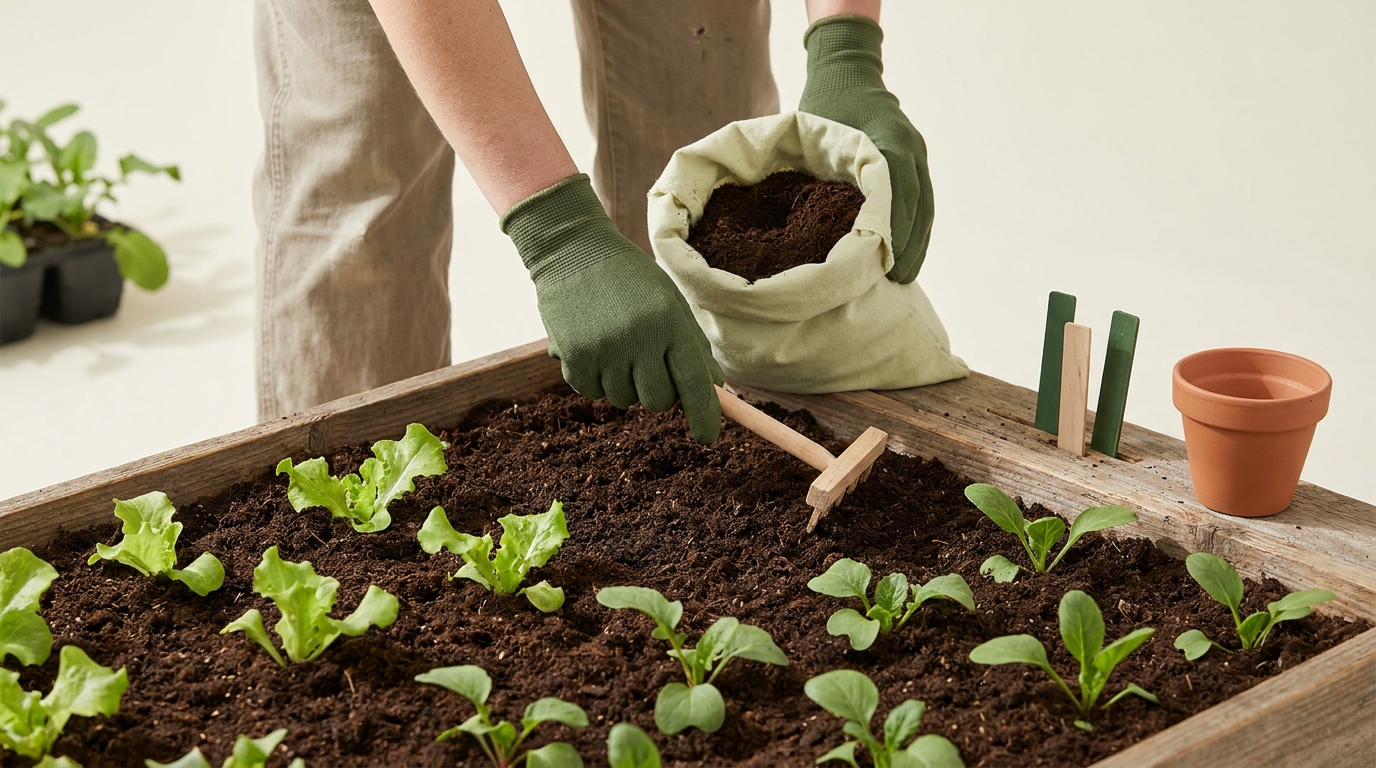
Yes. Compost and soil are different, and in containers they are used differently. Compost is decomposed organic matter that improves a growing medium; soil (garden soil/topsoil) is a mineral-based mix that provides structure in the ground. For pots, use a purpose-made potting compost/mix as the base and add compost in moderation. Avoid filling containers with straight compost or with garden soil alone SDSU Extension: compost in raised beds and containers; Rexius: compost vs soil overview.
What each material is, for container gardeners
Compost
Compost is biologically decomposed organic material used to enrich a growing medium. Quality and composition vary, which affects how it holds water, air and nutrients. Many gardeners find plants do not grow well in 100% compost because it can compact, become hydrophobic when dry, or have imbalanced nutrients or excess salts (especially manure-based composts) SDSU Extension: compost in raised beds and containers.
Soil and topsoil
Soil is mainly mineral particles (sand, silt, clay) plus some organic matter, air, water and organisms. That mineral structure works well in the ground, but garden soil or bulk topsoil is not suitable on its own in pots. In containers it can harbor pests and weed seeds and tends to drain and aerate poorly compared with potting mixes Learning With Experts: which soil or compost to use.
Term check: UK vs US usage
In the UK, “compost” commonly refers both to homemade compost and to bagged “potting compost” for containers. In the US, “compost” is the organic amendment and “potting mix” is the container medium. The practical takeaway is the same: use a formulated potting medium as the base in pots, and treat compost as an additive Learning With Experts: term differences.
How to use compost with potting compost/mix
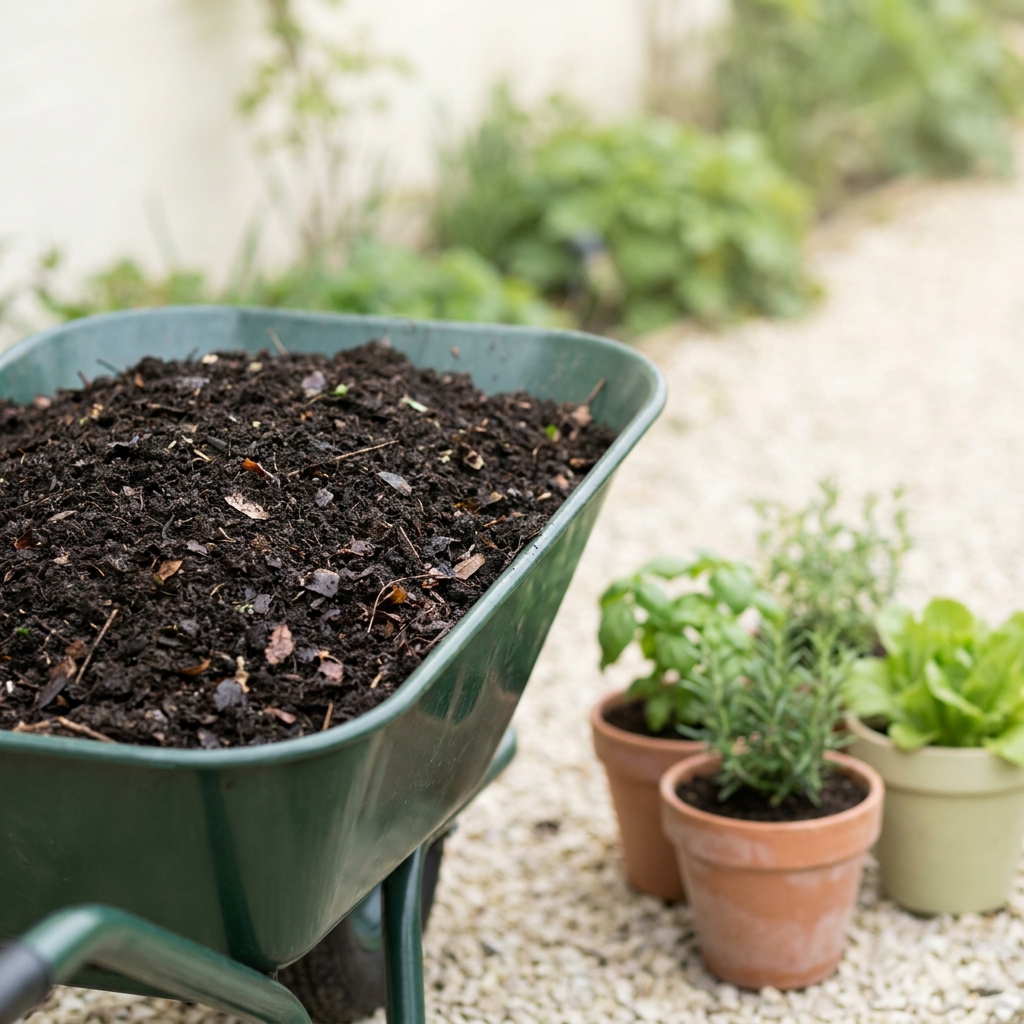
Base your container fill on a purpose-made potting compost/mix for drainage and aeration. If you want extra organic matter and slow nutrient release, blend in finished compost as a minority of the volume. Because compost varies, specific ratios are hard to prescribe, but a modest proportion is typical: the SDSU guide discusses mixtures with 10% to 25% compost by volume and higher proportions in some circumstances. Those examples are not a universal recipe for every crop or compost. Avoid planting in straight compost in containers due to compaction, hydrophobic drying and nutrient or salt imbalances SDSU Extension: compost in raised beds and containers; Rexius: compost vs soil overview.
If your compost includes manure or bedding, keep the proportion lower because phosphorus and salts can accumulate, and be prepared to supplement nutrients early in the season, especially in cool conditions when microbes release nutrients more slowly SDSU Extension: compost in raised beds and containers.
Do not use garden soil/topsoil as the sole medium in pots. It is better reserved for in-ground or raised beds where you can then enrich with compost. For UK readers, a loam-based “John Innes” style potting compost is a soil-containing potting medium formulated for containers and is distinct from garden soil dug from the ground Learning With Experts: which soil or compost to use; Topsoil Shop: topsoil vs compost.
Whatever mix you use, make sure your pots have drainage holes so excess water can escape. If you are refreshing an old container, you can often reclaim and top up last season’s medium after checking for pests and mixing in fresh material; see our guide on reusing old potting compost and why containers need drainage holes.
Common mistakes to avoid
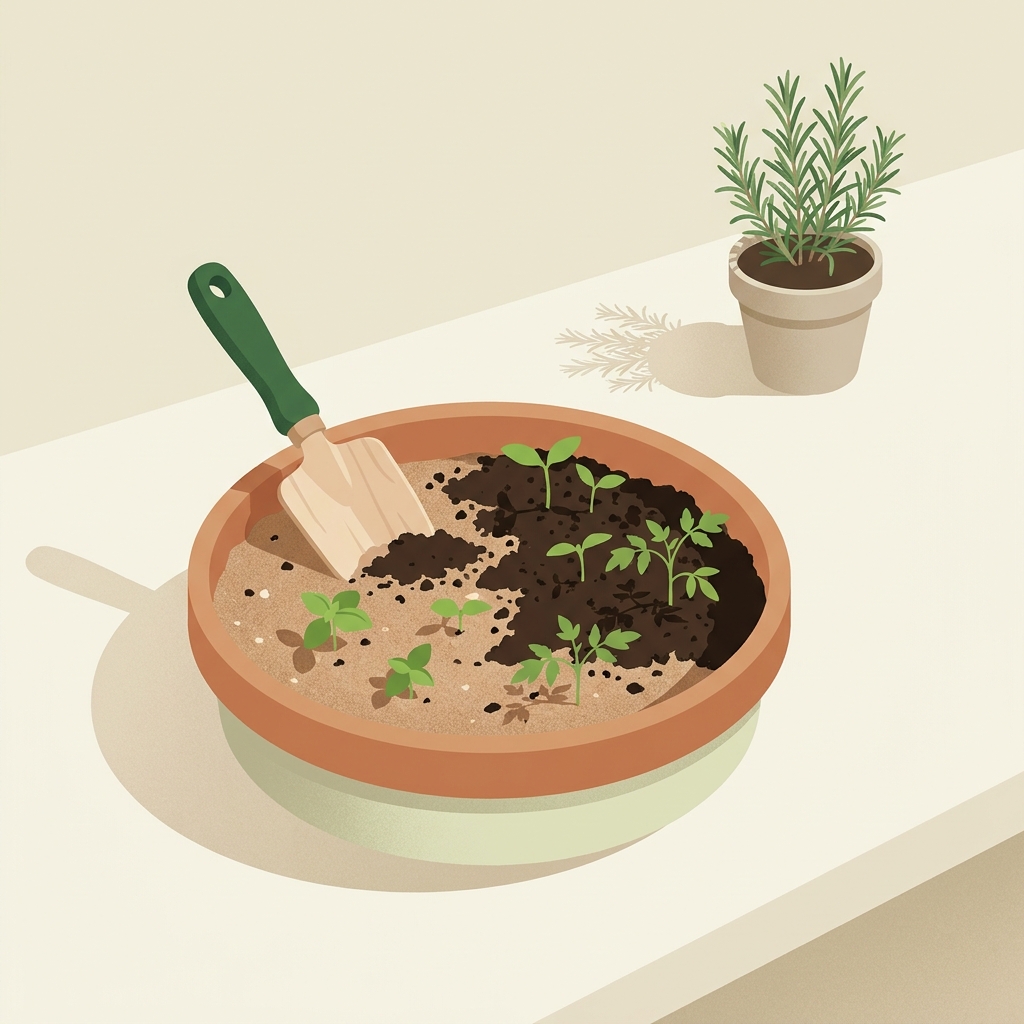
- Filling containers with 100% compost. Results can include poor aeration, hydrophobic drying and nutrient or salt problems, especially with manure-based composts SDSU Extension: compost in raised beds and containers.
- Using garden soil/topsoil alone in pots. It can introduce pests and weed seeds and is usually too heavy for reliable container drainage and root health Learning With Experts: which soil or compost to use.
- Assuming all compost behaves the same. Compost varies by feedstock and process, so test a small batch first and adjust your mix accordingly SDSU Extension: compost in raised beds and containers.
Before you fill a container with a compost mix
Short FAQs
Can I fill a pot entirely with compost?
Not recommended. Compost alone can compact or repel water when dry and may have unbalanced nutrients or salts. Blending a modest amount into a potting mix works far better SDSU Extension; Rexius.
Is topsoil OK for containers?
No. Garden soil/topsoil is best used in the ground or as part of a formulated, sterilized loam-based potting compost. Do not scoop soil from the garden for pots Learning With Experts.

Related guides
Product options for this topic
As an Amazon Associate I earn from qualifying purchases. These are researched options, not hands-on test results. Check the exact size or model, current price and availability on Amazon.
| Product option | Fit and limits to check | Retailer |
|---|---|---|
| Product imageFiskars Ergo garden trowel | A hand-trowel option for planting and potting. Compare the scoop with your container opening and choose a grip that works comfortably for you. | View on Amazon |
| Product imageXLUX long-probe soil moisture meter | A probe to supplement checks of potting-mix moisture. Readings vary with mix and placement; combine them with pot weight and a finger check. | View on Amazon |