Build a calendar around a place
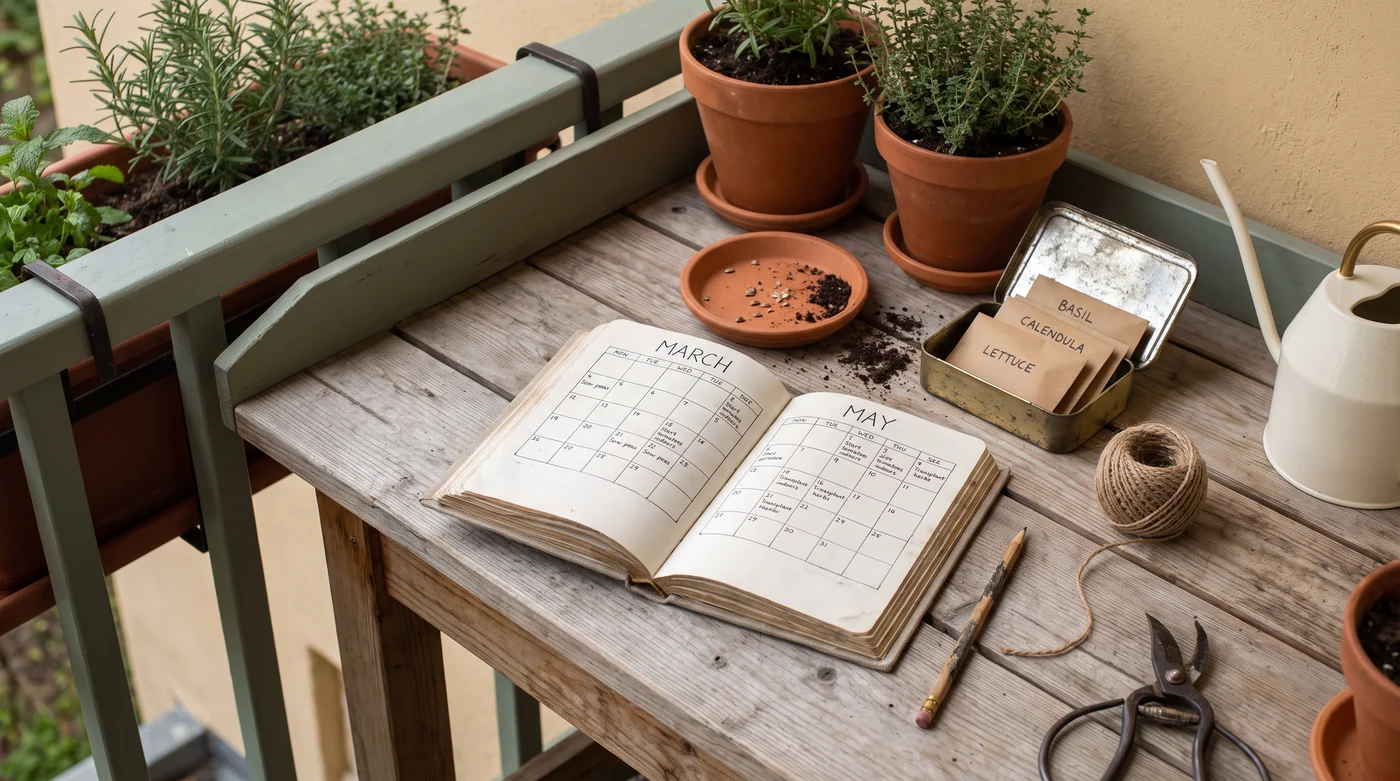
A useful seasonal note identifies its region, the plant and the conditions that matter. Keep a local frost reference beside the calendar, but do not turn an average date into a weather guarantee. A sheltered city patio and an exposed rural site can need different judgment. Use current local conditions and plant guidance when deciding whether a planned step can go ahead.
Work backward without losing the dependencies
For a seed-starting plan, distinguish the indoor sowing window, the plant’s development and the intended move outdoors. Minnesota Extension’s seed-starting guidance provides a regional framework; its dates belong to that context. Keep the seed packet’s instructions and the local advice with the schedule. Starting earlier does not automatically create a better plant if suitable light, space or later conditions are missing.
University of Minnesota Extension: starting seeds indoors ↗ — Minnesota guidance on seed starting and the transition outdoors; its seasonal dates are regional.
Plan the transition as a process
Moving a plant between environments changes more than its address. Minnesota Extension highlights sun, wind and cold when acclimating seedlings outdoors. Follow the appropriate gradual transition for the crop and watch actual conditions. Record what exposure the plant has had, rather than checking a box called outside after one warm afternoon. The process should have a practical way to respond if the weather changes.
University of Minnesota Extension: spring garden preparation ↗ — Regional advice highlights wind, sun and cold during seedling acclimation; do not reuse its calendar globally.
Leave a closing page for the season
Record which containers will remain in use, which plants need a different location and how empty equipment will be stored under its instructions. Keep unresolved observations for next season instead of discarding them with the old label. Note what you would repeat and what you would change, with reasons. This creates a calendar grounded in the place you actually have, rather than a generic list of jobs by month.
Keep these details together.
- Location and last/first frost context
- Shelter and exposure
- Plans for absence or seasonal storage
Go a little deeper.
Use the publication’s reference library to connect the task to the relevant constraints.
Small-Space Growing Atlas ↗