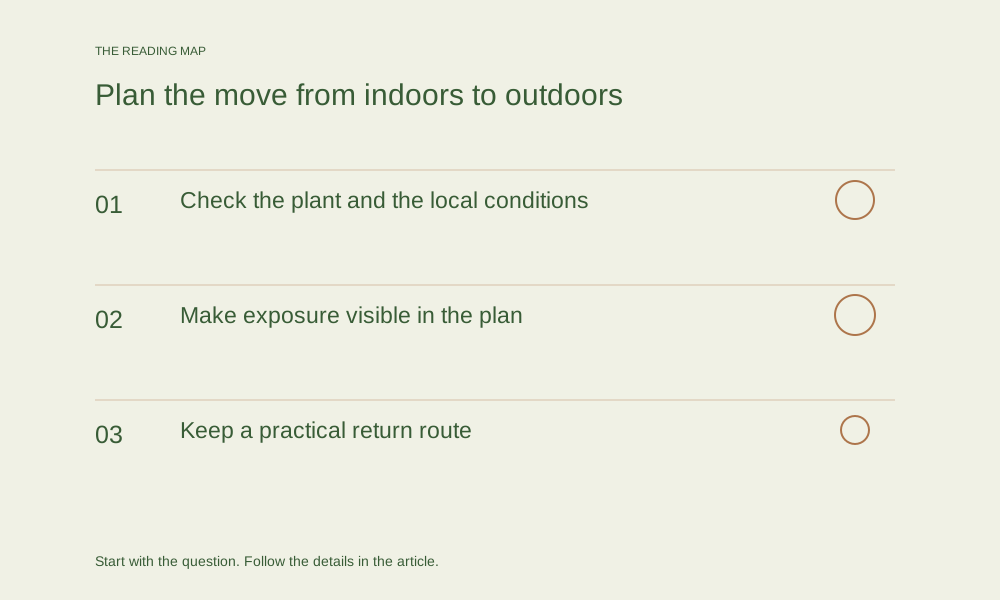
Check the plant and the local conditions
Identify the crop or cultivar and the guidance relevant to the place where it will grow. Record the planned outdoor position and the conditions the plant has experienced so far. An indoor sowing date cannot, by itself, establish that a plant is ready for an exposed outdoor location.
Make exposure visible in the plan
Use the crop-appropriate gradual acclimation process. Minnesota Extension specifically calls attention to wind, sun and cold during this transition. Its calendar examples belong to Minnesota; the same dates should not be copied into a Belgian, German or other US garden. Keep the reason for a step beside its date.
University of Minnesota Extension: spring garden preparation ↗ — Regional advice highlights wind, sun and cold during seedling acclimation; do not reuse its calendar globally.
Keep a practical return route
Plan how containers or trays will be moved if the relevant conditions require it. Check the weight, access and place they will stand before making the first trip. Label trays clearly so an absence or a handoff does not erase which plants have had which exposure.
Record the move and the next observation
Write down the actual transition steps, the final location and the plant’s condition at that point. Note any change observed afterward and seek suitable guidance where needed. Completing a calendar sequence does not guarantee establishment; the ongoing record is what makes the process useful next time.
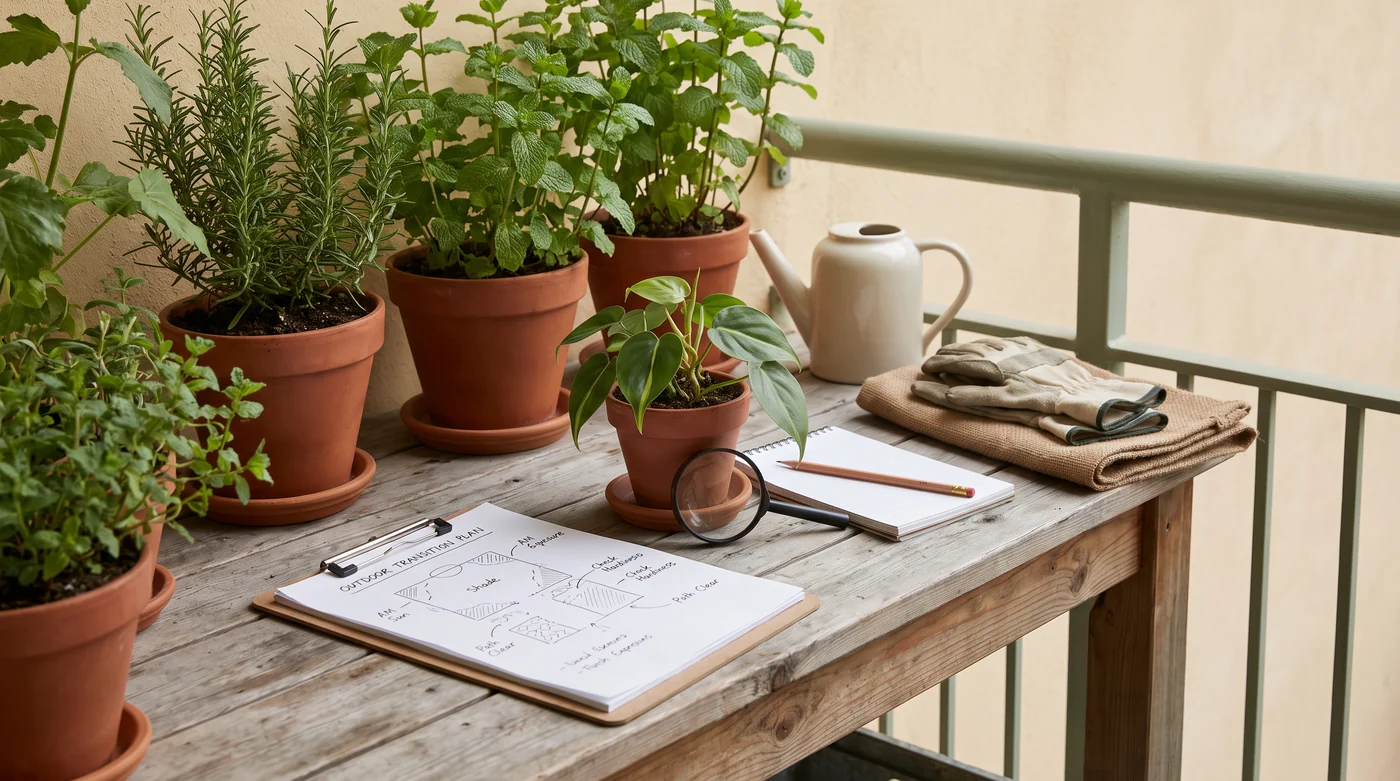
Plant advice needs the species or cultivar, local climate, light and growing conditions. Photographs of a generated garden are mood imagery, not observations of a growing trial.