Start with something you want to harvest
Name a crop you enjoy using and describe a modest goal. A few leaves for a meal and a season of fruiting growth ask different things of a small space. Keep the species and cultivar on the plan, with the source of the seed or young plant. “Compact” is useful information, but it does not replace the plant’s stated mature dimensions and growing requirements.
Keep neighboring herbs as individual plants
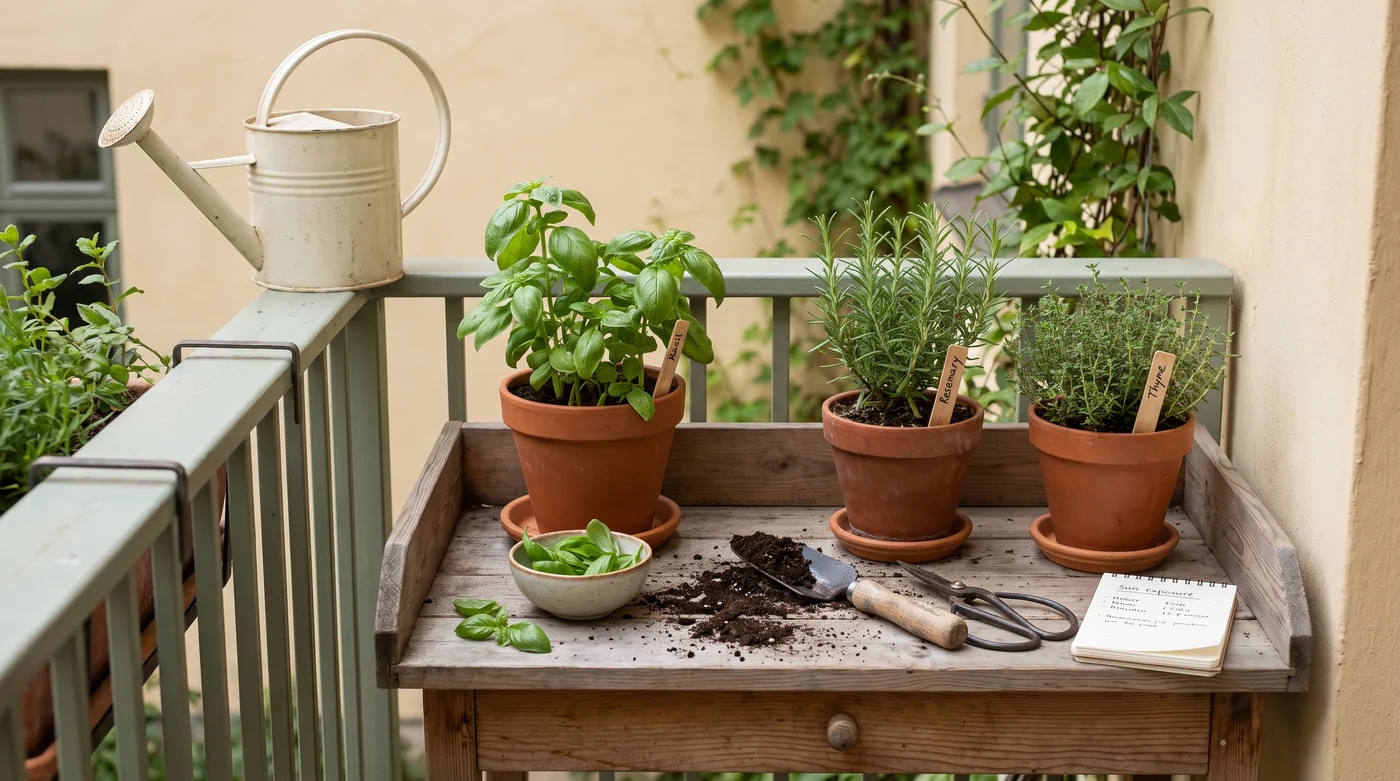
An attractive group of herb pots does not require one shared care routine. The RHS distinguishes tender herbs such as basil from herbs that can remain outdoors under suitable UK conditions, and gives different moisture considerations for mint. Match each plant to local guidance rather than assigning a generic herb setting. Separate pots also make it easier to record which plant received which care.
RHS: herbs in containers ↗ — UK growing guidance; named herbs have different seasonal and moisture requirements.
Match the plant to the observed growing place
Compare the named crop’s requirements with your light record, growing season and available container. Leave support and access in the plan, particularly when the mature plant will occupy more space than the transplant. If a requirement is unresolved, change the shortlist or gather the missing information before buying extra equipment. A sunny-looking corner is a starting point for observation, not proof of a harvest.
Keep the first harvest record honest
Record dates, what was harvested and the conditions you actually observed. Separate edible identification and safe handling from the aesthetic appeal of a planting. Use plants correctly identified for the intended edible use and follow relevant local food and growing guidance. Our illustrative herb photographs do not document a trial or establish yield. A small real record can later support a more useful article than a large unverified claim.
Keep these details together.
- Species or cultivar
- Season and temperature
- Container size and harvesting goal