Use the reminder to look
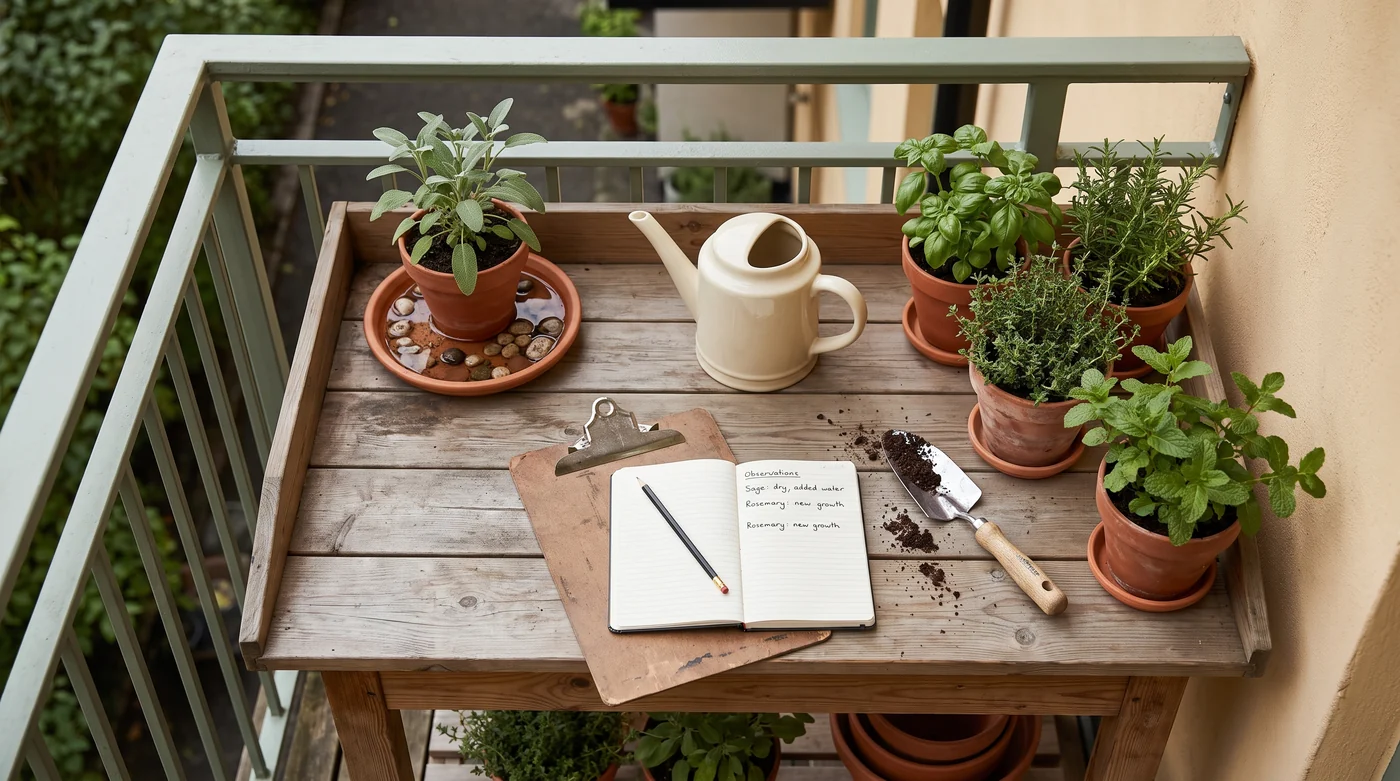
A calendar can remind you to check a pot; it cannot tell you that the pot needs a fixed dose today. Begin with the named plant, its growing medium and the appropriate plant-specific guidance. Note the condition you inspected before watering. Keep the observation and the action as separate fields so “checked Tuesday” does not silently become “watered Tuesday.”
Record what has changed around the pot
A larger plant, hotter weather, different exposure or a new container can change the care question. The RHS notes that container vegetables rely heavily on supplied water and their demand can rise in hot conditions. Use that as a reason to revisit the observation routine, not as an automatic daily schedule. A weather forecast gives context; it does not measure the condition inside your particular pot.
RHS: watering vegetables ↗ — Water demand varies with crop and conditions; containers depend on an available water supply.
Distinguish reservoir care from ordinary watering
A self-watering container may specify its own initial watering, reservoir filling and overflow management. An external irrigation kit may have a pump, tubing and separate delivery settings. Identify the exact system before writing instructions for it. A reservoir capacity is a storage quantity; without observed use, it does not establish how many days the plant can be left unattended.
Make an absence plan someone can follow
Label the pots and leave a clear observation brief with the person checking them. Trial any automatic arrangement while you can still inspect its behavior. Include a fallback for an empty supply, unexpected drainage or a changed plant condition. Keep a contact route and the exact equipment instructions available. A useful handoff is specific enough to help without implying that a caretaker should diagnose every change.
| Field | Example of what to record |
|---|---|
| Before | Plant, pot, weather and moisture observation. |
| Action | What was done, or that no watering was needed. |
| After | Drainage, reservoir condition and the next observation to make. |
Keep these details together.
- Moisture observations at a useful depth
- Weather and exposure changes
- Drainage and reservoir condition