Give each possible spot a name
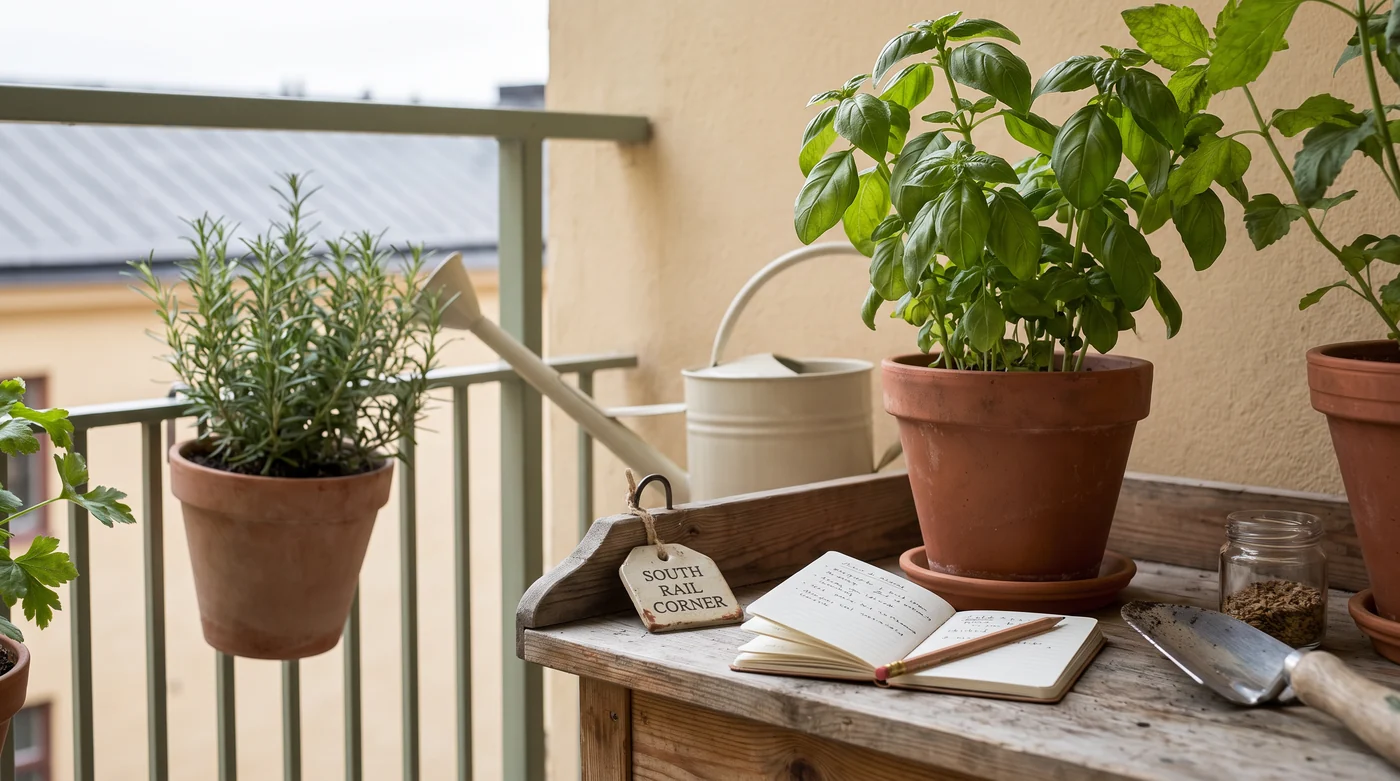
A windowsill, a corner beside the balcony door and a patio wall are separate growing positions. Sketch the fixed features first: doors, opening windows, the walking route and the water supply. Name a few possible pot positions on that drawing. This makes a later note such as “the east corner changed” more useful than a general impression that the balcony is sunny.
Watch the plant position, not only the room
Observe when direct sunlight actually reaches the intended foliage position and what interrupts it. Note the date and weather as well as the clock time. Our sunlight notebook lets you mark observed half-hour blocks while leaving unknown periods empty. It is a visual record of your observations, not a light meter or a prediction for another season. A bright photograph does not measure the daily light available.
Keep exposure and access beside the light record
A pot may sit in sun while also receiving wind or heat reflected from a hard surface. Maryland Extension identifies those conditions as part of choosing a container location. Walk through the care routine too: can you inspect the plant, reach the growing medium and manage drainage without moving other pots? On a balcony, confirm structural and property limits separately before placing filled containers.
University of Maryland Extension: container vegetables ↗ — US extension guidance on vegetable containers, drainage and growing conditions; adapt the crop and region.
Begin with a small, named trial
Select a plant using relevant local guidance and keep its species or cultivar label. Start with a place you can observe regularly. Write down what would count as a useful outcome, such as maintaining the plant through the season or harvesting a modest amount of a named herb. The first record should describe the conditions and the result, without turning one success into a promise for every similar-looking space.
Keep these details together.
- Direct light and obstruction notes
- Wind and reflected heat
- Access, drainage and property constraints
Go a little deeper.
Small-Space Growing Atlas ↗Make a growing-space map before buying plants
A simple sketch can reveal the limits and useful opportunities of a small space.
Read the note ↗A practical reading noteKeep the gaps in your sunlight record
A few observations can be useful without pretending you watched the whole day.
Read the note ↗