Walk the route
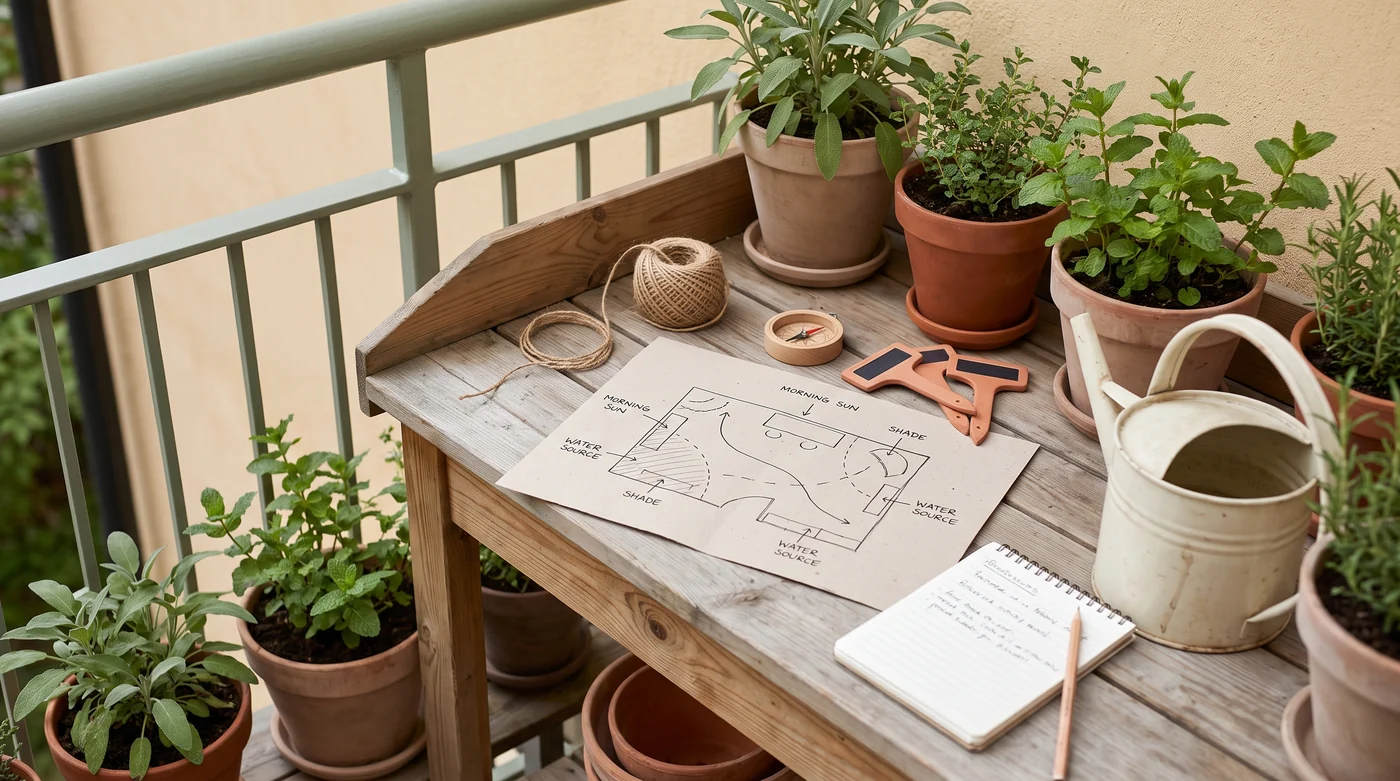
Draw the door, opening windows and the route used for everyday access. Leave room to carry a watering can and reach the back of the planting. The best-looking arrangement may be awkward to maintain.
Observe the light
Note when direct sunlight reaches each position and what blocks it. Repeat when the season changes. A compass direction is helpful context, but nearby buildings, overhangs and trees affect the actual light.
Plan the water route
Identify where excess water can go without damaging surfaces or affecting a neighbor. Container-growing guidance emphasizes suitable drainage and growing medium. Check the actual container design rather than adding materials to the base by habit.
University of Maryland Extension: container vegetables ↗ — US extension guidance on vegetable containers, drainage and growing conditions; adapt the crop and region.
Choose the first small trial
Begin with a limited number of named plants whose requirements match the observed conditions. Keep the labels and local guidance with your notes. Expand after you understand the place, rather than filling every corner at once.
Plant advice needs the species or cultivar, local climate, light and growing conditions. Photographs of a generated garden are mood imagery, not observations of a growing trial.