Measure the inside and the intended fill line
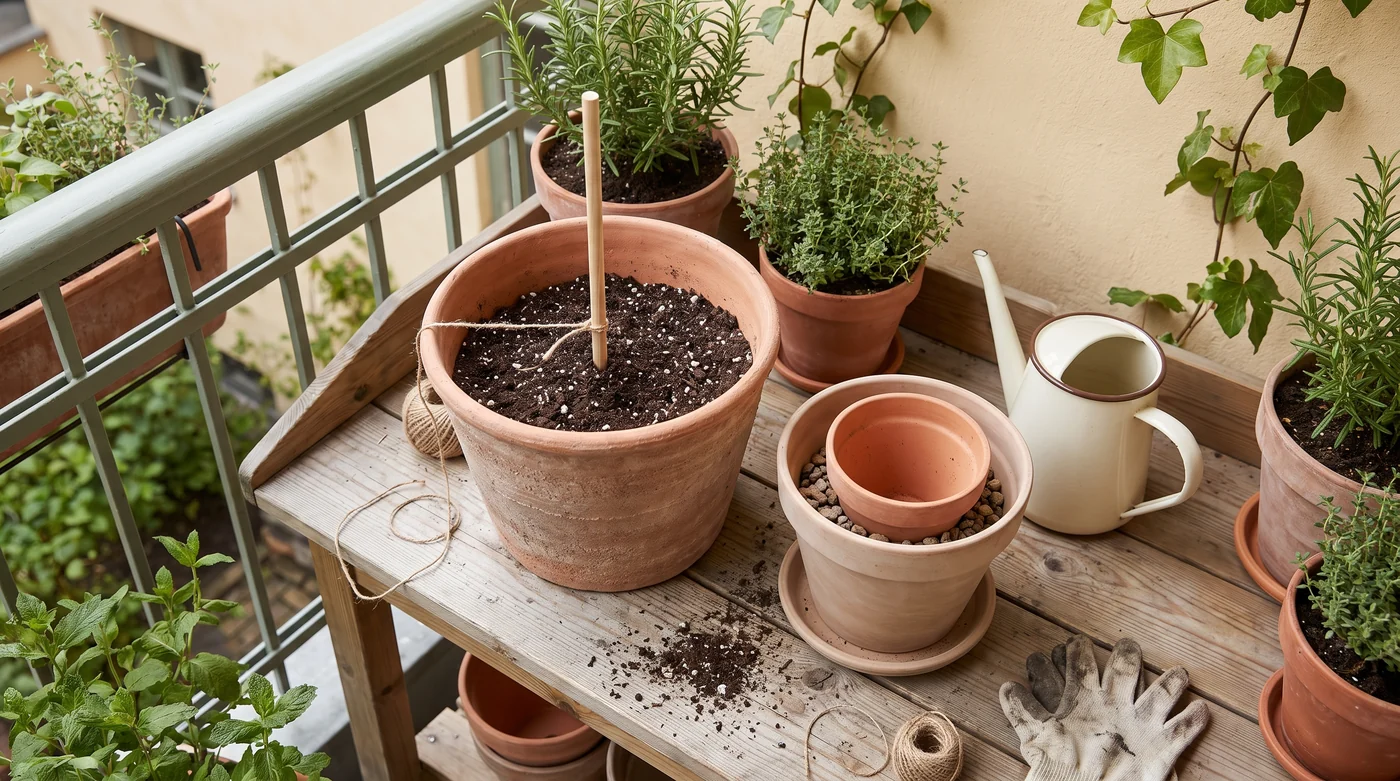
A pot’s product name may refer to its outside diameter. For a mix estimate, measure the useful interior and mark the fill line. Record any raised base, curved shape or reservoir. Our container planner offers straight round, tapered round and rectangular approximations. If the shape is a poor match, use a reliable measured capacity instead of forcing an exact-looking number from unsuitable geometry.
Separate growing volume from the other spaces
Leave the planned headroom visible and account separately for root balls or retained medium. A water reservoir is not automatically growing space. Read the container’s construction and filling instructions before estimating. The geometric volume also says nothing about how much settled or compressed product a particular bag provides; keep the supplier’s quantity information with the purchase calculation.
Follow the water through the actual design
Locate the drainage or overflow route and plan where excess water can go. Maryland Extension warns that a gravel layer at the bottom does not improve container drainage and can worsen waterlogging. That is different from the specific arrangement of a manufactured reservoir system. Read that system’s instructions rather than modifying its internal layers from a general potting tip.
University of Maryland Extension: container vegetables ↗ — US extension guidance on vegetable containers, drainage and growing conditions; adapt the crop and region.
Plan the filled container in its final place
Check the pot, supports and intended mature plant as a physical arrangement. Keep any rated load or mounting specification attached to its exact model and installation conditions. The planner does not calculate a balcony’s capacity or a bracket’s strength. Leave enough room to reach the plant and water route, and decide how the container will be moved or stored before filling it.
Keep these details together.
- Internal dimensions and fill line
- Drainage and water destination
- Load limits checked separately