
The journal
How deep do containers need to be for lettuce? A practical guide
growing lettuce in containers, learn recommended depths for leaf and heading lettuces plus potting, drainage and watering essentials.
Quick answer and why container depth matters
Short summary for quick readers
growing lettuce in containers
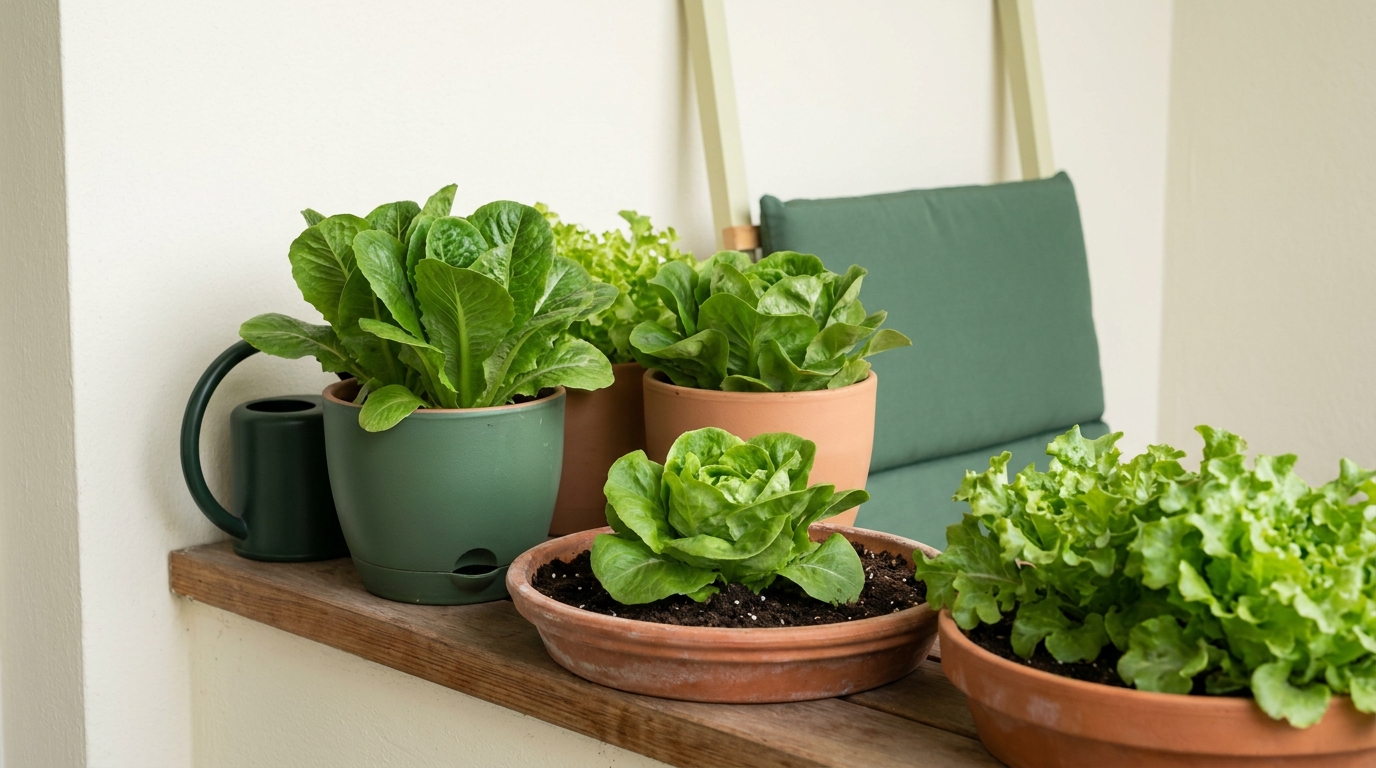
Short answer: for most leaf lettuces, choose containers at least 15 cm (about 6 inches) deep; for heading types such as romaine and butterhead, aim for deeper containers in the 8 to 12 inch range to support head development and sturdier root systems.
This matters because container depth determines how much soil a plant can use for roots and water storage, and more soil volume buffers swings in moisture and temperature that stress lettuce plants. Guidance from extension services shows leaf types do well in shallower pots while heading lettuces generally need more root volume to form tight heads, so depth affects both yield and plant health University of Florida IFAS Extension.
How deep do containers need to be for different types of lettuce?
Leaf lettuces grow reliably in containers at least 15 cm (6 inches) deep; heading types like romaine and butterhead need more depth, typically 8 to 12 inches, to support head development and steady moisture.
In practical terms, the extra depth for romaine or butterhead allows a fuller root system, which helps prevent bolting and poor head formation under heat or uneven watering. The recommendation to err toward a little more soil for heading varieties comes from several university extension guides that compare container outcomes by depth and volume Royal Horticultural Society.

Choosing container depth by lettuce type
Deciding container depth starts with the variety you want to grow. If you plan to grow primarily leaf lettuce—looseleaf or salad mixes—choose containers that are at least 15 cm (6 inches) deep and favor wider shapes for easier spacing and harvesting; these lettuces are shallow-rooted and tolerate closer spacing of 4 to 6 inches between plants University of Florida IFAS Extension (see our plant pots and containers guide).
For heading lettuces like romaine and butterhead, choose containers in the 8 to 12 inch depth range to give roots room to grow and to maintain more stable moisture; deeper, narrower pots help form a better heart and reduce small or loose heads during growth, especially in warm weather University of Maryland Extension. Gardentherapy also outlines container depth options in a practical how-to for patios and balconies Growing Lettuce in Containers.
Container shape and volume matter as much as depth: leaf types do well in shallow, wide trays or half-barrels that let you sow rows or dense clusters, while heading types benefit from pots with more vertical volume. As a rule of thumb: shallow-wide, at least 6 inches deep, for cut-and-come-again leaf lettuce; deeper pots, 8 to 12 inches, for heading varieties where head size and structure are priorities University of Maryland Extension.
When should you choose deeper containers even for leaf lettuce? If you expect hot, dry microclimates on a balcony or have limited ability to water daily, larger containers with greater soil volume help buffer fast drying and reduce stress. The added volume gives you a margin for error and steadier moisture between waterings Royal Horticultural Society.
Soil, drainage and watering: set the container up to succeed
Use a high-quality soilless potting mix rather than garden soil; potting mixes hold air, drain well and are formulated to give seedlings a lightweight, disease-safer start, which is a common recommendation from extension services for container vegetables Colorado State University Extension (see our potting mix and plant care guide).
Colorado State University Extension
Drainage holes are essential. Place pots where excess water can run out, and test drainage by watering thoroughly after potting: if water pools on the surface or the soil stays saturated for long periods, add more drainage or repot into a container with better outflow. Proper drainage prevents root rot and other moisture-related problems, and deeper containers hold more free-draining media that dry more slowly under the same conditions University of Maryland Extension.
Watering frequency depends on pot size, weather and container material, but containers generally dry faster than in-ground beds. Keep media consistently moist, not waterlogged, and expect to water more often in warm weather; greater soil volume in deeper pots reduces how frequently you must water, which is especially helpful for heading lettuces that need steadier moisture during head formation Colorado State University Extension. For tips on managing watering in containers, see our container watering guide.
Planting, spacing, thinning and harvest timing
Sow lettuce seeds shallowly—about 1/4 inch deep—and cover lightly with fine mix or vermiculite. This shallow sowing encourages quick emergence and is the standard practice recommended for home garden lettuce seedings University of Minnesota Extension.
Thin seedlings to reduce overcrowding, which lowers the risk of bitterness and poor head formation. For leaf lettuces, thin to roughly 4 to 6 inches between plants so each plant has room to produce full leaves; follow seed packet spacing for heading varieties, which usually require wider spacing to form a proper head University of Minnesota Extension.
quick pre-plant checks to ensure good sowing and watering
Harvest timing differs by type. Pick leaf lettuces using cut-and-come-again: when outer leaves reach 4 to 6 inches, cut what you need and allow the center to continue producing. Heading lettuces are harvested when they form a firm head, often around 45 to 60 days or more depending on the cultivar and growing conditions; check seed packet timing and visual firmness to decide when to harvest University of Minnesota Extension.
Practical sowing steps: 1) Fill your chosen container with soilless mix to within about 1 inch of the rim. 2) Scatter or drill seeds and cover about 1/4 inch. 3) Keep lightly moist until seedlings emerge. 4) Thin when plants have their first true leaves to the spacing recommended for your variety. These steps reduce common problems and give you good stand establishment for both leaf and heading types University of Minnesota Extension.
Common mistakes and troubleshooting
Using garden soil in pots, neglecting drainage, using containers that are too shallow for heading types, and inconsistent watering are common errors that lead to poor growth, bitter leaves or small heads. Extension guidance consistently warns against garden soil in containers because it compacts and drains poorly compared with potting mixes Colorado State University Extension.
Signs of water stress and root problems include wilting during midday, yellowing lower leaves, rapid drying of media, and slow or stunted growth. Bitterness can result from irregular watering and overcrowding as much as heat; correcting moisture and spacing issues often reduces bitter off-flavors University of Florida IFAS Extension.
Fixes you can try: repot into a larger container if roots look cramped or heads stay small; refresh the top layer of potting mix or repot entirely when media is depleted; add 1 to 2 inches of mulch such as straw or shredded bark to help reduce surface evaporation; and adjust your watering schedule to provide steadier moisture. These steps restore better root conditions and improve head formation in heading lettuces University of Minnesota Extension.
Too-deep containers are rarely a problem for lettuce, but very large pots can be heavier and harder to move. Conversely, containers that are too shallow for heading types often produce poor heads or small plants; choosing the right depth for the variety avoids unnecessary repotting and crop loss University of Maryland Extension.
Practical examples and container recommendations
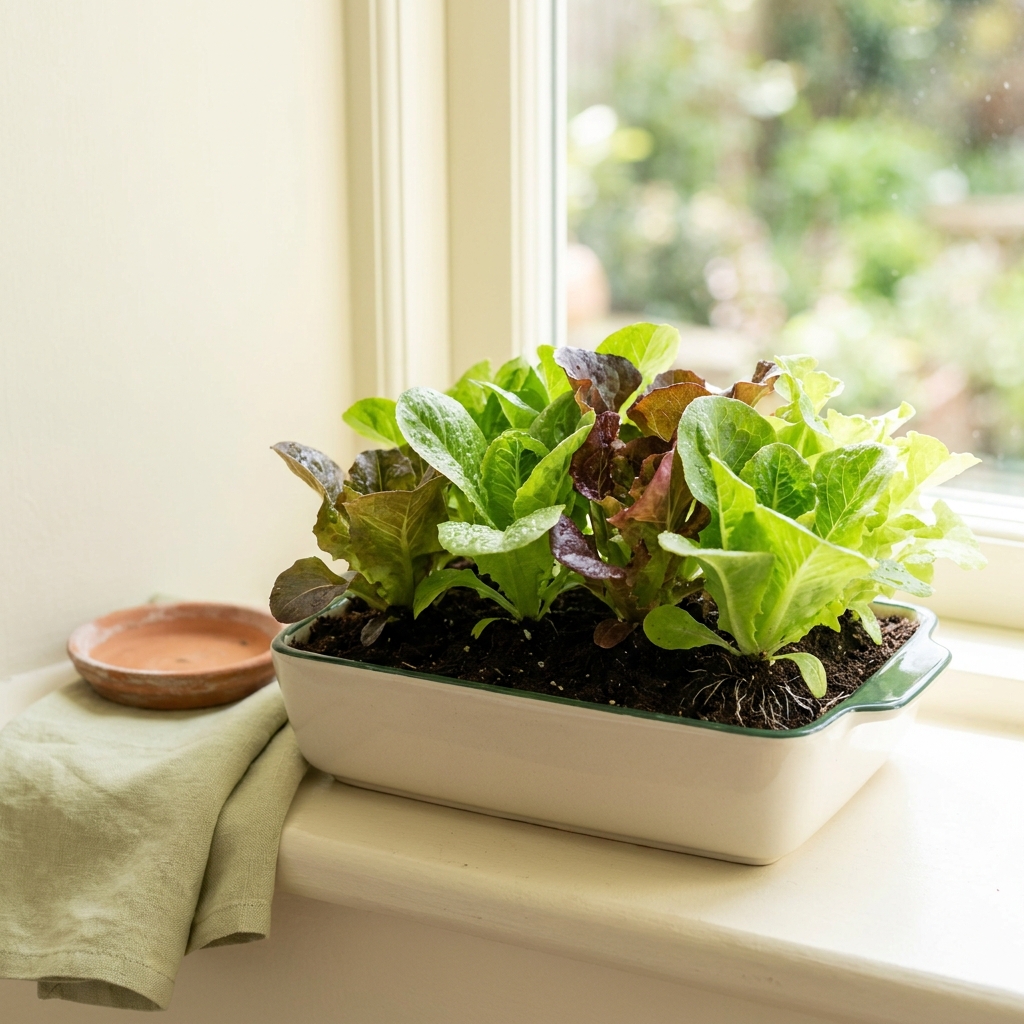
Example setup for a small balcony, leaf lettuce: shallow-wide rectangular planter at least 6 inches deep and 10 to 12 inches wide per row, filled with soilless potting mix, sown in a row or block and thinned to 4 to 6 inches for cut-and-come-again harvest. This uses minimal depth while giving plants the lateral space they prefer University of Maryland Extension and practical container choices are also covered in a guide to the best containers for salad greens Best Containers for Growing Salad Greens.
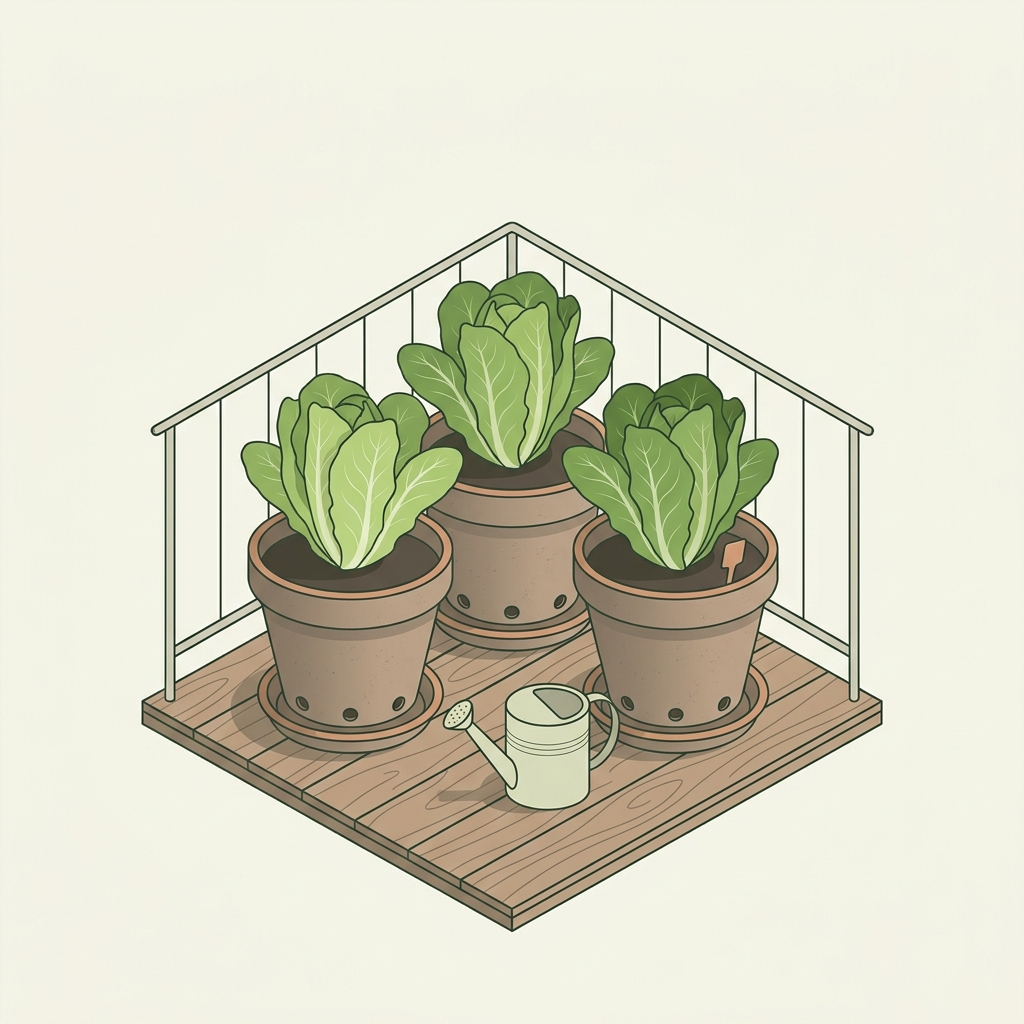
Example setup for romaine or butterhead: a round or rectangular pot 8 to 12 inches deep, 8 to 12 inches in diameter for individual heads or larger for multiple plants, with ample drainage holes and at least 6 to 8 liters of potting mix per head to keep moisture steadier during head formation. This increased soil volume helps the plant resist brief dry spells and supports fuller head development Royal Horticultural Society.
Container materials matter: lightweight plastic or resin pots are easier to move and retain moisture longer than thin metal or unglazed terracotta in hot conditions; however, terracotta breathes and can be preferable for very humid spots. Regardless of material, ensure drainage holes and use a good potting mix to set up for success Colorado State University Extension. Additional practical notes on minimum container depths appear in consumer gardening resources such as Pegplant Easy-to-Grow Lettuce.
Final quick checklist before planting: depth at least 6 inches for leaf lettuce and 8 to 12 inches for heading types; use a soilless potting mix; confirm drainage holes; sow seeds about 1/4 inch deep; thin leaf types to about 4 to 6 inches; and plan for more frequent watering in warm weather. Following these checks will address the main reasons container lettuce fails and put you on track for reliable harvests University of Florida IFAS Extension.
Frequently asked questions
How deep should a container be for leaf lettuce?
Use containers at least 15 cm (about 6 inches) deep for leaf lettuce; wider, shallow planters work well and allow denser spacing and cut-and-come-again harvests.
Can I grow romaine in a shallow pot?
Romaine performs better with deeper pots, roughly 8 to 12 inches, because it needs more soil volume to form a firm head and maintain steady moisture.
How often should I water container lettuce?
Watering frequency varies with pot size, weather and material, but keep media consistently moist and expect more frequent watering in warm weather; larger containers dry more slowly.
Choosing the right container depth for lettuce depends on the variety you plan to grow and how often you can water. Leaf lettuces do well in shallower, wider containers while heading types need deeper pots and more soil volume for reliable heads. Follow the checklist for depth, potting mix, drainage, spacing and watering, and you can expect steady, harvestable lettuce from even the smallest spaces.
References
- https://gardeningsolutions.ifas.ufl.edu/plants/edibles/vegetables/lettuce.html
- https://www.rhs.org.uk/vegetables/lettuce/grow-your-own
- https://extension.colostate.edu/topic-areas/yard-garden/container-gardens-7-238/
- https://extension.umn.edu/vegetables/growing-lettuce
- https://gardeninreach.com/guides/plant-pots-and-containers/
- https://gardeninreach.com/guides/potting-mix-and-plant-care/
- https://gardeninreach.com/guides/container-watering/
- https://gardentherapy.ca/growing-lettuce-in-containers/
- https://pegplant.com/2022/04/04/lettuce/
- https://www.gardenary.com/blog/best-containers-for-growing-salad-greens
Product options for this topic
As an Amazon Associate I earn from qualifying purchases. These are researched options, not hands-on test results. Check the exact size or model, current price and availability on Amazon.
| Product option | Fit and limits to check | Retailer |
|---|---|---|
| Fiskars Ergo garden trowel | A hand-trowel option for planting and potting. Compare the scoop with your container opening and choose a grip that works comfortably for you. | View on Amazon |
| XLUX long-probe soil moisture meter | A probe to supplement checks of potting-mix moisture. Readings vary with mix and placement; combine them with pot weight and a finger check. | View on Amazon |