
The journal
Do herbs like deep or shallow pots? A practical guide
container herbs drainage pots guidance on matching pot depth to root type, ensuring drainage holes and using a free-draining potting mix to prevent waterlogging.
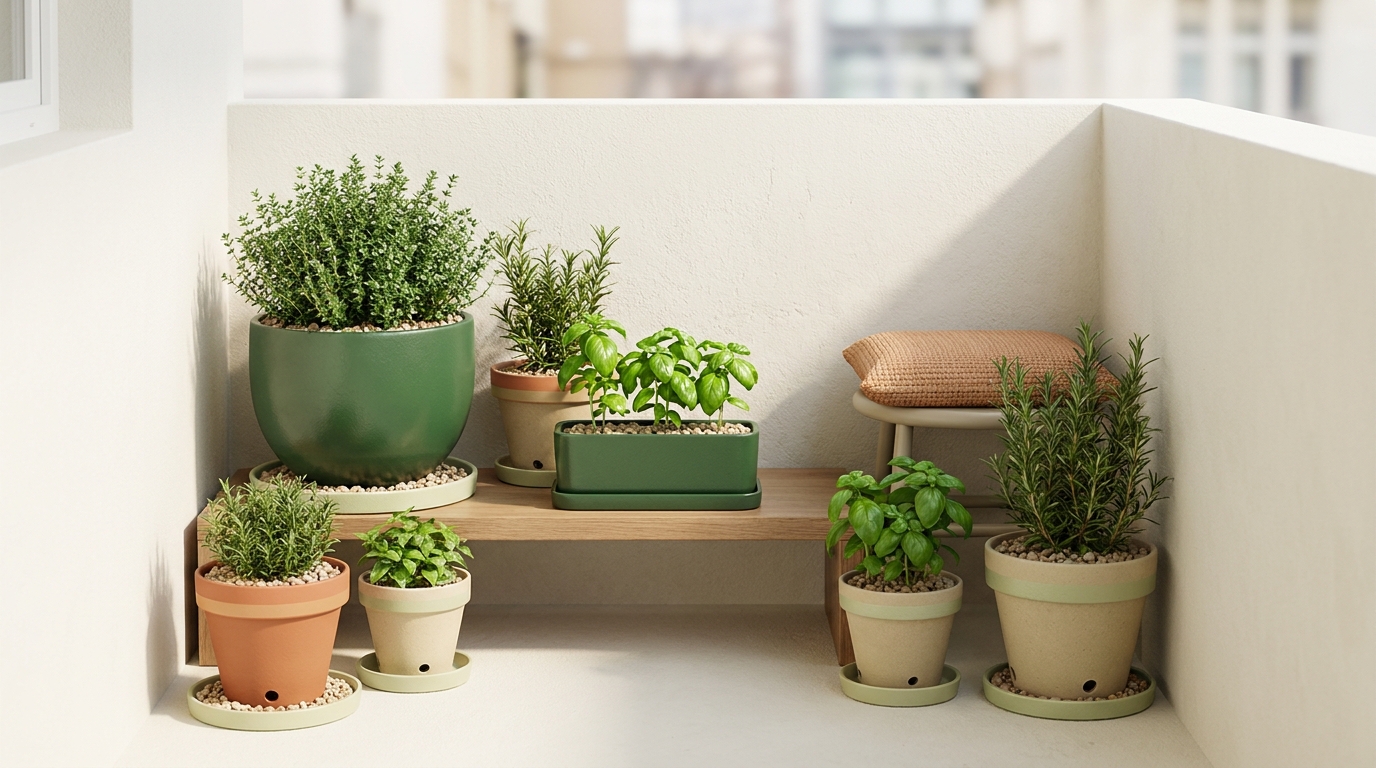
Quick answer: container herbs drainage pots and the right pot depth
For most home gardeners the simplest rule is this: aim for at least 6 to 8 inches of usable soil depth for common culinary herbs, give deeper, larger pots to tap-rooted or woody species, and always use containers with unobstructed drainage holes and a free-draining potting mix to avoid waterlogging and root trouble, especially in warm or variable microclimates University of Minnesota Extension.
Short verdict for common herbs: many soft, fibrous-rooted herbs are comfortable in relatively shallow pots if the soil drains well and the container gives enough volume for the plant to develop; conversely, herbs with deeper or woody root systems need extra depth to avoid root restriction and moisture stress University of Maryland Extension.
When to choose deeper or shallower pots: choose shallower, very well drained planters for low-growing, fibrous-rooted herbs and pick taller or wider containers for larger, woody or tap-rooted herbs so the root system has room and the pot buffers moisture and temperature swings, and see our plant pots and containers guide for pot shapes and sizes Colorado State University Extension.
How root type and plant habit determine pot depth
Shallow-rooted herbs such as thyme, oregano and chives develop a fibrous root mat near the surface and typically thrive in containers with modest soil depth; these species spend most of their feeding and water uptake in the top layer of soil, so they can succeed in shallower planters when drainage is excellent University of Minnesota Extension.

Tap-rooted and woody herbs, including dill, fennel, parsley and many rosemary types, send a principal root downward and need more vertical space to avoid becoming root bound, which can reduce vigor and increase moisture stress when roots are restricted University of Maryland Extension.
Decision rule you can use: match the pot's usable soil depth to the expected rooting depth for the species, then add a small margin for root growth; in practice that margin usually puts common herbs into the 6-8 inch baseline and pushes tap-rooted or woody herbs into deeper, 10 inch plus pots for better long term performance Royal Horticultural Society, and similar depth suggestions appear in an EarthBox guide EarthBox.
How to tell root habit quickly: check seed descriptions, supplier tags or trusted extension pages for terms like fibrous, tap-root or woody; when in doubt, err on the side of more depth and volume for long lived or woody herbs because container volume reduces water stress and supports fuller growth Colorado State University Extension.
Drainage and potting mix: what actually helps drainage
Drainage holes that are clear and unobstructed are essential; water must be able to leave the container freely after thorough watering to prevent prolonged saturation around the roots, so check holes and lift liners or trays if water pools beneath the pot Washington State University Extension, see our container watering guide, and review additional drainage options at University of Illinois Extension.
The old practice of adding coarse gravel, shards or a layer of broken pots under potting mix is a common myth; because the finer potting mix above sits at a higher water retention level than the coarse layer below, a perched water table forms and drainage becomes worse rather than better, so rely on a free-draining container potting medium instead of bottom layers of gravel Washington State University Extension.
A high-quality potting medium made for containers tends to be light, free-draining and resists compaction; these mixes are preferable to garden soil, which compacts in pots and holds water around roots, increasing the risk of root rot and poor oxygenation Colorado State University Extension.
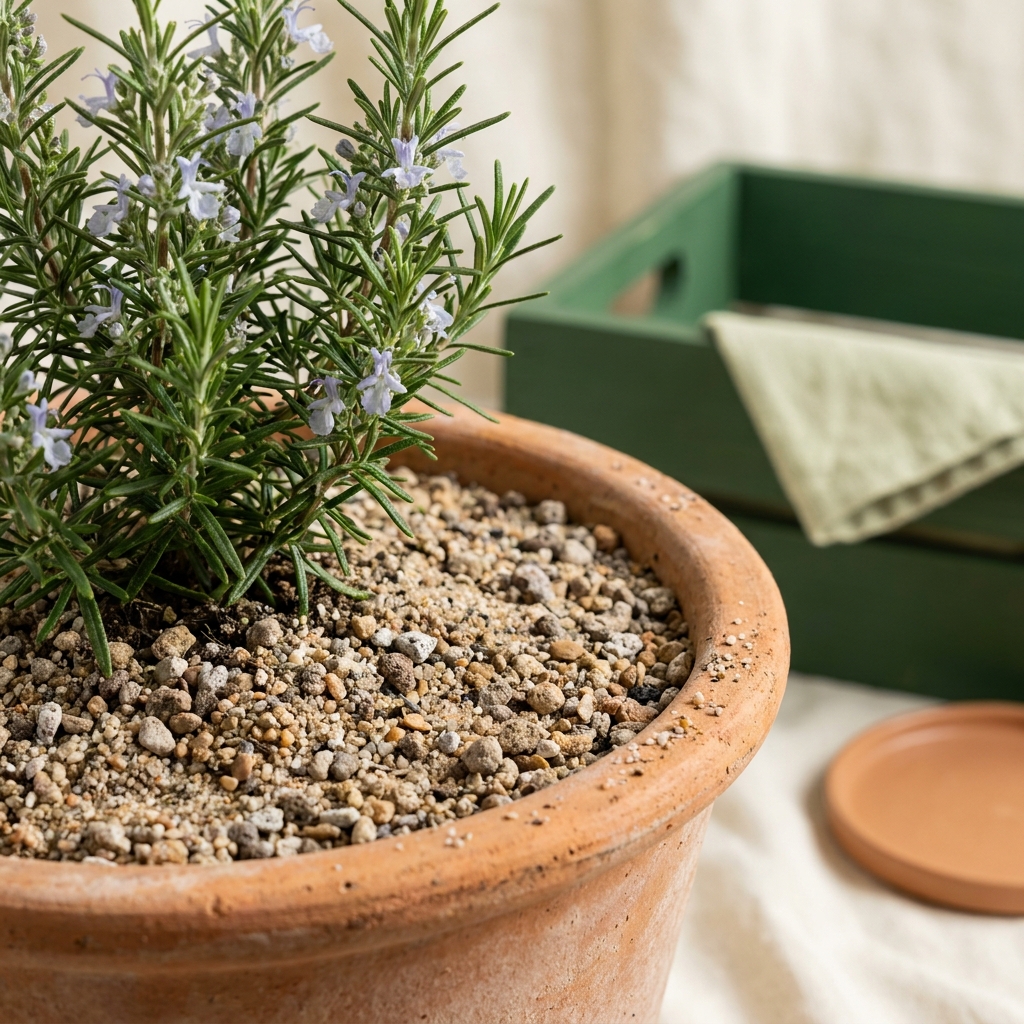
For Mediterranean woody herbs such as rosemary and lavender, use a grittier, sharply drained mix and consider an upright, deeper pot form to keep the crown clear and reduce the time the root zone stays wet after rain or watering Royal Horticultural Society.
Simple drainage tests you can do: water thoroughly and time how long it takes for water to exit the pot, or tip the pot gently after watering to see if the mix releases moisture; if water sits on the surface or drains very slowly, repot into a coarser, container-appropriate mix and check that holes are not blocked Colorado State University Extension.
Choosing pot shape, size and material for your herb goals
Tall, narrow pots such as long-tom shapes are useful when you need depth without taking up much ground; they are often recommended for woody Mediterranean herbs that prefer upright root space and sharply draining soil, because the shape encourages good airflow and keeps crowns drier Royal Horticultural Society, and practical container choices are covered by a useful overview at Urban Harvest Lab.
Volume matters more than finish: a larger container volume gives more soil to hold water and heat, so it buffers temperature swings and reduces how often you must water compared with a small, shallow pot, regardless of whether the pot is terracotta, glazed ceramic, or lightweight plastic, and see our potting mix and plant care guide for mix and volume tips Colorado State University Extension.
Do herbs prefer deep pots or shallow pots in containers?
Most culinary herbs prefer at least 6 to 8 inches of soil depth, while tap-rooted and woody herbs perform better with deeper pots and sharply drained mixes; always provide unobstructed drainage and a free-draining potting medium.
Pros and cons at a glance: tall and deep pots add rooting room and moisture buffering but can be heavier and take more soil; shallow planters are lighter and work well for low, fibrous-rooted herbs provided they drain extremely well and are monitored for rapid drying in hot positions University of Minnesota Extension.
Material choice tips: unglazed terracotta loses moisture through its porous walls and often dries faster than plastic or glazed containers; plastic is lighter and retains moisture better; prioritize volume and drainage behavior over material alone when matching pots to herb types Colorado State University Extension.
Practical scenarios: recommended pots and mixes for common setups
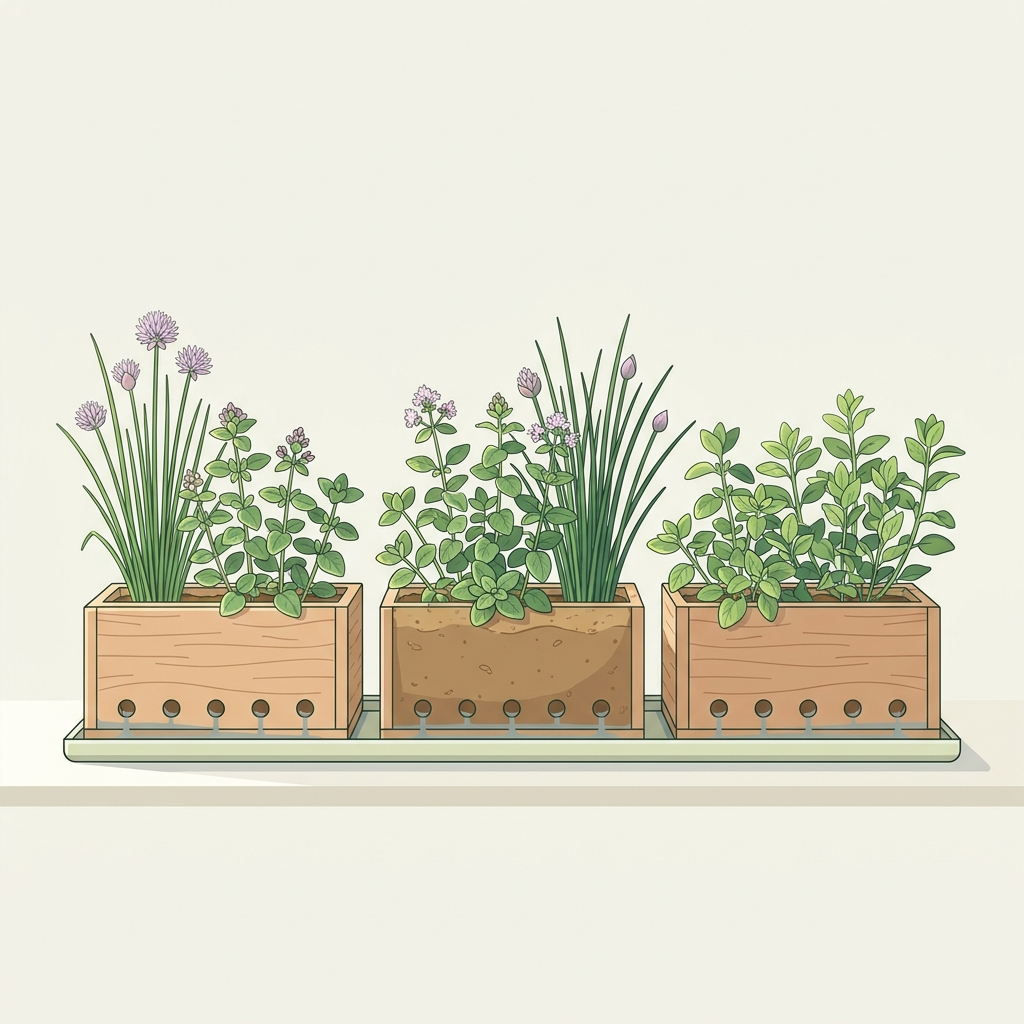
Windowsill and small balcony planters, where space is limited, work best with the 6-8 inch soil depth baseline for mixed culinary herbs such as basil, chives and parsley, paired with a light, free-draining potting mix and clear drainage holes; when you want to keep several herbs together, group plants with similar water needs to reduce stress from mixed moisture requirements University of Maryland Extension.
Mixed herb pots versus single-species pots: mixed pots are convenient but force compromises in depth and moisture; choose a general free-draining container mix and pick herbs with comparable water habits, and when a woody or tap-rooted herb is involved prefer a separate, deeper pot to let that species develop without restricting roots University of Minnesota Extension.
Mediterranean herb containers for rosemary or lavender should be deeper and grittier than a standard windowsill box; these herbs need well-drained conditions, so use a potting medium with added grit or coarse sand and a tall, narrow or upright planter if space allows to keep crowns dry while providing root depth Royal Horticultural Society.
Conservative pot recommendations: use at least a 6-8 inch deep container for most culinary herbs; choose 10-12 inch deep or larger for rosemary, fennel or other deep-rooted plants and increase pot diameter to give more soil volume if you want to reduce how often you water University of Maryland Extension.
Common mistakes, troubleshooting and a short care checklist
Top mistakes include using garden soil in pots, adding gravel to the bottom thinking it helps drainage, choosing containers that are too small for the plant's habit, and failing to verify that drainage holes are open; each of these choices increases the chance of waterlogging or root crowding and reduces plant performance Colorado State University Extension.
Troubleshooting soggy pots: first check that the drainage holes are clear and that a saucer is not holding water into the pot; if holes are blocked or the mix is compacted, gently lift the plant and test the rootball, then repot into a fresh, free-draining container mix designed for pots Washington State University Extension.
Troubleshooting drought-stressed shallow pots: if a shallow planter dries out quickly and the herb shows stress, consider repotting into a larger volume container or moving the pot into a spot with slightly lower sun exposure to reduce evaporative demand; larger pots reduce watering frequency because they hold more soil and buffer temperature swings Colorado State University Extension.
End-of-season and repotting reminders: check for root crowding rather than relying on a calendar schedule; when roots circle the pot or soil dries out very fast after watering, it is time to refresh the mix and move to a larger pot if needed, using a high-quality container medium to restore drainage and nutrient holding University of Minnesota Extension.
Copyable care checklist: verify drainage holes are clear; use a container potting mix formulated for pots not garden soil; match pot depth to root habit with at least 6-8 inches for most herbs and deeper for tap-rooted or woody species; select larger volume to reduce watering frequency; repot when roots indicate crowding rather than on a fixed schedule Colorado State University Extension.
Frequently asked questions
How deep should a general herb pot be?
Most common culinary herbs do well with 6 to 8 inches of usable soil depth; deeper pots are better for tap-rooted or woody herbs.
Does adding gravel to the bottom of a pot help drainage?
No. Adding coarse material under potting mix creates a perched water table and usually worsens drainage; use a free-draining container mix instead.
When should I repot my herbs?
Repot when you see root crowding, circling roots, or rapid drying of the soil after watering, not on a fixed calendar schedule.
Give your herbs enough soil depth and good drainage, and you will see steadier growth and fewer problems. When in doubt, increase container volume and use a container mix made for pots rather than garden soil; these choices are the most reliable ways to keep herbs healthy in containers.
References
- https://extension.umn.edu/garden-and-home/yard-and-garden/gardening-in-minnesota/growing-herbs
- https://extension.umd.edu/resource/growing-herbs-containers-and-indoors
- https://cmg.extension.colostate.edu/gardening-resources/online-garden-publications/vegetables/container-gardens/
- https://gardeninreach.com/guides/plant-pots-and-containers/
- https://www.rhs.org.uk/herbs/containers
- https://earthbox.com/blog/how-to-grow-herbs-in-pots-the-complete-guide
- https://gardeninreach.com/guides/container-watering/
- https://s3.wp.wsu.edu/uploads/sites/403/2015/03/container-drainage.pdf
- https://extension.illinois.edu/container-gardens/container-drainage-options
- https://gardeninreach.com/guides/potting-mix-and-plant-care/
- https://urbanharvestlab.com/blog/containers-planters/best-containers-herbs/