
The journal
What herbs should be cut back for winter? Practical container care for seasonal herbs
how to overwinter herbs in pots, with clear steps on which herbs to cut, move, or protect and easy container winter-care tips.
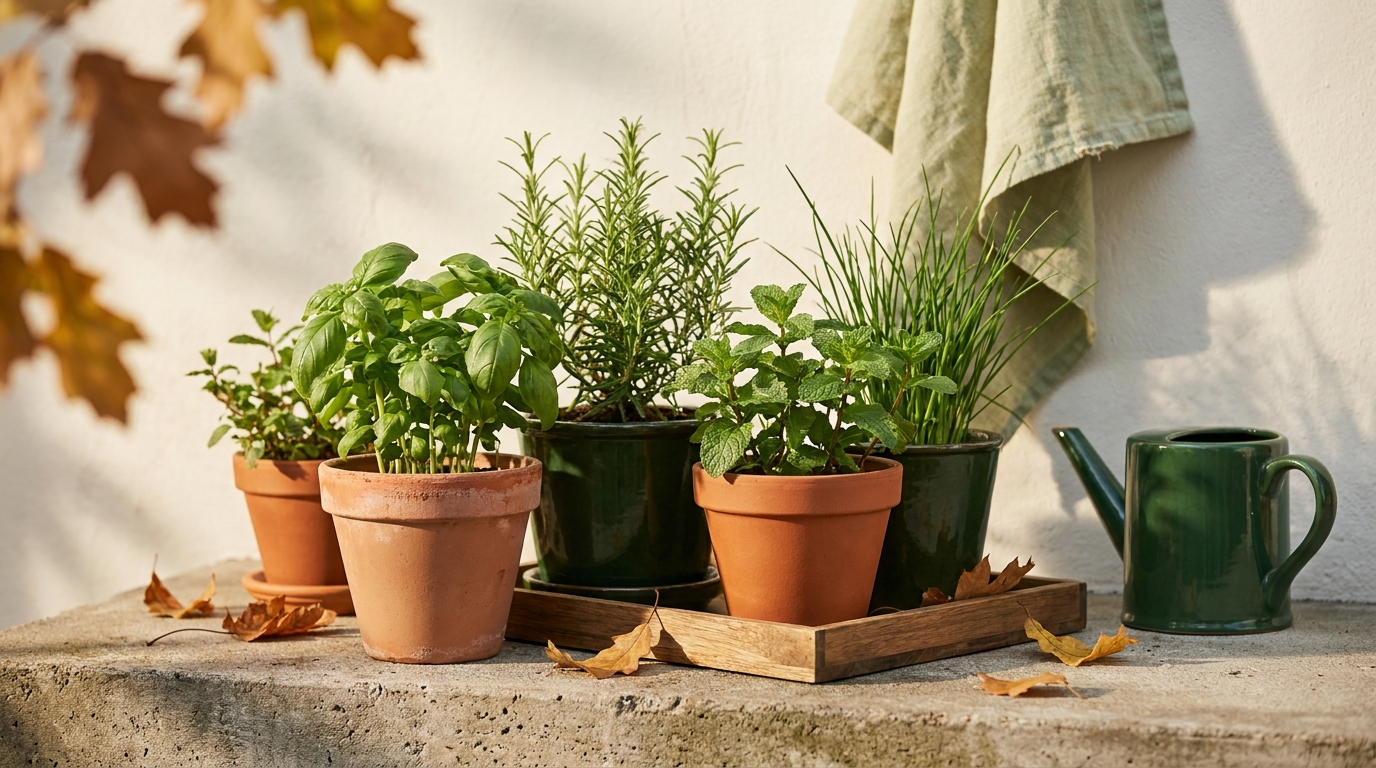
Quick answer and why overwintering in pots matters
For most home gardeners wondering how to overwinter herbs in pots, the short answer is: harvest or move frost-tender annuals like basil before the first frost, give woody Mediterranean herbs only light autumn shaping rather than hard pruning, and cut herbaceous perennials such as mint and chives to soil level only after foliage has browned and growth is dormant. This approach balances plant health with the special risks containers face, including limited root volume and increased freeze-thaw movement that can damage roots.
Container culture raises different winter risks than in-ground planting because pots expose the root ball to wider temperature swings and can hold freezing water that expands, stressing roots and container walls. Protecting or relocating potted herbs matters more in colder regions and for tender plants kept in shallow or lightweight pots, so consider your hardiness zone and the container type when deciding whether to cut back, insulate, or bring plants indoors. University of Minnesota Extension herb guide
Which herbs should be cut back for winter, and how should potted herbs be protected or moved?
Cut herbaceous perennials like mint and chives to the crown after foliage browns, avoid hard autumn pruning on woody Mediterranean herbs such as rosemary and thyme, and harvest or move frost-tender annuals like basil indoors before frost; protect outdoor pots with insulation, drainage checks and sheltered placement.
Quick checklist sentence: If in doubt, harvest or move tender annuals, lightly tidy woody herbs, and wait to cut herbaceous perennials until after frost.
Tender annuals and seasonal herbs: what to cut, what to move
Basil and many summer annuals are frost-tender and should not be hard-pruned outdoors in late fall; instead, harvest remaining leafy growth, take cuttings to root indoors, or move the entire pot inside before frost to preserve flavor and growth. Garden extensions recommend harvesting or relocating basil ahead of cold weather rather than relying on late-season cuts outdoors, because frost will damage tender tissue and reduce chances of successful overwintering indoors. University of Minnesota Extension herb guide
Practical options for tender annuals include: harvest usable leaves and stems for cooking, take several healthy tip cuttings and root them in water or a light potting mix to create small indoor plants, or place the whole container in a cool, very bright indoor spot. Avoid making hard fall prunes that remove most foliage; instead, reduce size with selective harvest and encourage a small, sturdy root ball when moving plants inside. These options let you keep the plant as a short-term houseplant through the season when light and cool conditions allow.
Before moving any potted herb indoors, stop fertilizing several weeks in advance to let growth slow, and inspect plants closely for pests such as aphids or whiteflies so you do not introduce infestations to indoor spaces. Acclimate plants by bringing them into a protected porch or unheated room for a few days to reduce shock, and then move them to their winter location. Pausing fertilizer and checking for pests are simple steps that lower the chance of problems under lower winter light. University of Minnesota Extension herb guide
Some annual herbs transplanted inside will need brighter light than a typical window offers; place them where they receive the most daylight, or supplement with a grow light if necessary. Keep indoor temperatures cooler than typical living rooms when possible, and reduce watering frequency compared with summer to avoid root rot while the plant grows more slowly.
Woody Mediterranean herbs: avoid hard fall pruning
Rosemary, thyme and similar woody Mediterranean herbs are best treated gently in autumn; hard pruning at the end of the season can remove protective wood and increase the risk of dieback when cold or damp weather arrives. Horticultural guidance recommends limiting autumn work to light shaping or removing spent flowering stems, and saving major pruning for spring or after the main flowering period. RHS rosemary care
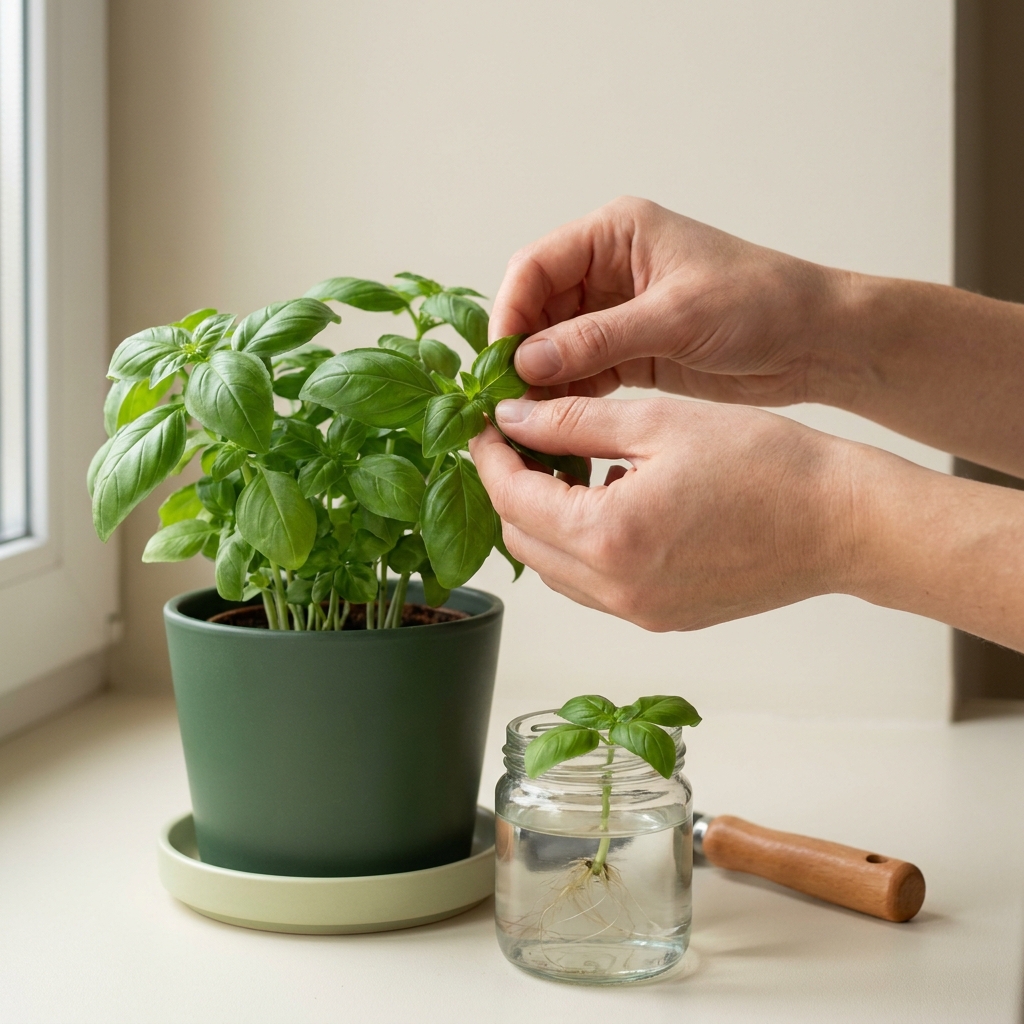
For potted woody herbs, the safe autumn routine is simple: remove obvious dead or completely brown wood, trim only to shape without cutting into old wood, and check that the pot drains freely so roots are less likely to sit in cold, wet soil. Avoid heavy summer-style cuts late in the season because the plant has less time to recover and may be vulnerable to winter dieback if exposed.
If you plan to bring a potted rosemary indoors, know that this species often reacts poorly to warm, dry indoor conditions and can decline if lighting and watering are inappropriate; see the indoor overwintering section for specific care notes to reduce stress. When possible, delay any major pruning until spring, when the plant can put on new growth. RHS rosemary care
Herbaceous perennials: cutting back mint, chives and similar plants
Mint and chives are herbaceous perennials that commonly die back after frost and can be cut to soil level once the foliage has browned and growth is dormant. Wait for the plant to show clear signs of dormancy so crowns and root systems remain intact and ready to regrow in spring. This timing helps protect the dormant crown while removing decaying material that can hide pests or disease.
For potted herbaceous perennials you plan to keep outside, cutting to the crown after the foliage browns is usually sufficient; leave the pot in place and provide winter protection if your zone is cold, or move to a sheltered microclimate. If pots are to be left outside, consider insulating them and grouping them for mutual protection rather than bringing every perennial indoors. Dividing overcrowded clumps is best done in early spring when growth resumes.
When cut to crowns, mint and chives rely on their root systems and crowns to store energy and begin new shoots as temperatures rise. Cutting too early while green growth remains can reduce stored reserves, so prefer to wait until autumn browning is complete. In milder regions, some perennial herbs will retain semi-green growth longer and can be trimmed closer to the dormant period.
Protecting potted herbs outdoors: insulation, drainage and placement
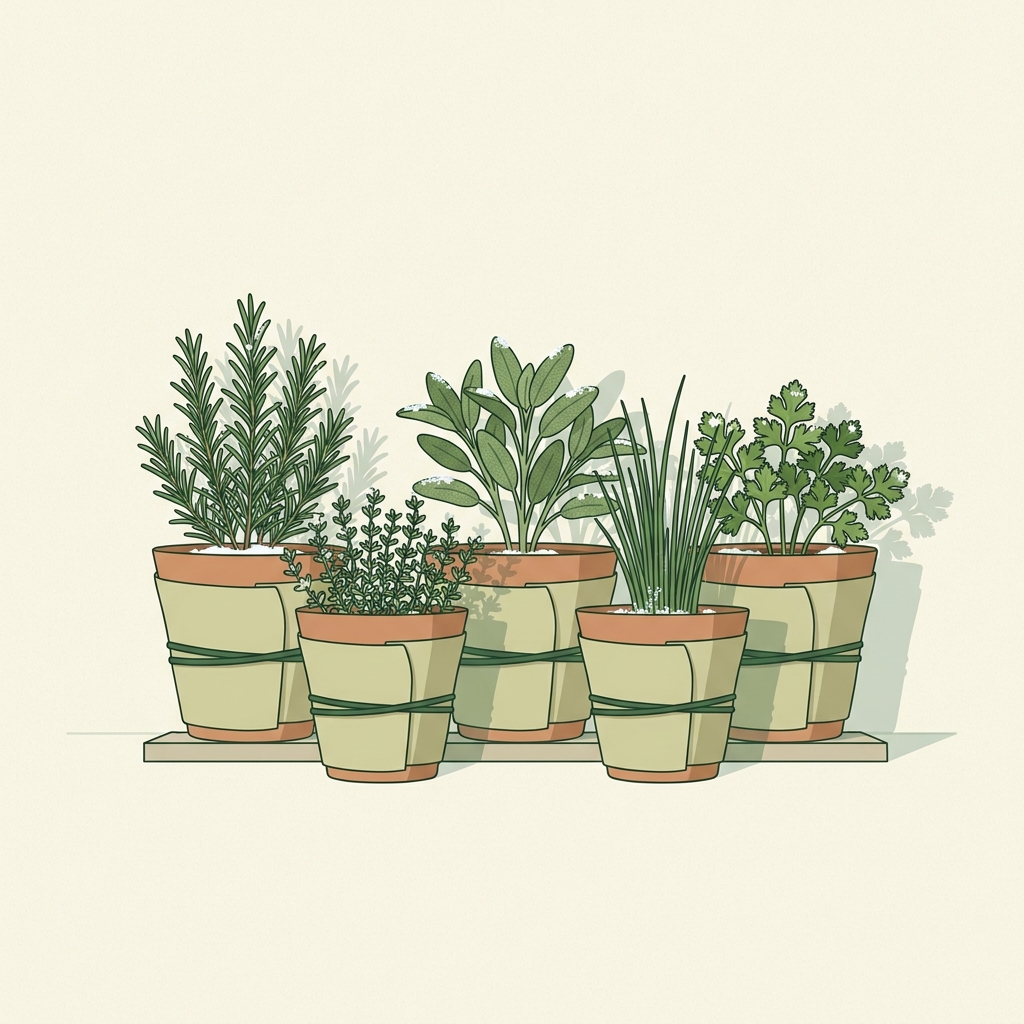
Potted herbs outdoors face added risk from freeze-thaw cycles and restricted root volume, so clustering pots against a sheltered wall, insulating containers, and ensuring free drainage are effective measures to reduce root and pot damage. Grouping pots reduces wind exposure and creates a small shared microclimate that moderates temperature swings for the root balls. Horticultural guidance notes clustering as a simple first step for winter protection. See our seasonal container gardening guide for related ideas.
Insulation options include wrapping pots with bubble wrap, surrounding containers with straw or mulch, or placing pots inside larger containers filled with insulating material to buffer the root ball from rapid freezing and thawing. These methods reduce the amount of freeze-thaw movement the root ball experiences and lower the risk of cracking pots or heaving the plant out of its soil. Bubble wrap is lightweight and quick to apply, while mulch or straw adds both insulation and airflow control. Brooklyn Botanic Garden offers similar winter wrapping tips.
Drainage is critical: make sure every container has free outlets so water does not pool and freeze around roots. Raise pots slightly off the ground on feet or tiles to allow runoff, and avoid leaving saucers full of water under pots during freeze nights. In cold regions, consider moving containers into a protected lean-to or against a south-facing wall to access a warmer microclimate. Merrifield Garden Center
When selecting insulating materials, match the approach to the pot material and plant needs: terracotta pots are porous and lose heat quickly so benefit from thicker insulation, while plastic or fiberglass pots retain warmth better and may need only minimal wrapping. Consider pot size too: larger pots buffer temperature changes better than small ones, so portable small pots often need the most protection. Group pots of similar hardiness together to make seasonal decisions easier. For more on pot selection and materials see our plant pots and containers guide.
Bringing herbs indoors: light, temperature and watering tips
Acclimating potted herbs before bringing them fully inside reduces shock and winter problems. Move plants first to a sheltered porch or cool room for several days, stop fertilizing beforehand to slow active growth, and inspect for pests so you do not bring infestations indoors. These steps lower stress when light levels and airflow change. University of Minnesota Extension herb guide Iowa State Extension
Once indoors, tender herbs such as rosemary need very bright light, cool temperatures and sparing watering so the root ball remains just moist but not wet. Avoid placing rosemary in warm, dry rooms where it may drop foliage; instead choose the brightest cool spot available, and water less often than you would outdoors. This balance reduces root rot risk and keeps plants from suffering heat stress under low light. RHS rosemary care
monitor indoor light and pests for overwintered herbs
For indoor lighting, measure available light and supplement with a grow light if windows do not provide consistent bright levels; if you cannot add light, prioritize moving only a few tender pots indoors and accept that others may not thrive. Reduce watering frequency compared with summer because plant metabolism slows in lower light and cool temperatures; check the top of the root ball and only water when the top inch is slightly dry. RHS rosemary care
Common indoor stresses include overwatering, warm dry air from heating systems, and low light. To troubleshoot, check soil moisture, move the pot to a cooler brighter spot, and inspect leaves for pests or sticky residues that indicate insects. A gentle rinse or a targeted removal of pests before moving the plant indoors lowers the chance of infestations spreading to other houseplants. University of Minnesota Extension herb guide
Common mistakes, seasonal checklist and quick action plan
Top mistakes to avoid are hard fall pruning of woody herbs, moving tender herbs inside without acclimation, overwatering during winter, and leaving pots with poor drainage exposed to repeated freeze-thaw cycles. These common errors are the ones most likely to cause dieback, root damage, or pest outbreaks.
Seasonal one-page checklist: harvest or move frost-tender annuals; stop fertilizing several weeks before moving plants; inspect and treat pests; cluster and insulate outdoor pots; ensure free drainage and elevate pots; bring a few tender pots indoors to bright cool spots and water sparingly. Use the checklist as a quick pre-winter routine to reduce common failures and keep your container herbs healthy next spring. See our guides for more seasonal resources. University of Minnesota Extension herb guide

Try one improvement this season, such as insulating one group of pots or acclimating a plant before bringing it inside, and observe the result; small changes often produce clear improvements in overwinter survival of potted herbs.
Frequently asked questions
When should I cut back mint and chives for winter?
Wait until foliage browns after frost and then cut to soil level; crowns will remain dormant and regrow in spring.
Can I prune rosemary hard in the fall to reduce size?
No, avoid hard fall pruning; do only light shaping and save major pruning for spring or after flowering.
How do I protect potted herbs from freeze damage outdoors?
Cluster pots against a sheltered wall, insulate them with bubble wrap or mulch, ensure free drainage, and raise pots slightly to improve runoff.
With a few small adjustments—timing your cuts, protecting pots, and choosing which plants to move indoors—you can improve overwinter survival and have healthy herb pots ready in spring. Try one simple change this season and note the difference for next year.
References
- https://extension.umn.edu/vegetables/growing-herbs
- https://www.rhs.org.uk/plants/15843/rosemary/details
- https://gardeninreach.com/guides/seasonal-container-gardening/
- https://www.bbg.org/article/overwintering_potted_plants
- https://www.merrifieldgardencenter.com/6-tips-to-overwinter-your-containers/
- https://gardeninreach.com/guides/
- https://gardeninreach.com/guides/plant-pots-and-containers/
- https://yardandgarden.extension.iastate.edu/how-to/overwintering-unplanted-trees-shrubs-and-perennials
Product options for this topic
As an Amazon Associate I earn from qualifying purchases. These are researched options, not hands-on test results. Check the exact size or model, current price and availability on Amazon.
| Product option | Fit and limits to check | Retailer |
|---|---|---|
| FELCO 6 pruning shears | A bypass-pruner option to compare against your hand size and the plant material. Follow blade-care instructions and use a tool suited to the cut. | View on Amazon |
| XLUX long-probe soil moisture meter | A probe to supplement checks of potting-mix moisture. Readings vary with mix and placement; combine them with pot weight and a finger check. | View on Amazon |