
The journal
How to stake up tomato plants in pots? Practical container staking and training
how to support tomatoes in pots with stakes, cages or trellises; install supports at planting and use soft ties for safe, stable container tomato growth.
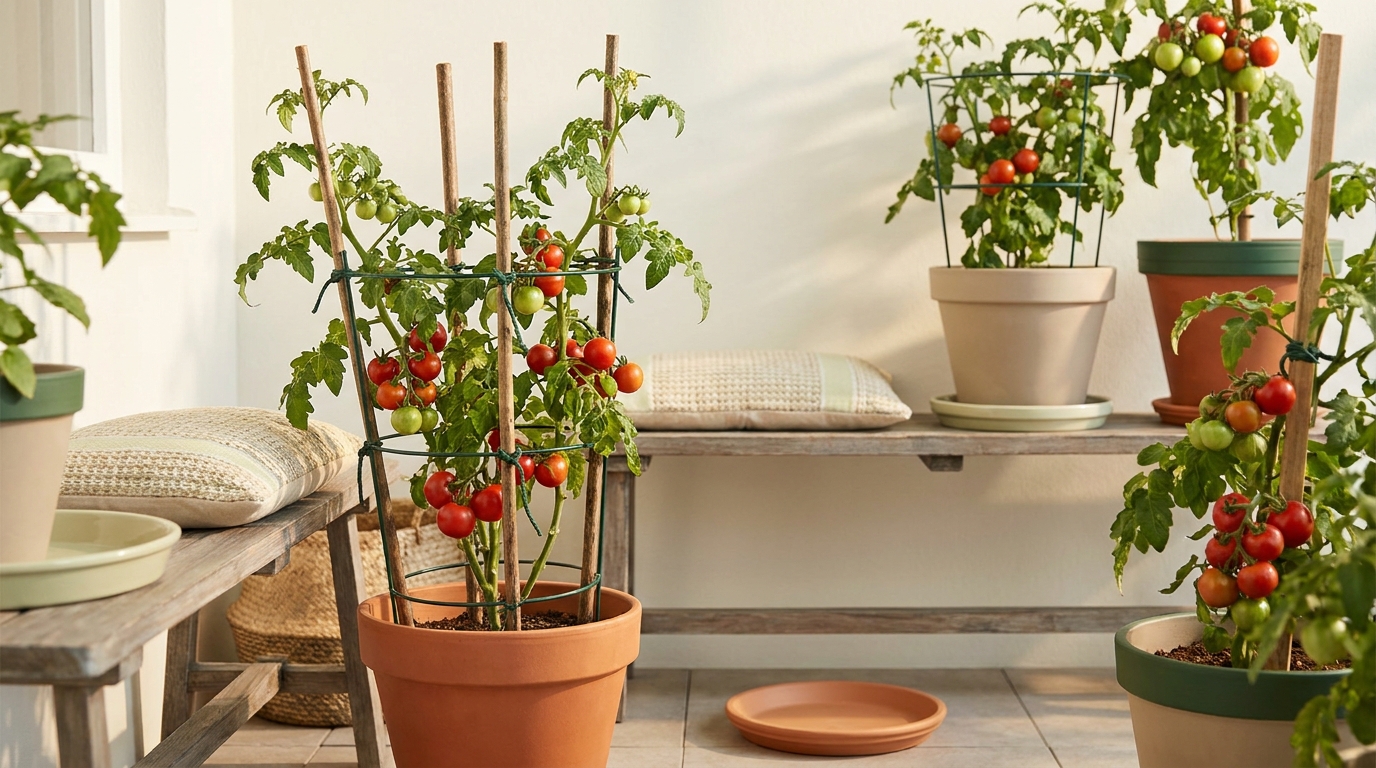
Quick answer and context: should you support tomatoes in pots?
Short practical answer
Yes, install supports when you plant tomatoes in containers, not after roots are established, because adding a stake or cage later risks root disturbance and reduces early stability for the rootball, which makes pot-grown plants more likely to wobble or topple as they grow; this approach is recommended by extension guidance RHS Tomatoes: grow your own.
Container tomatoes face special stresses: pots dry faster and nutrients leach more quickly than ground soil, and a shallow root area gives the plant less anchorage against wind-topple, so supports that are fixed at planting time reduce risk and make later training easier University of Minnesota Extension Growing tomatoes.
Why container tomatoes need supports early
In a pot, the rootball is compact and closely packed against the container sides, so pushing in a post or forcing a cage through foliage late in the season can cut or compress roots; putting supports in at planting time protects the root system and establishes a stable framework before the vine gains weight, a point made in modern extension guidance RHS Tomatoes: grow your own.
Both determinate and indeterminate types need support, but for different reasons: determinate bush types need sturdy cages to carry fruit load without heavy pruning, while indeterminate types need tall, rigid stakes or trellises and regular tying so stems stay upright and air moves around the plant University of Maryland Extension Tomatoes.
Choose the right support for your pot and tomato variety
Compare stakes, cages and trellises
Stakes are simple and space-efficient for indeterminate tomatoes trained to a single or double leader; a tall, rigid stake gives height with a small footprint and is easy to tie into as the plant grows NC State Extension Training and Pruning Tomatoes. See stake recommendations from Penn State Extension.
Cages give built-in support around a bush habit and work well for determinate varieties because they hold fruit clusters without frequent tying, but choose a cage with legs you can set deeply or secure so the pot will not tip under load Penn State Extension Growing Tomatoes in Containers.
Trellises and A-frames are useful when you have several containers close together or want a neat vertical row on a balcony; they spread the load across a structure and can be anchored to a railing or wall to reduce reliance on the pot for stability NC State Extension Training and Pruning Tomatoes.
Think about cultivar vigor: a compact determinate will not need the same 7 to 8 foot height an indeterminate will try to reach, so match the support height and thickness to avoid a top-heavy plant that tips in wind; extension recommendations stress matching support strength to the variety and pot size RHS Tomatoes: grow your own.

Pot size limits root anchorage, so in a small patio pot choose supports that transfer forces to the ground or a building element rather than relying solely on the pot; for larger planters you can set deeper legs or use wider cages for stability Penn State Extension Growing Tomatoes in Containers. See our plant pots and containers guide here.
Install supports at planting time: practical step by step
Tools and materials list
Gather a sturdy stake or cage, soft wide ties, a mallet or hammer if you need to drive legs, potting mix, and a small anchoring method like an L-bracket or buried weight; having these ready before you plant makes installation clean and fast and helps avoid later root damage University of Minnesota Extension Growing tomatoes.
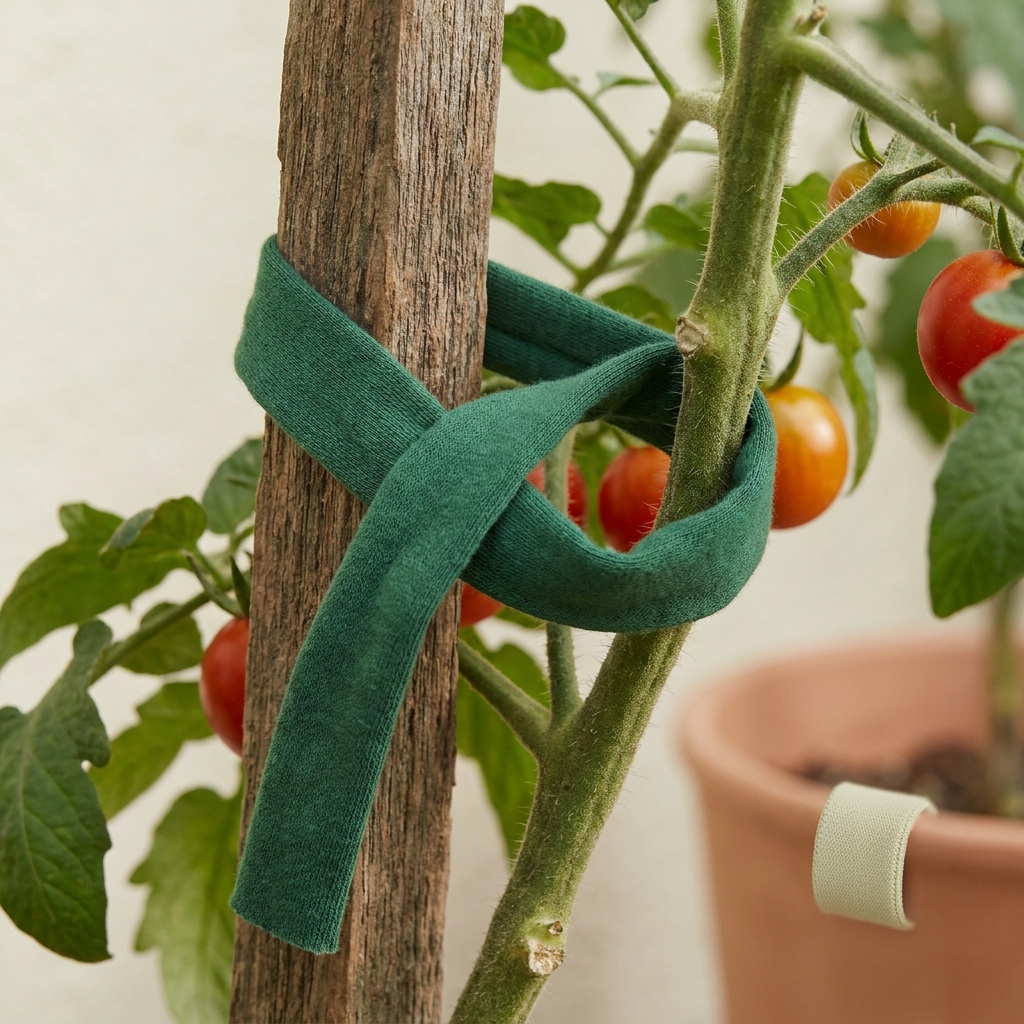
Soft ties can be cloth strips, plant tape, or purpose-made soft garden ties; pick wide, flexible material rather than thin twine to prevent abrasion and check ties frequently as the stem thickens University of Maryland Extension Tomatoes.
How to set stakes or cages without damaging roots
Step 1, choose location: place the pot where it will get the best sun and where the support can be anchored if needed; consider wind exposure so you can place supports on the sheltered side or anchor them to a fixed point RHS Tomatoes: grow your own.
Step 2, position the support: set a stake or a cage in the pot before adding the plant, so the legs or the stake pass through the pot and into the centre of the soil without moving the rootball; doing this protects roots and saves time later University of Minnesota Extension Growing tomatoes.
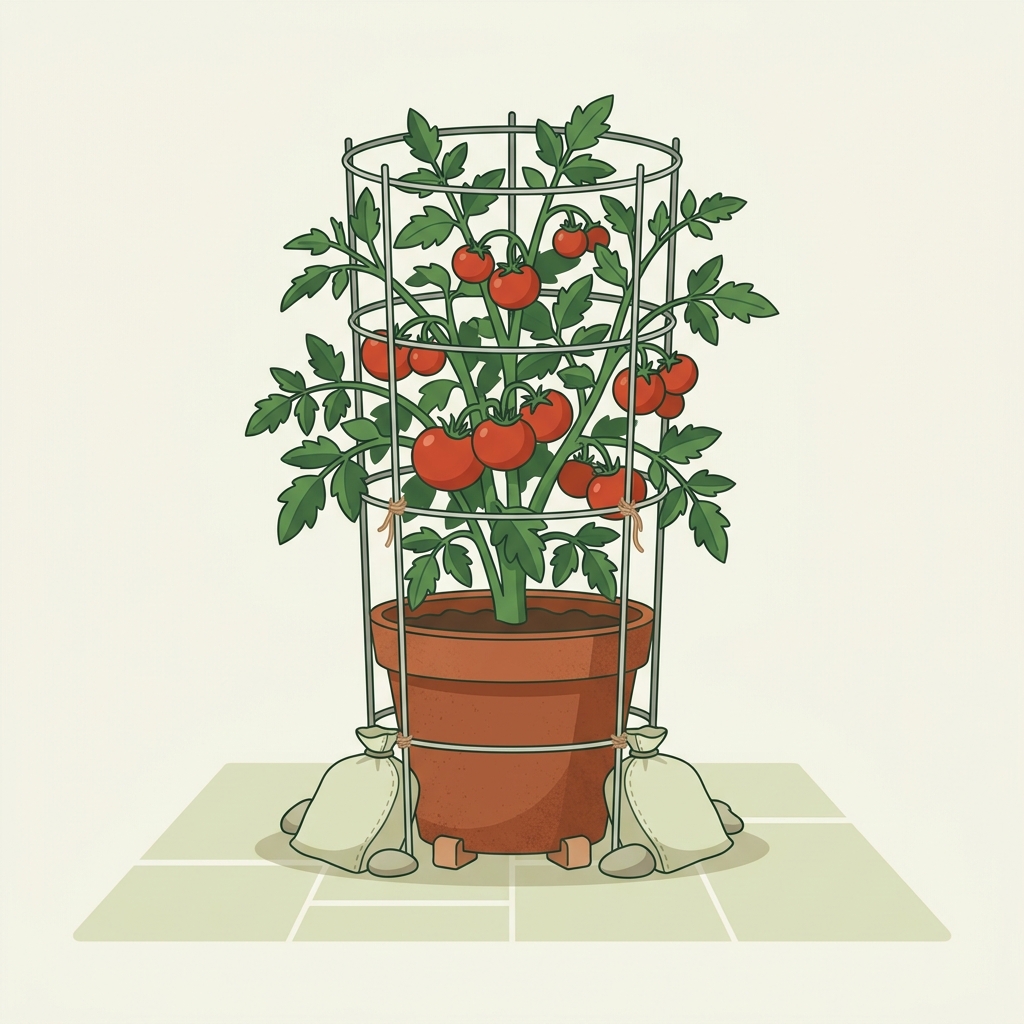
Step 3, depth and anchoring: drive stakes or cage legs deep enough that at least a third to half the supports length is below the soil line or press cage legs firmly into the soil; for light pots, secure the support by tying the pot to a railing, adding weights to the base, or using an external anchor to prevent tipping Penn State Extension Growing Tomatoes in Containers. See staking and pruning guidance from UGA.
Step 4, planting: position the rootball next to the installed support and backfill gently, firming soil around the support legs so everything is stable but roots are not compressed; water in after planting to settle soil and check that the support stays vertical RHS Tomatoes: grow your own.
Materials checklist quick view: rigid stake or robust cage, soft wide ties, mallet or hammer for leg setting, weights or anchors for windy sites, and quality potting mix with steady feed for containers University of Maryland Extension Tomatoes.
Training, tying and pruning for indeterminate tomatoes
Single or double leader training on tall supports
Indeterminate tomato varieties keep growing and fruiting, so choose tall, sturdy supports and decide whether you want a single-leader system, where you keep just one main stem, or a double-leader system that allows a second stem for extra fruit while keeping the plant manageable; extension advice supports leader training for indeterminate types NC State Extension Training and Pruning Tomatoes.
To train a single leader, remove side shoots regularly below the first flower cluster and tie the main stem loosely to the stake at intervals; for a double leader, allow one lateral to become a co-leader and manage both with ties so each stem has room and airflow University of Maryland Extension Tomatoes.
How should I support a tomato plant grown in a pot to avoid root damage and tipping?
Install a suitable stake, cage or trellis at planting time, anchor the support deeply or to a fixed point, use soft wide ties in a loose figure eight and adjust ties regularly as the plant grows to prevent abrasion and toppling.
Tying technique and sucker management
Tie stems with a loose figure eight using soft, wide material so the tie cushions the stem against the support while avoiding constriction; adjust ties as the stem grows to keep them loose and replace or move them before they cut into the plant RHS Tomatoes: grow your own.
Selective sucker removal keeps the plant airy and focused on fruiting. Remove small suckers early by pinching them out, and avoid heavy pruning that reduces yield; leave a few healthy shoots near the top if you want extra fruit but monitor airflow to reduce disease risk NC State Extension Training and Pruning Tomatoes.
Adjust ties every one to two weeks when plants are actively growing, and watch for stem abrasion; soft tie material in a figure eight prevents rubbing and supports stems without harming them University of Maryland Extension Tomatoes.
Cages, determinate varieties and decision criteria
When cages are better than stakes
Determinate or bush tomatoes set much of their crop in a short window and respond poorly to heavy pruning, so a sturdy cage that supports the plant and fruit clusters with minimal intervention is often the best choice for container growing Penn State Extension Growing Tomatoes in Containers.
Choose a cage whose diameter and height match the plant habit and pot: a too-small cage will not hold large fruit clusters and a too-tall lightweight cage may act like a sail in wind, so prefer rigid cages with legs you can set deep or secure to the pot base University of Maryland Extension Tomatoes.
Minimal pruning for bush types and load support
With determinate types, prune sparingly: remove only dead or damaged foliage and avoid removing fruiting shoots, because over-pruning reduces total harvest; rely on the cage to carry the fruit load and monitor for signs that the plant is leaning or the pot is destabilizing Penn State Extension Growing Tomatoes in Containers.
If fruit load increases and the pot begins to tip, reinforce the cage by adding weights to the pot base, securing legs to a deck or railing, or moving the pot to a more sheltered location; these adjustments are preferable to removing productive shoots University of Maryland Extension Tomatoes.
Watering, feeding and common mistakes to avoid
Why containers need more frequent care
Container tomatoes dry out faster and experience faster nutrient leaching than in-ground plants, so they need more frequent watering and a consistent fertilizer schedule to keep fruit developing properly and to reduce disorders such as blossom end rot University of Minnesota Extension Growing tomatoes. See our container watering guide here and practical staking notes on stake options.
Use regular checks rather than a fixed schedule: feel the top and lower soil, and water deeply enough to wet the rootball but avoid waterlogging; paired with steady feeding, this reduces stress that makes stems brittle and supports more effective University of Maryland Extension Tomatoes.
Typical errors and how to prevent them
Common mistakes include installing supports too late, using narrow ties that abrade stems, under-anchoring supports, and over-pruning determinate types; prevent these by planning supports at planting, using soft wide ties, securing supports to an external point if needed, and pruning minimally for bush varieties RHS Tomatoes: grow your own.
Check ties every week when plants are growing rapidly, loosen or move ties before they constrict, monitor feeding to prevent blossom end rot, and re-anchor supports if the pot shifts after heavy rain or wind University of Minnesota Extension Growing tomatoes.
a short list to anchor and stabilize container supports
Quick maintenance checklist
Weekly, look for loose ties, leaning supports, drying soil and yellowing leaves; tighten anchors and replace ties as needed to prevent sudden failures when fruit adds weight University of Maryland Extension Tomatoes.
If a plant starts to tip repeatedly, move it to a more sheltered spot or add a simple brace to the pot rim rather than removing productive shoots; changing the support anchoring is usually the fastest, least damaging fix Penn State Extension Growing Tomatoes in Containers.
Frequently asked questions
When should I install supports for tomatoes in pots?
Install stakes or cages at planting time to avoid root damage and provide early stability for container-grown tomatoes.
Which support is best for a bush tomato in a pot?
A robust cage sized to the plant and pot is usually best for determinate bush tomatoes, with minimal pruning to preserve yield.
How often should I check ties and watering in containers?
Check ties weekly during active growth and water when the top 2 to 3 centimeters of soil feel dry, adjusting feed frequently for container crops.
Supporting tomatoes in pots is a small upfront step that pays off through less root stress, fewer toppled plants and better harvests. With the right support, soft ties and a routine for watering and feeding, container tomatoes can be productive and manageable in small spaces.
References
- https://www.rhs.org.uk/vegetables/tomatoes/grow-your-own
- https://gardeninreach.com/guides/
- https://extension.umn.edu/vegetables/growing-tomatoes
- https://extension.umd.edu/resource/tomatoes
- https://extension.psu.edu/stake-your-tomatoes/
- https://gardeninreach.com/articles/balcony-garden-windy-plants-guide/
- https://gardeninreach.com/guides/plant-pots-and-containers/
- https://fieldreport.caes.uga.edu/publications/C1150/staking-and-pruning-tomatoes-in-the-home-garden/
- https://gardeninreach.com/guides/container-watering/
- https://www.foodgardenlife.com/learn/stake-tomato-plants