
The journal
What plants are good for growing in pots in windy conditions? Practical balcony guide
balcony garden windy plants advice for choosing wind-tolerant container plants, potting and care to keep exposed balconies thriving.
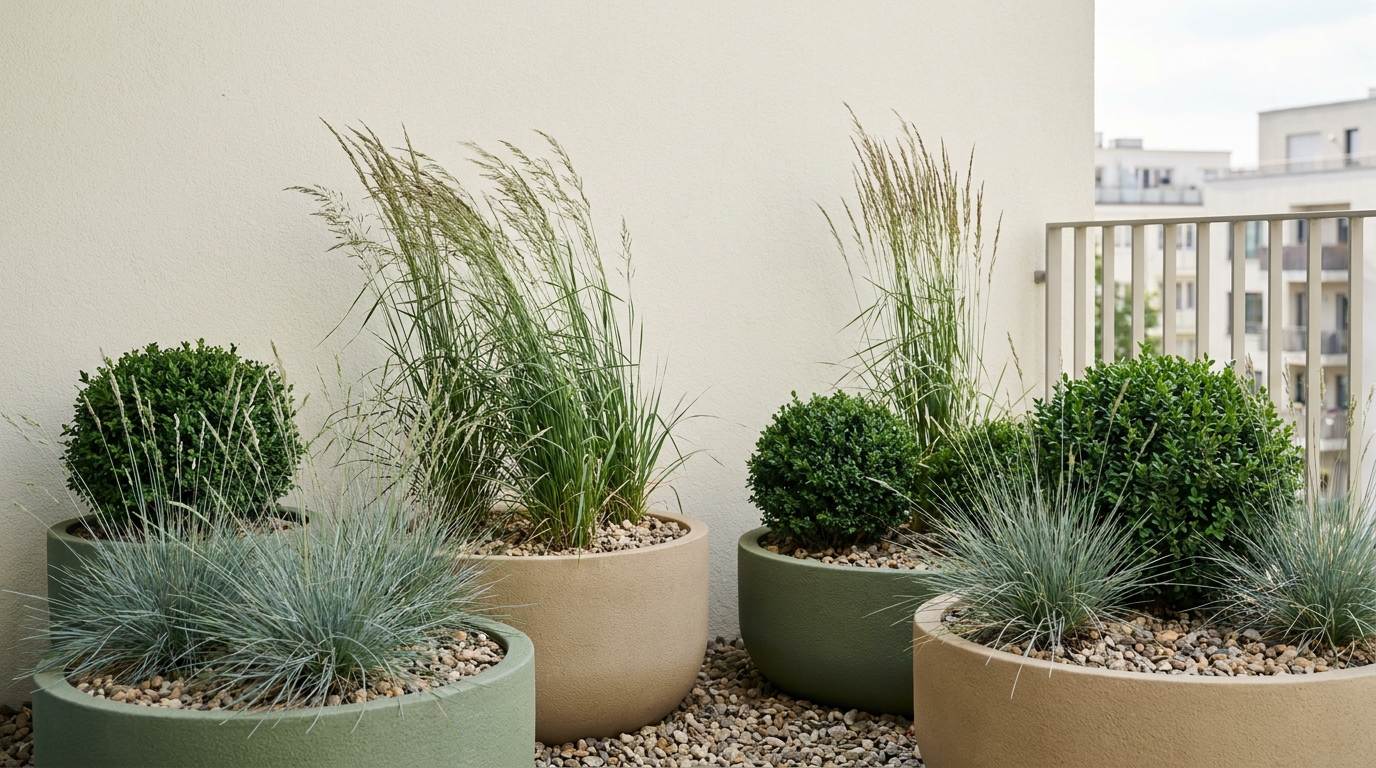
Quick answer and why windy conditions matter for balcony gardens
If you need a short, usable answer: choose plants with low profiles or flexible stems, tough or small leaves, and strong root systems, and pair them with heavy, wide-based containers and grouped placement to reduce tipping and moisture loss. Start with evergreen shrubs, ornamental grasses, low succulents and compact perennials in pots to make a balcony garden windy plants setup that copes with frequent breezes.
Wind affects potted plants differently than those in the ground. Containers dry faster because they hold less soil and expose roots to air, and leaves lose water more quickly through transpiration. Wind also causes mechanical wear, from frayed leaf edges to broken stems, and can strip lightweight potting mix from shallow pots during gusts.
Because containers create their own microclimate, you can use pot choice, soil mixes and placement to reduce the worst effects. A heavy base, a dense soil mix with good water retention and grouping pots close to a wall or railing will slow drying and lower the chance of tip-over. These steps make it practical to maintain a pleasing balcony garden windy plants arrangement even on exposed terraces.
Which plants are naturally suited to windy balconies
What counts as a windy balcony
Start by assessing your balcony: does it feel gusty most afternoons, or only during storms? Is the exposure direct from one side, or do winds wrap around the building? A balcony that gets steady wind is different from one that only receives occasional gusts, and that matters for plant choices and watering routines.
Windy balconies often have warmer daytime air movement and faster evaporation, so leaning toward plants that tolerate occasional drought and have protective foliage will reduce maintenance and plant stress.

How wind affects potted plants compared with garden beds
Compared with garden beds, containers have limited soil volume, so roots cannot reach a deep moisture reserve. That means the plants you pick should either use water sparingly or be placed in mixes that retain moisture. Also, in a pot the root ball can shift and become rootbound more quickly, so pick plants that adapt to confined roots or plan regular repotting.
Plants in pots also receive the full brunt of wind without the sheltering effect of adjacent soil. Choosing hardy forms with flexible stems or low, mounded habits reduces the chance of damage.
Which plants and practices help container gardens survive on windy balconies?
Choose plants with low profiles or flexible stems, use wide heavy pots and groupings to reduce wind exposure, and adopt watering and support routines that account for faster drying and mechanical stress.
Plant types and traits to prioritize
When selecting species for windy balconies, focus on physical traits more than specific names. Look for flexible stems that bend rather than snap, low or mounded profiles that present less surface area to gusts, and foliage with small, thick, or waxy leaves that lose less water. Deep or fibrous root systems help plants anchor in a pot, but in small containers many plants will rely on you for stability through correct pot choice and anchoring.
Evergreen shrubs and compact evergreens are helpful for year-round structure because they keep a protective presence through windier seasons, while ornamental grasses and plants with tough, narrow leaves shrug off abrasion. Succulents and other waterwise plants suit very exposed positions because their leaves store water and often have protective surface features.
Examples of plant groups that tend to tolerate wind
Think in groups rather than exact cultivars to give yourself flexibility. Ornamental grasses offer movement and flexible stems that bend, making them tolerant of regular wind. Low evergreen shrubs and small conifers provide structure and shelter and usually benefit a mixed container planting by breaking wind locally. Succulents and rosetted plants perform well on exposed terraces where drought and abrasion are common. Tough-leaved perennials and small-leaved hedging plants can also make effective screening and hold up to repeated exposure.
Using these groupings, you can plan containers that balance movement, shelter and low maintenance so your balcony garden windy plants collection remains attractive and resilient across seasons.
Designing containers and placement to reduce wind stress
Choosing pot type, size and weight
Pick a pot with a wide base and enough volume to hold an appropriate soil mass for the plant you choose. Wider pots are inherently more stable than tall, narrow ones when wind gusts arrive.
Use internal ballast where needed: for rented spaces or where you cannot permanently fix pots, adding dense filler near the bottom of the container increases its resistance to tipping. Combine ballast with a well-structured soil mix so the plant has both stability and access to moisture.
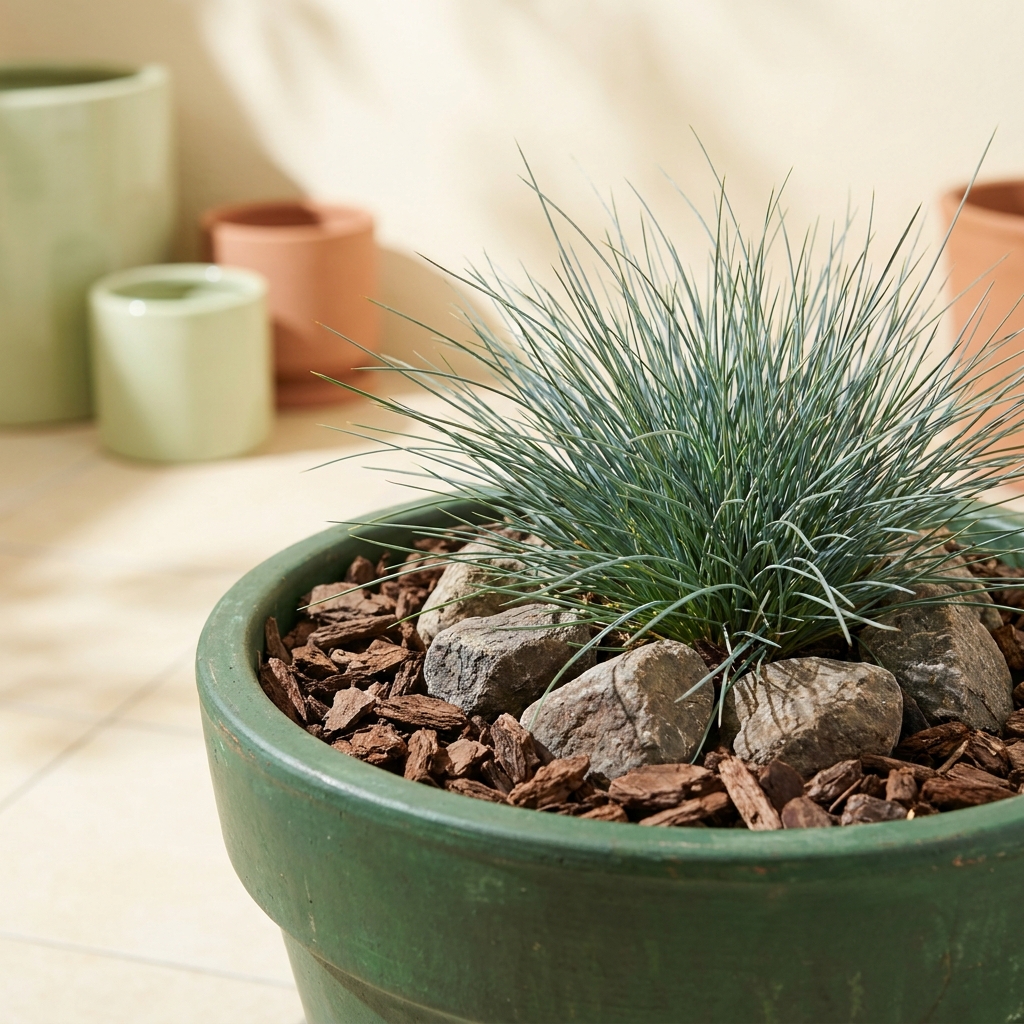
Consider pot profile too. A low, bowl-like container reduces the sail effect compared with a tall cylinder. If you like taller forms, place them near the balcony inner wall so the building gives additional shelter.
Placement strategies and windbreak options for balconies
Placement matters more than many gardeners expect. Grouping pots tightly creates a pocket of calmer air and reduces mutual exposure. Put heavier, taller pots at the back close to the wall, and lower, more wind-tolerant pots near the edge. This layering helps maintain sightlines while offering shelter for more delicate plants.
Use existing architectural features: a corner, a parapet, or a neighboring wall will reduce wind speed and create microclimates. Temporary screens such as removable lattice, a row of dense evergreen planters, or even a foldable fabric windbreak can reduce the worst gusts while preserving airflow. Avoid creating a completely sealed barrier; some airflow prevents stagnation and reduces disease risk.
If you must use a railing, mount planters securely with rated brackets and choose planters designed for that method. Railing boxes should be anchored and not rely solely on the lip of the balcony, and always check load limits for safety. For tenants, use freestanding groupings and temporary anchors that do not damage the building.
Practical care: watering, feeding, staking and inspection routines
Adjusting irrigation and soil mix for windy exposure
Wind increases evaporation and transpiration, so check moisture more often than you would for an equivalent plant in the ground. A good practice is to gently probe the top few centimeters of soil; when it feels dry to the touch, water. Mulch the top of containers with a coarse layer of bark, gravel or decorative mulch to slow surface evaporation and to prevent potting mix from blowing away during gusts.
Use a potting mix formulated for containers that balances drainage with enough organic matter to hold moisture. Avoid mixes that are overly light or loose on very exposed balconies because wind can displace fine material and dry the root ball quickly. A higher proportion of water-retentive components will give you more buffer between watering events.
Common items to support and anchor potted plants in windy locations
Short maintenance checklist to prevent wind-related problems
Inspect plants after every strong gust for torn leaves, leaning stems or soil loss, and correct problems early. Remove shredded or dead foliage so the plant focuses energy on recovery. For wind-prone pots, make routine checks part of your watering round to catch issues without extra effort.
Stake taller plants with flexible ties that allow some movement. Rigid tying can transfer wind stress to the rootball and cause breakage. Instead, give a little slack so stems move and strengthen naturally while remaining supported enough to prevent snapping.
Fertilize conservatively; plants under constant wind stress often use resources differently than sheltered plants. A balanced, slow-release feed applied according to label intervals is usually sufficient for container plants in exposed positions. Heavy feeding can encourage soft, wind-susceptible growth.
Common mistakes and how to fix them
Avoiding unstable pots and improper soil
Mistake 1, unstable pots: using tall, lightweight containers on an exposed edge. Fix: swap to a wider, heavier pot or add ballast and move the pot closer to a wall or grouping of other containers to reduce tipping risk.
Mistake 2, light, loose soil: using a peat-heavy or very airy mix that dries and blows out of the pot. Fix: replace the top layer with a denser container mix and apply a surface mulch to keep fines in place.
Overpruning, overexposure and incorrect support
Mistake 3, overpruning: cutting back too hard to force compact growth can expose inner stems and make plants more vulnerable to wind. Fix: prune more gradually and maintain a protective outer canopy when you can.
Mistake 4, incorrect support: tying stems tightly to stakes without allowing natural flex. Fix: use soft, elastic ties and leave some movement so stems strengthen while staying upright. Mistake 5, ignoring seasonal movement: leaving screening plants in the same exposed spot through winter when they need extra protection. Fix: move vulnerable pots to a sheltered spot or add temporary windbreaks for cold months.
Decide when to move a plant by watching its growth and condition. If a plant repeatedly loses foliage or fails to establish after a season despite correct care, it may need relocation to a more sheltered site or replacement with a more tolerant group.
Sample plant combinations and seasonal scenarios for windy balconies
Three sample container schemes for different wind exposures
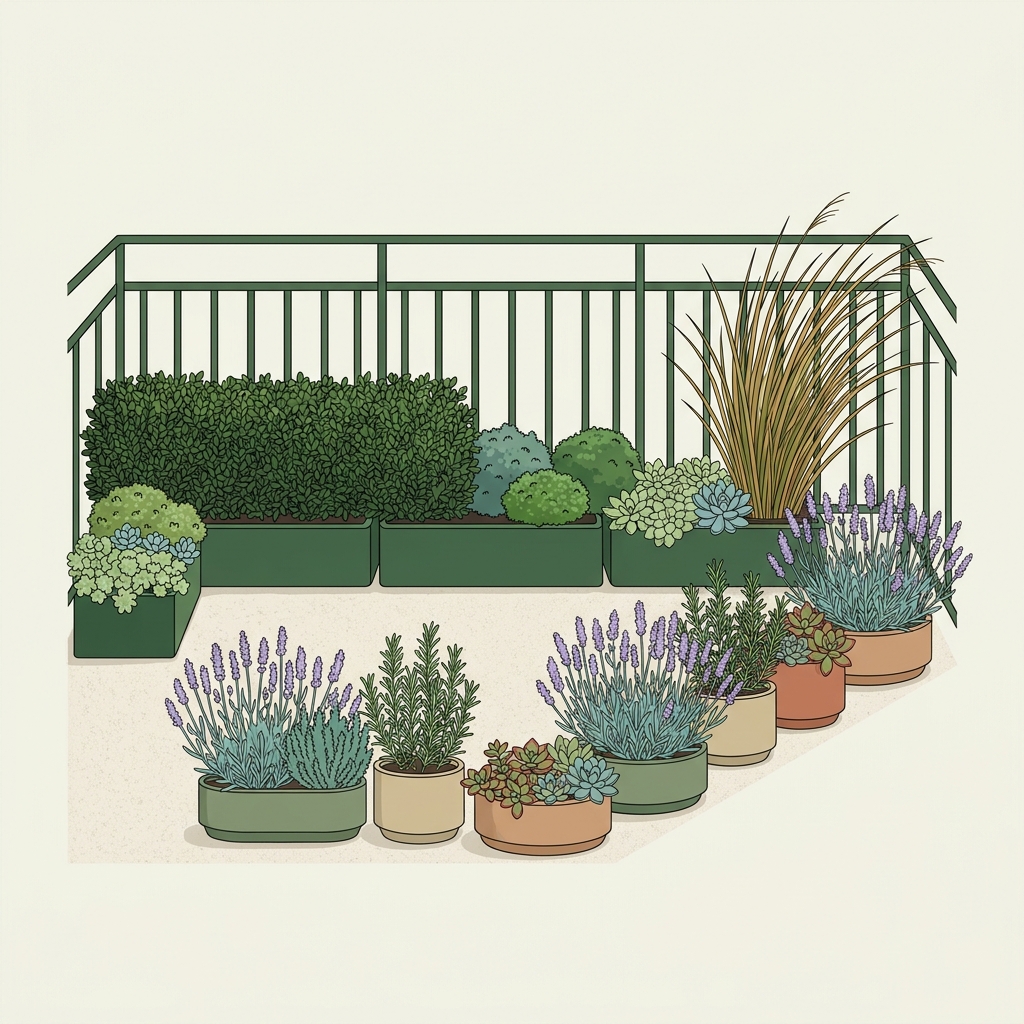
Scheme 1, compact screening: use a row of low evergreen shrubs or small-leaved hedging-planted containers along the leeward side of the balcony. These act as a living windbreak while providing year-round structure. Add low-profile perennials at the base to soften the edge.
Scheme 2, low-profile mixed container: choose mounded ornamental grasses, drought-tolerant perennials and small succulents in wide, shallow pots. This approach reduces wind area and creates an attractive, moving composition that tolerates regular breeze well.
Scheme 3, year-round structure: combine a few evergreen shrubs in heavy pots placed at the back with ornamental grasses and a layer of small rock or mulch on top of the soil to reduce evaporation. This gives the balcony presence through colder months and a sheltered microclimate for smaller seasonal plantings in front.
Seasonal adjustments and winter protection ideas
In warm months, wind can increase watering frequency; in cold months, wind chill can dry plants out and increase freeze damage. For winter, push pots closer to the building, group them together, and wrap the pots and rootballs loosely in breathable material if extremes are expected. Avoid wrapping foliage unless the plant needs it; breathable coverings around the pot and a mulch layer often provide useful insulation without inviting rot.
Scale these schemes to your container size by adjusting numbers and plant groupings. A single large pot can host the mixed container idea, while multiple small pots arranged in a staggered row will emulate screening. Pay attention to weight limits on balconies and choose materials and numbers accordingly.
Seasonal care notes for each sample: for the screening row, trim lightly to maintain density and check for wind pruning in late winter; for the low-profile mix, refresh soil annually and top up mulch; for year-round structure, monitor for salt or drying and adjust irrigation through dry spells.
Practical wrap-up and next steps
Wind poses predictable challenges for balcony gardeners, but the right plant groups, container choices and routines make a thriving, low-maintenance display possible. Prioritize stability, moisture retention and flexible plant habits and you will reduce the most common failures.
Start small, observe how a single pot fares in a typical week of wind and adjust placement, soil or plant choice before committing to a larger display. Over time you can expand from one resilient container into a coherent balcony garden windy plants scheme that matches your apartment and climate.
By matching plants to the microclimate you create with pot placement and by adopting straightforward care habits, your balcony can become an inviting, wind-adapted space rather than one where plants constantly struggle.
Frequently asked questions
How often should I water pots on a windy balcony?
Check the top few centimeters of the potting mix regularly; water when the surface feels dry. Windy conditions usually mean more frequent monitoring rather than a fixed schedule.
Can I use tall planters on an exposed balcony?
Tall planters are possible if they have a wide, heavy base or are anchored securely, but lower, wider containers are generally safer in windy locations.
Are succulents a good choice for windy balconies?
Yes, many succulents handle wind and dry conditions well because they store water and have protective leaf surfaces, but they still need stable pots and shelter from abrasive gusts.
Begin with one trial container to learn how wind and sun interact on your balcony, then expand what works. Small, thoughtful changes to pot choice, placement and routine care can make a big difference in plant health and resilience.
References
- https://gardeninreach.com/guides/plant-pots-and-containers/
- https://gardeninreach.com/guides/container-watering/
- https://gardeninreach.com/guides/seasonal-container-gardening/
- https://nurserynearme.com.au/collections/plants-for-balconies/plant?page=12&srsltid=AU7gw4WwhxhMhKjbQAGw1kMjmU0Vkbfd-XaarB6LAnNfmYWxi3ZeXO4F
- https://www.thebamboojungle.com.au/blogs/the-bamboo-jungle/bamboo-for-windy-sites-which-varieties-handle-exposure-best?srsltid=AU7gw4VmiuZVQckRcIZPUisk9BQyvpy4vSp3bY5xrfQ9TAgxIBKGInmg
- https://lawnandgardenideas.com/balcony-plants/