
The journal
How far should a grow light be from your plants?
Set grow-light height by your fixture’s PPFD/height chart and plant stage, not a single universal number. See example ranges from manufacturers, a step-by-step adjustment method, signs of too much/too little light, and a quick checklist.
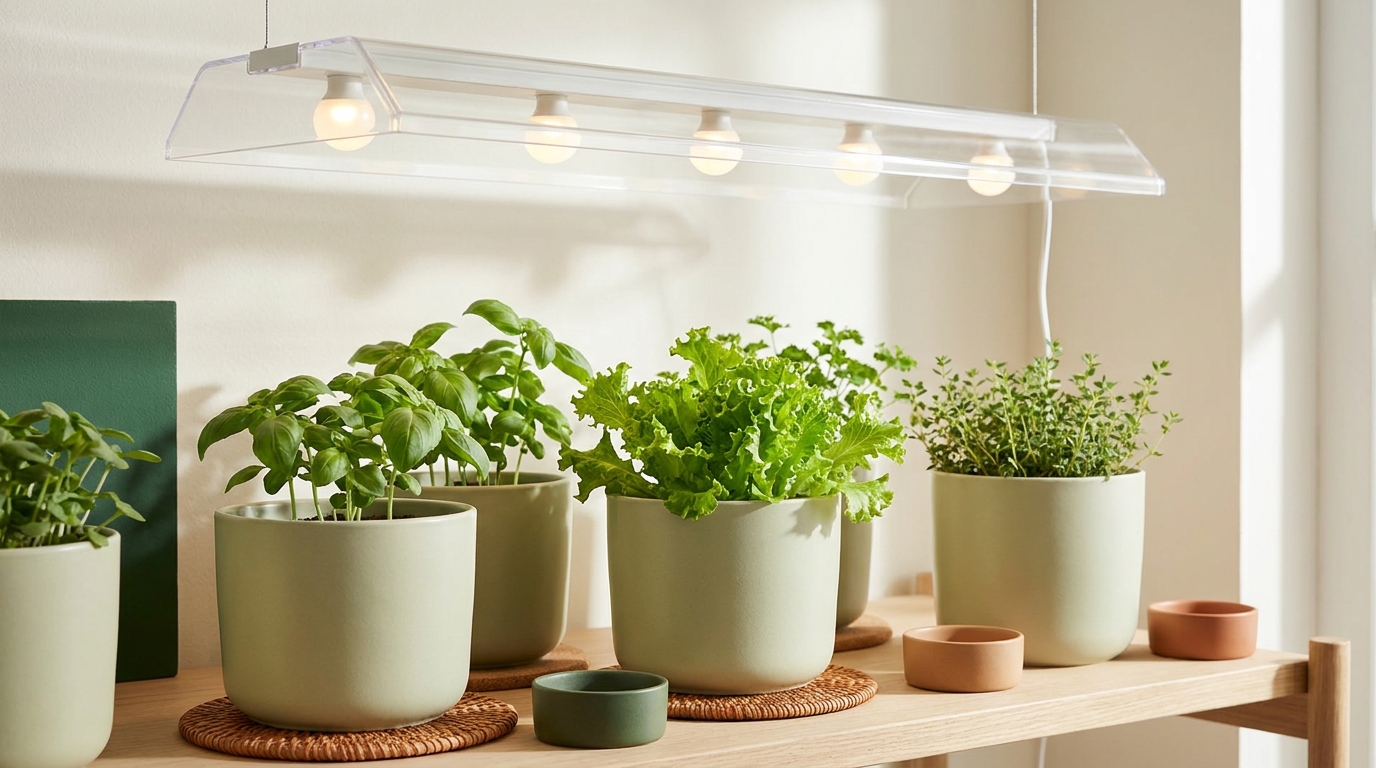
There isn’t one safe distance for every setup. Set height from your fixture’s PPFD or height chart and your plant stage, then fine-tune in small steps while watching plant response. For example, Vivosun’s full‑spectrum LED guidance lists seedlings/clones at 12-24 in with 100-300 µmol/m²/s, veg at 18-24 in, and late flower at 12-18 in for higher PPFD targets (Vivosun: How Far Should Grow Lights Be From Plants?). LED Grow Lights Depot offers different starting points for many LEDs: seedlings 6-12 in, veg 18-24 in, and flowering roughly 18-30 in depending on fixture intensity (LED Grow Lights Depot: How Far Should LED Grow Lights Be From Plants?).
Why distance varies
- Fixture output and optics: Two LEDs at the same height can deliver very different PPFD at the canopy. Wattage alone is not a reliable way to set height; different fixtures with the same input power can produce very different PPFD (Vivosun: How Far Should Grow Lights Be From Plants?).
- PPFD beats a fixed distance: PPFD at the canopy is the better guide than inches alone; distance is only a starting point to reach a PPFD range suitable for your stage (Vivosun: How Far Should Grow Lights Be From Plants?).
- Coverage and heat: Raising a light increases uniformity but lowers intensity; lowering it boosts PPFD but can create hot spots and heat/light stress, especially with HID fixtures (Vivosun: How Far Should Grow Lights Be From Plants?).
- Physics at play: Intensity falls rapidly with distance (inverse-square behavior for point sources), though large LED panels and optics modify the exact pattern (Vivosun: How Far Should Grow Lights Be From Plants?).
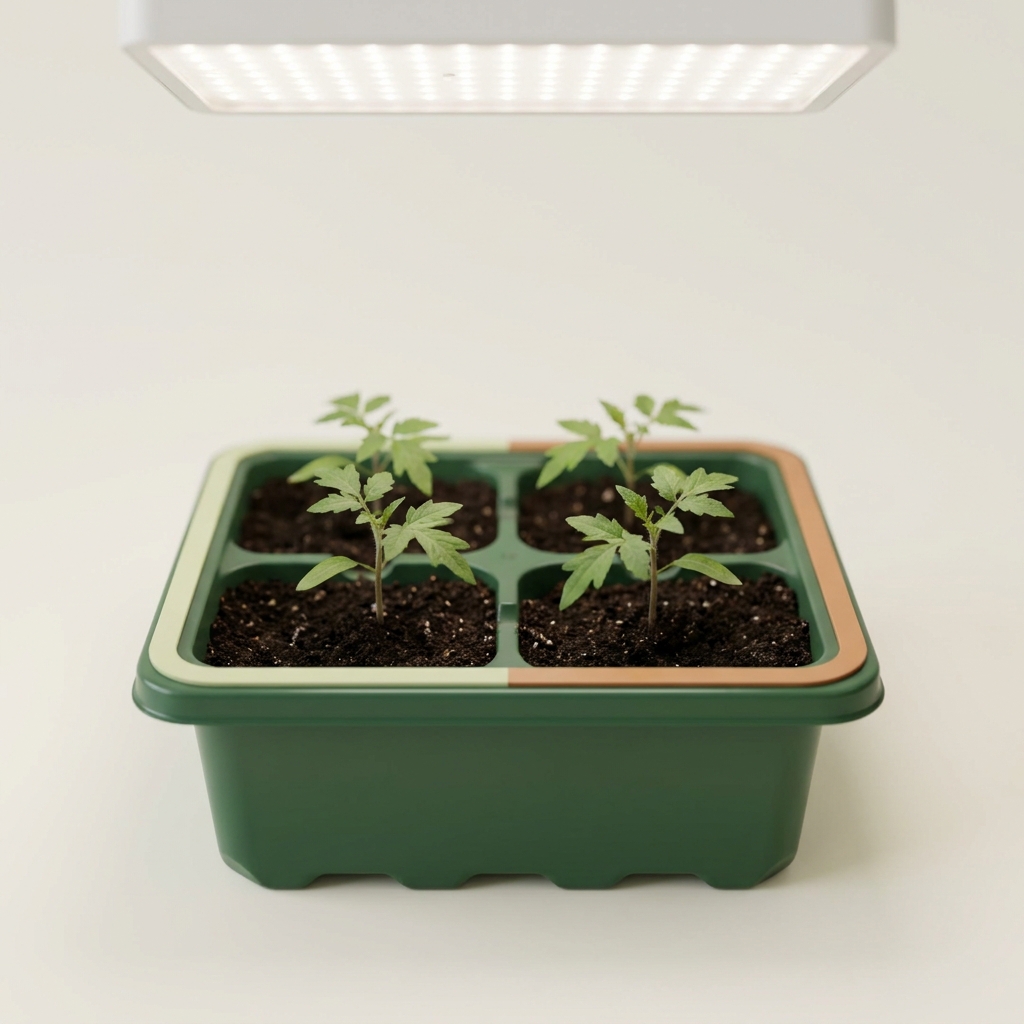
How to set height today: a simple, repeatable method
1) Start with the maker’s chart
Use your fixture’s PPFD map or stage-by-stage height guidance as the baseline. If none exists, begin on the higher side for your stage and work downward gradually while watching plant response (Vivosun).
2) Measure from the canopy
Measure distance from the tallest growing tip, not the pot rim or shelf. Re‑measure after growth spurts.
3) Make small changes, then wait
Adjust by 1-2 inches or one dimmer step, then observe for 24-48 hours before making another change (Vivosun).
4) Use tools wisely
If available, confirm PPFD with a quantum/PAR meter. Smartphone lux apps can help compare relative changes with white LEDs but are not precise PPFD converters (Vivosun).
Dial in your grow-light distance
Stage-based examples from manufacturers (use as starting points)
Seedlings and clones
- Example: 6-12 in for many LED fixtures at reduced power or after acclimation (LED Grow Lights Depot).
- Example: 12-24 in aiming for roughly 100-300 µmol/m²/s PPFD on full‑spectrum LED panels (Vivosun).
These differences reflect fixture intensity, optics, and dimming. Start with your model’s chart and adjust based on plant response.
Vegetative growth
- Example: 18-24 in for many full‑spectrum LEDs, with a PPFD target broadly around 300-600 µmol/m²/s depending on crop and environment (Vivosun).
- Example: 18-24 in is also a common LED starting distance in this stage (LED Grow Lights Depot).
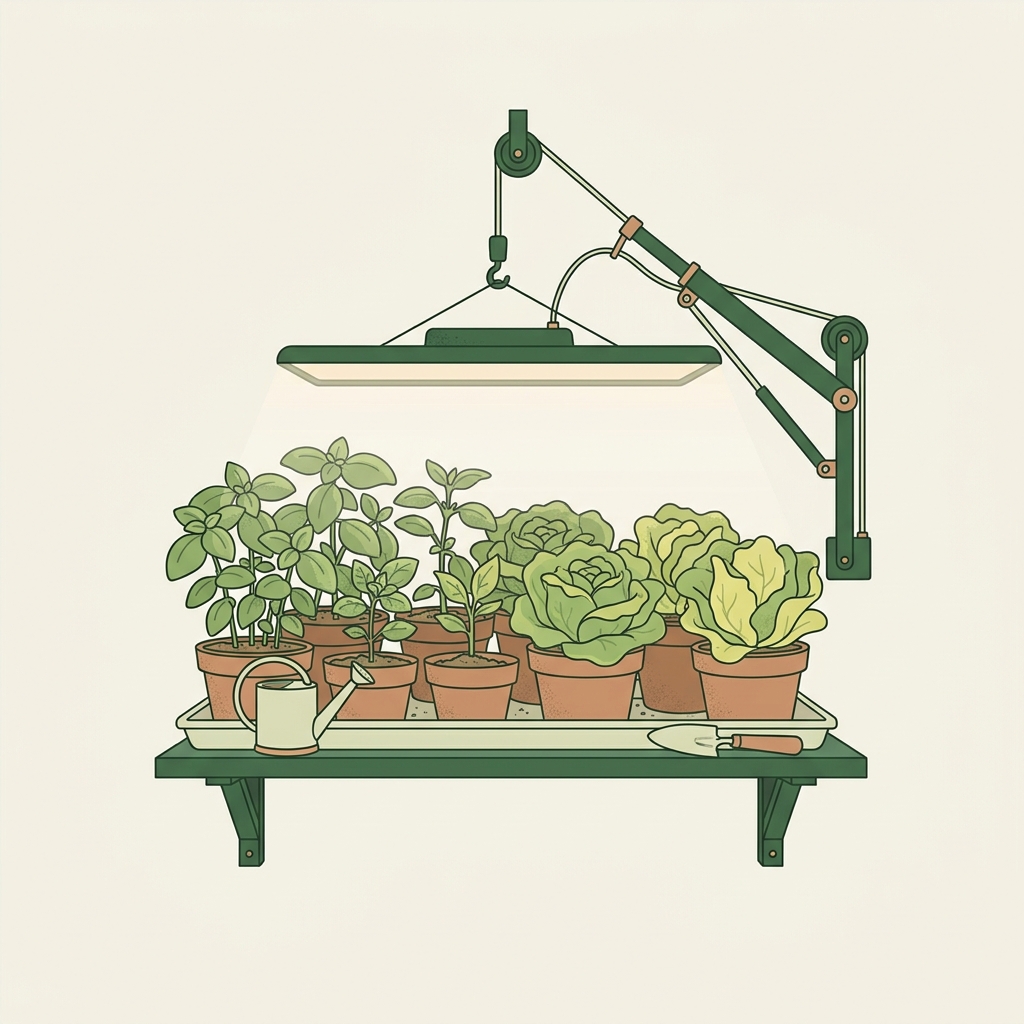
Flowering or other high-light stages
- Example: lower or run higher output cautiously, e.g., 12-18 in with higher PPFD targets for late flower on full‑spectrum LED panels, watching heat and light stress (Vivosun).
- Example: roughly 18-30 in depending on fixture intensity and coverage (LED Grow Lights Depot).
How to tell it’s too close or too far
Too close / too intense
- Bleached or white upper leaves, yellow/brown spots, upward “taco” curl, or stunted growth. Raise the light or dim, then reassess after 24-48 hours (Vivosun).
Too far / too weak
- Leggy stretch, long internodes, pale growth, slow development, or small airy flowers. Lower the light or tighten the footprint to increase PPFD at the canopy (Vivosun).
Common mistakes to avoid
- Using wattage to set height. The same wattage can deliver very different PPFD; use the maker’s map and plant response instead (Vivosun).
- Big, frequent moves. Make small changes and give plants time to respond (Vivosun).
- Ignoring footprint. Lowering increases PPFD but shrinks coverage, creating hot spots and weak edges; adjust placement or footprint before cranking hours (Vivosun).
Related small-space help
- Starting greens under lights? See our Beginner’s guide to growing microgreens at home.
- Prepping trays for the next round? Here’s how to clean and safely reuse seed starting trays.
FAQ
What about non-LED fixtures?
Clearance varies by light type. As general examples from Vivosun: fluorescents often sit close (about 6-12 in), HPS typically needs more clearance (roughly 16-31 in depending on wattage), and CMH commonly runs 18-24 in or more. Always confirm with your fixture’s manual and finish by checking plant response and heat at the canopy (Vivosun).