
The journal
What is the best light spectrum for plant growth?
White or balanced light is a practical option for many plants. Check the exact crop, fixture output, duration and placement rather than relying on a colour label.
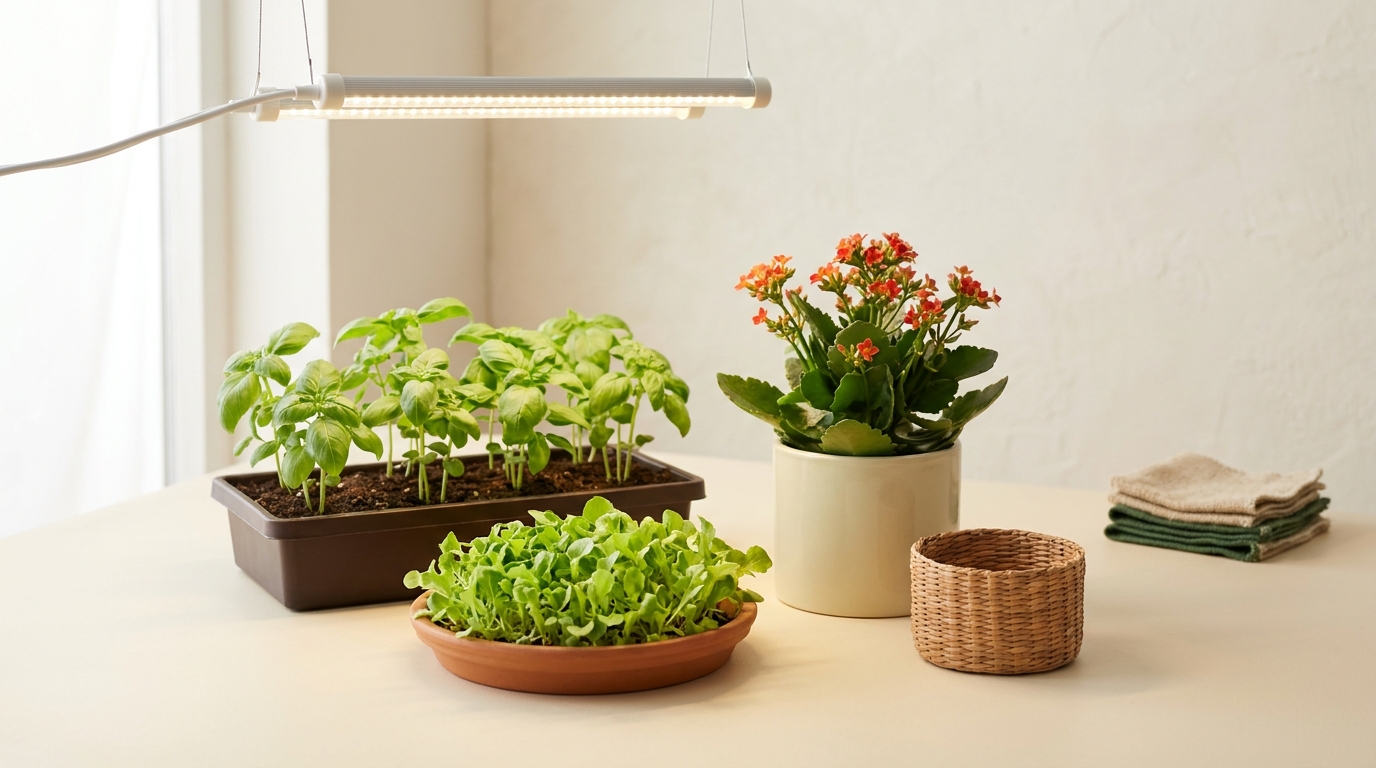
A broad white or balanced grow light is a practical option for many indoor plants and seedlings. There is no single spectrum established here as best for every crop and growing stage. Match the light to the plant, and consider the amount reaching the leaves and its daily duration as well as colour.
What does spectrum tell you?
Spectrum describes the wavelengths a lamp emits. University of Minnesota Extension identifies white or balanced light as suitable for many plants at different growth stages. Its guidance also describes uses for blue or mixed light in seed starting and red or mixed light for flowering. That is a reason to check a product’s output, not to assume one visible colour proves how it will perform.
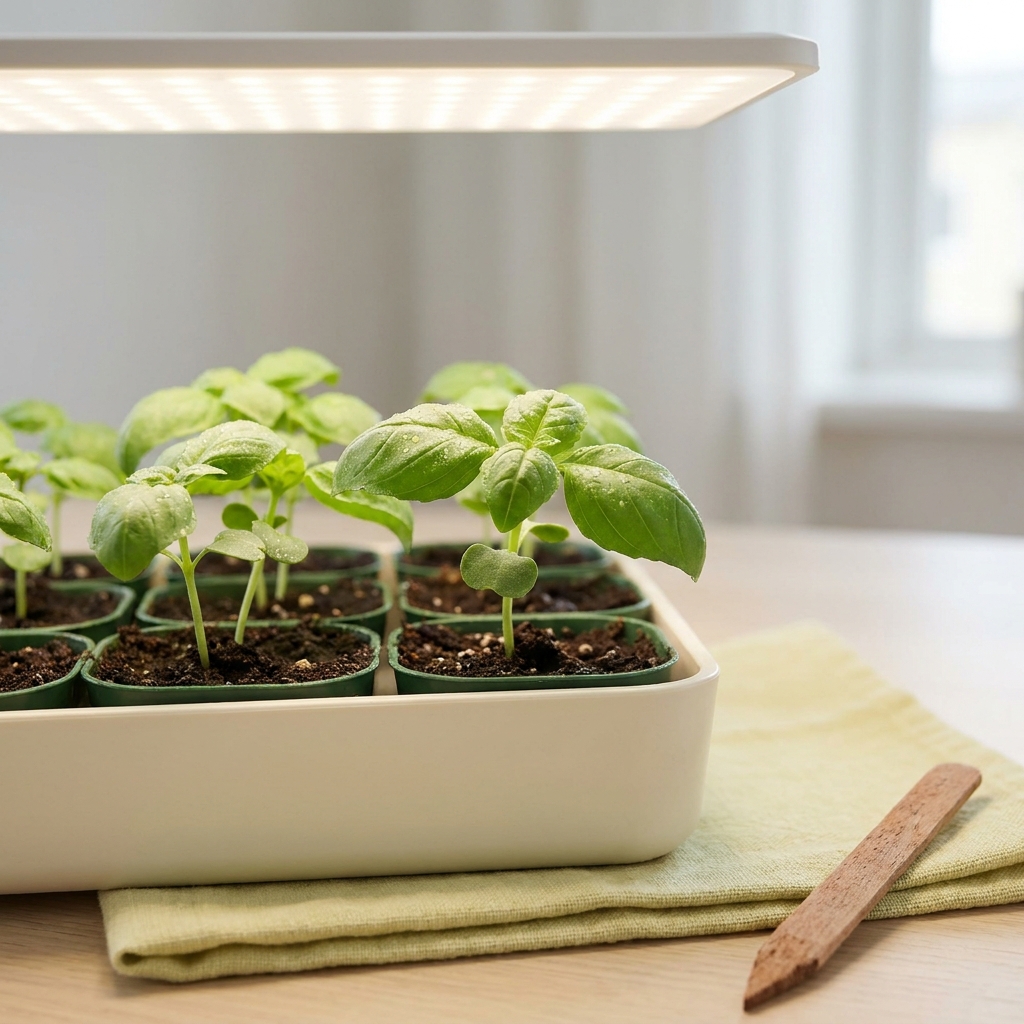
For seedlings, spectrum is secondary to distance and intensity
For young plants, adequate light intensity and duration matter more than micro‑tuning spectrum. When seedlings don’t get enough usable light, they stretch and become “leggy.” University of Minnesota Extension flags low light as a key cause of legginess in indoor starts (University of Minnesota Extension).
Use the exact fixture’s mounting and dimmer guidance as your starting point. Keep a note of the plant, setting, distance and timer schedule. If growth changes, check the whole setup rather than moving the lamp automatically: stretching alone does not establish a particular mounting height.
Choosing a practical light
If you’re using LED grow lights
Compare the actual specification and coverage at the intended mounting height. Ask whether the output and controls suit your plants and available space. A “full-spectrum” label alone does not answer those questions.
If you’re using fluorescent or other white lamps
Do not use a Kelvin value as a substitute for a complete plant-lighting specification. Keep the package details and look for the maker’s intended use, coverage and operating instructions. Wattage describes electricity use; it is not a direct measure of light delivered to the plant.
How spectrum ties into seedling light distance
Because full‑spectrum white already covers the useful range, you control results mainly with how strong the light is at the canopy. That’s set by fixture output and distance. There isn’t one universal height that fits all fixtures or crops. Instead:
- Start with the fixture’s instructions for that crop and setting; do not infer a distance from a different lamp.
- Follow the manufacturer’s distance guidance for your specific model and wattage.
- Check seedlings daily during the first week after any adjustment.
For placement specifics by light type and output, see our separate guide How far should a grow light be from your plants?
Simple signs to watch
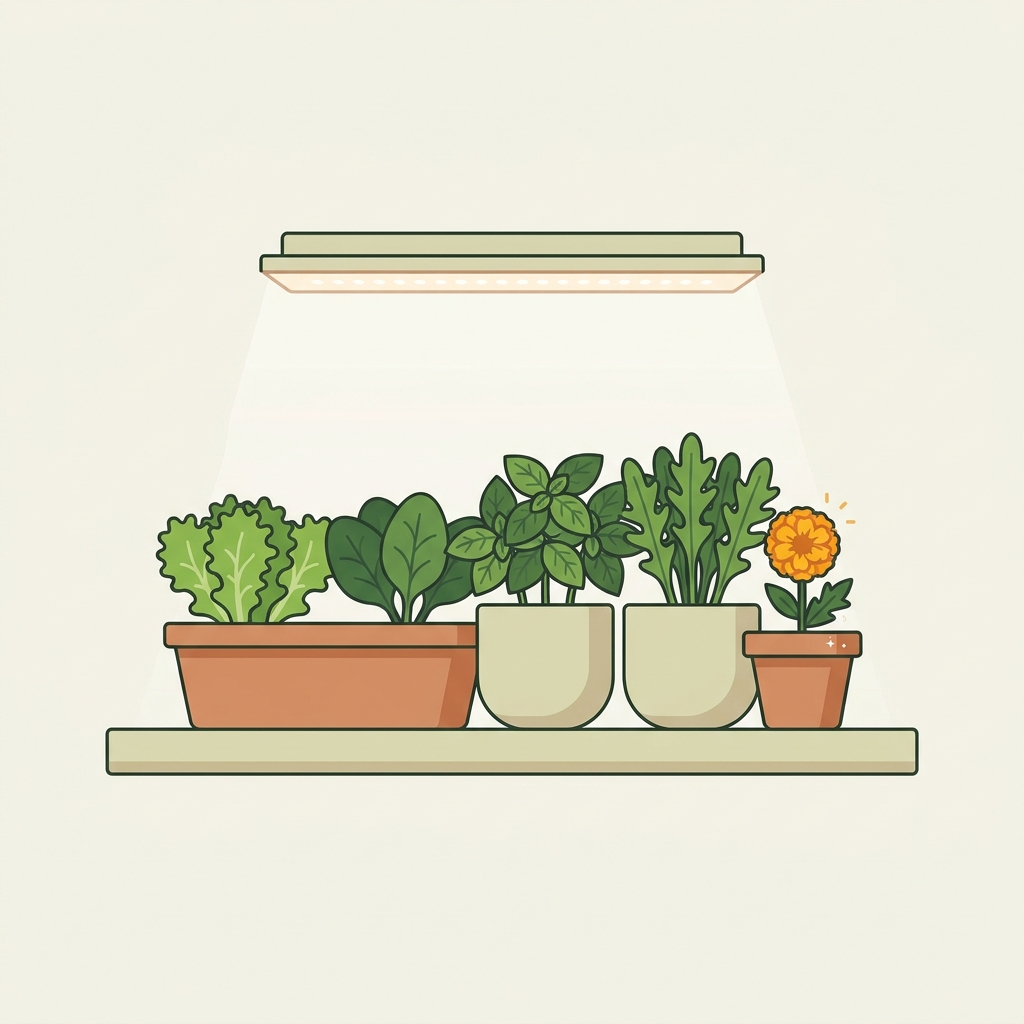
- Too little effective light: stems elongate, seedlings lean toward the lamp, spacing between leaves increases. University of Minnesota Extension notes low light as a cause of leggy seedlings (University of Minnesota Extension).
- Potentially encouraging signs: growth suited to the plant, without obvious stretching or bleaching. Appearance alone does not measure light output.
Also keep light duration consistent. If you’re unsure how many hours to provide, start with our companion article How long should seedlings have light?
Put this into practice
Identify the plant’s light requirement and the actual fixture’s instructions, including distance and operating schedule. Judge the complete growing setup rather than using a colour name or spectrum claim as a stand-alone measure of suitability.
Quick setup checklist for seedling lights
What should I compare before buying?
Make a short list of the plants, tray area and mounting space. Compare lamps against that same list rather than against the colour of a photograph. Check the timer, mounting arrangement and operating instructions as part of the purchase. If a seller supplies only a colour name, ask for the missing specification before relying on it.