
The journal
How long should seedlings have light?
Most seedlings grow best with 14-16 hours of light each day and at least 8 hours of darkness. Use a timer, and adjust fixture distance and brightness before extending hours.
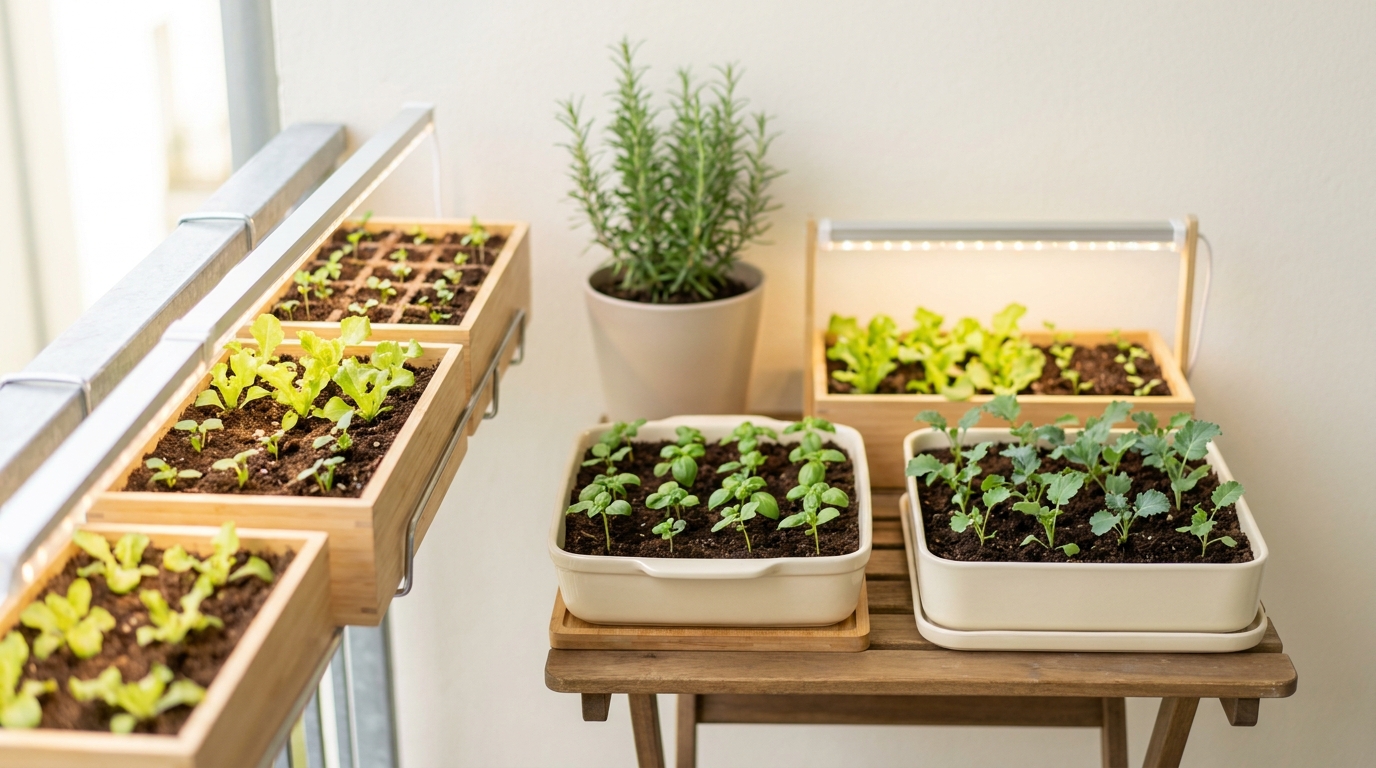
Most seedlings do best with 14 to 16 hours of light each day and a nightly dark period of at least 8 hours. Avoid 24/7 lighting; plants need darkness for healthy development. A simple plug-in timer keeps the routine consistent (Gardening Know How; Elm Dirt; Vego Garden).
The simple daily schedule
Set your grow lights for a steady 14-16 hours. Two easy examples:
- 14 hours: on 7:00 am, off 9:00 pm
- 16 hours: on 6:00 am, off 10:00 pm
Using a timer is strongly recommended so the photoperiod is the same every day (Elm Dirt).
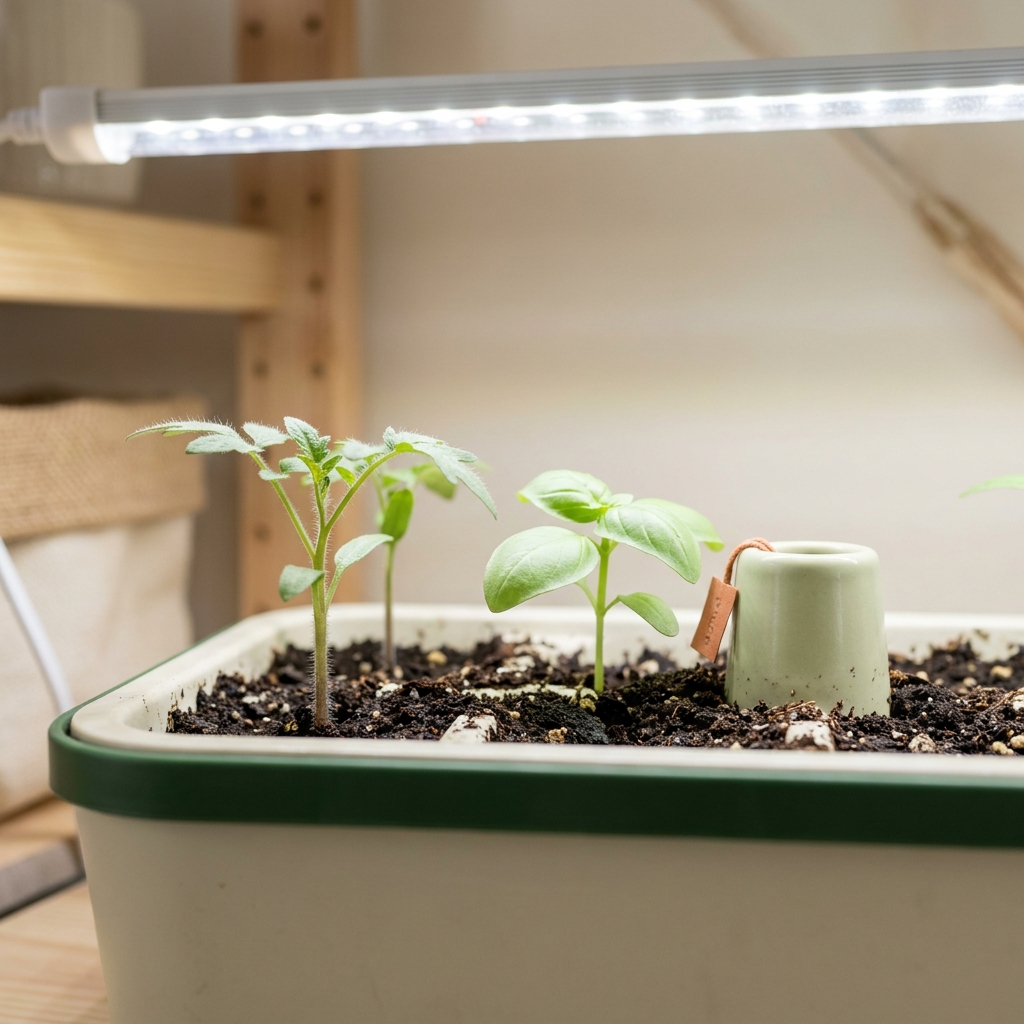
Why seedlings need darkness each night
Seedlings thrive on a balance of day and night. Guidance for home growers cautions that continuous light can cause stress; aim for a daily dark period and watch for wilt or burn if intensity is too high (Gardening Know How; Vego Garden).
Match duration with brightness and distance
Hours are only half the story. If your light is dim or hung too high, seedlings stretch and turn leggy. If it is too close or intense, leaves can bleach or curl.
- Start LED fixtures about 6-12 inches above the canopy; fluorescent shop lights usually perform best around 3-4 inches. Adjust based on what you see (Elm Dirt).
- Signs of too much light or heat include drooping, pale or browned patches; too little light leads to yellowing and stretched stems (Vego Garden).
Fix problems before adding more hours
- If seedlings are leggy, lower the fixture a few inches or increase brightness rather than extending the daily hours first (Elm Dirt).
- If leaves look bleached or scorched, raise the light or reduce intensity and maintain the same 14-16 hour schedule (Vego Garden).
If you also get window sun
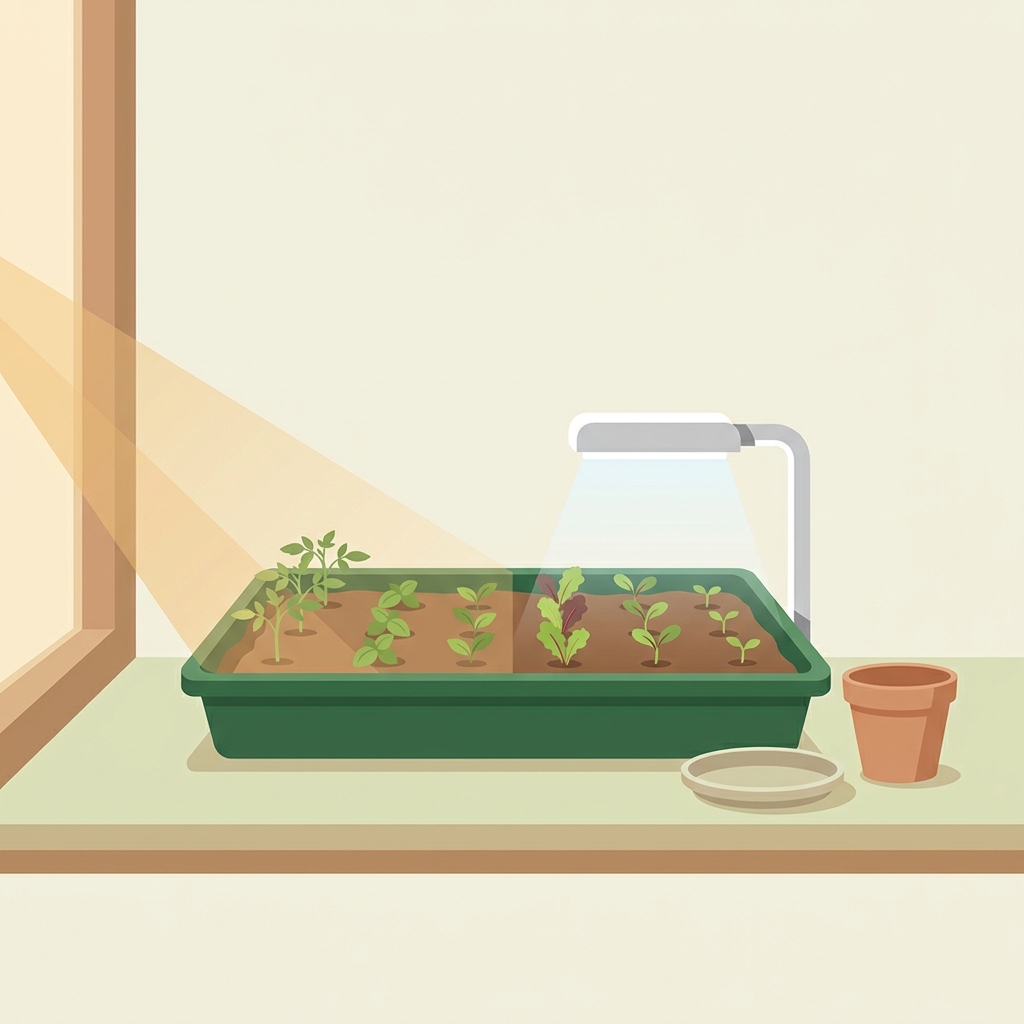
Seedlings near a bright window can get part of their daily total from the sun. Shorten your grow-light runtime so the combined light lands in the same mid-teens total, and keep a consistent dark period at night. Watch plants closely and adjust light distance or brightness if you notice stretch or leaf stress (Vego Garden).
Troubleshooting at a glance
- Leggy, leaning stems: increase effective light by lowering the fixture or improving coverage before adding hours (Elm Dirt).
- Bleached, crispy, or drooping leaves: raise the light or dim output; keep the same daily schedule (Vego Garden).
- Lights accidentally left on overnight: return to your timer-based 14-16 hour day and re-check fixture distance (Gardening Know How).
Set a reliable seedling light routine
Related guides from Garden in Reach:
- Can you reuse seed starting trays? How to clean and reuse safely
- Beginner’s guide to growing microgreens at home

FAQ
Do seedlings need light immediately after they sprout?
Yes. Turn on grow lights as soon as green shoots appear above the surface so seedlings do not stretch. Keep to a 14-16 hour day with a dark period at night (Elm Dirt; Gardening Know How).
Can I leave grow lights on all the time for faster growth?
Skip 24/7 lighting. Practical guides recommend a daily dark period, and many seedlings show stress under continuous light. Stick to 14-16 hours of light and at least 8 hours of darkness (Gardening Know How; Vego Garden).
Related guides
Product options for this topic
As an Amazon Associate I earn from qualifying purchases. These are researched options, not hands-on test results. Check the exact size or model, current price and availability on Amazon.
| Product option | Fit and limits to check | Retailer |
|---|---|---|
| Product imageHaws Handy one-pint watering can, Green | A small watering can for indoor pots and seedlings. Its modest capacity suits short watering rounds rather than a large outdoor bed. | View on Amazon |