
The journal
Can you reuse seed starting trays? How to clean and reuse safely
Yes, you can reuse seed-starting trays. Clean off soil, wash, disinfect per label directions, ensure drainage holes, and store dry and out of sun to help prevent disease and extend tray life.
Quick answer
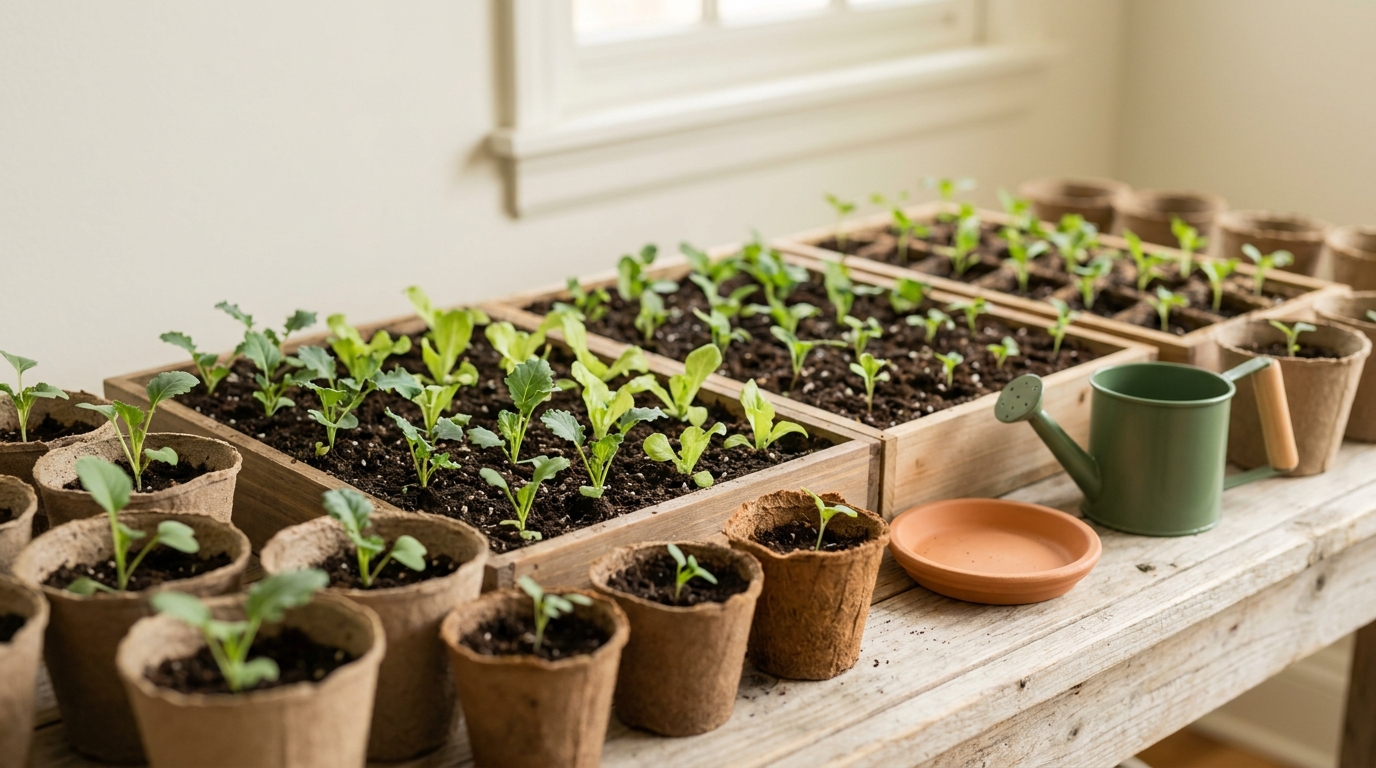
Yes. Seed-starting trays are reusable if you remove old media, wash them, then disinfect and let them dry fully before the next use. Extension guidance recommends cleaning and sterilizing trays before each use to reduce disease risk (https://yardandgarden.extension.iastate.edu/how-to/containers-starting-seeds).
When it is safe to reuse seed-starting trays
Good candidates for reuse
Reuse trays when you can completely clear out potting mix and residues, wash them well, and disinfect per the product label. Confirm there are working drainage holes, since adequate drainage is essential for seed-starting containers (https://yardandgarden.extension.iastate.edu/how-to/containers-starting-seeds).
When to retire a tray
Retire trays that are cracked, brittle, warped, or so caked with residue that you cannot clean seams and drainage holes. Trays that don’t drain or are difficult to sanitize can harbor pathogens and aren’t worth the risk.
How to clean and disinfect trays
What you need
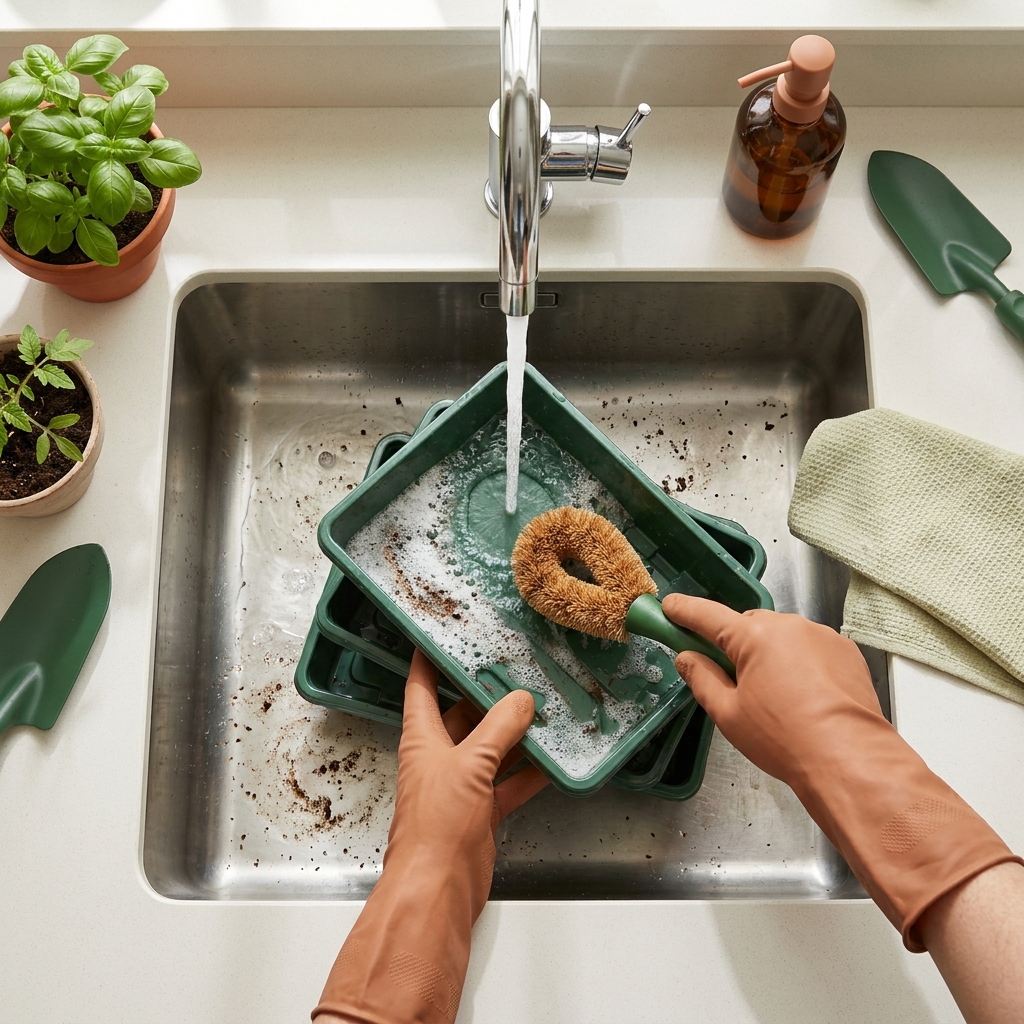
Gloves, a stiff brush, mild dish detergent, a bucket or sink, and a disinfectant suitable for hard plastic surfaces. Have ventilation and eye protection if the label advises. Practical garden how‑to guidance outlines this simple clean‑then‑sanitize sequence (https://seedsnsuch.com/blogs/gardeners-greenroom/how-to-clean-seed-starting-trays-and-plant-pots-a-guide-to-winterizing-your-garden-supplies).
Step-by-step
- Knock out and brush away all soil and roots, including in corners and holes.
- Wash in warm, soapy water; scrub until visibly clean. Rinse well.
- Disinfect: apply your chosen sanitizer and keep it wet for the label’s contact time. Do not mix chemicals. Rinse if the label requires it.
- Air-dry completely before use or storage.
This routine helps prevent common seedling losses from pathogens that persist on dirty equipment (https://seedsnsuch.com/blogs/gardeners-greenroom/how-to-clean-seed-starting-trays-and-plant-pots-a-guide-to-winterizing-your-garden-supplies).
Drainage, container options and simple modifications
Drainage is non-negotiable
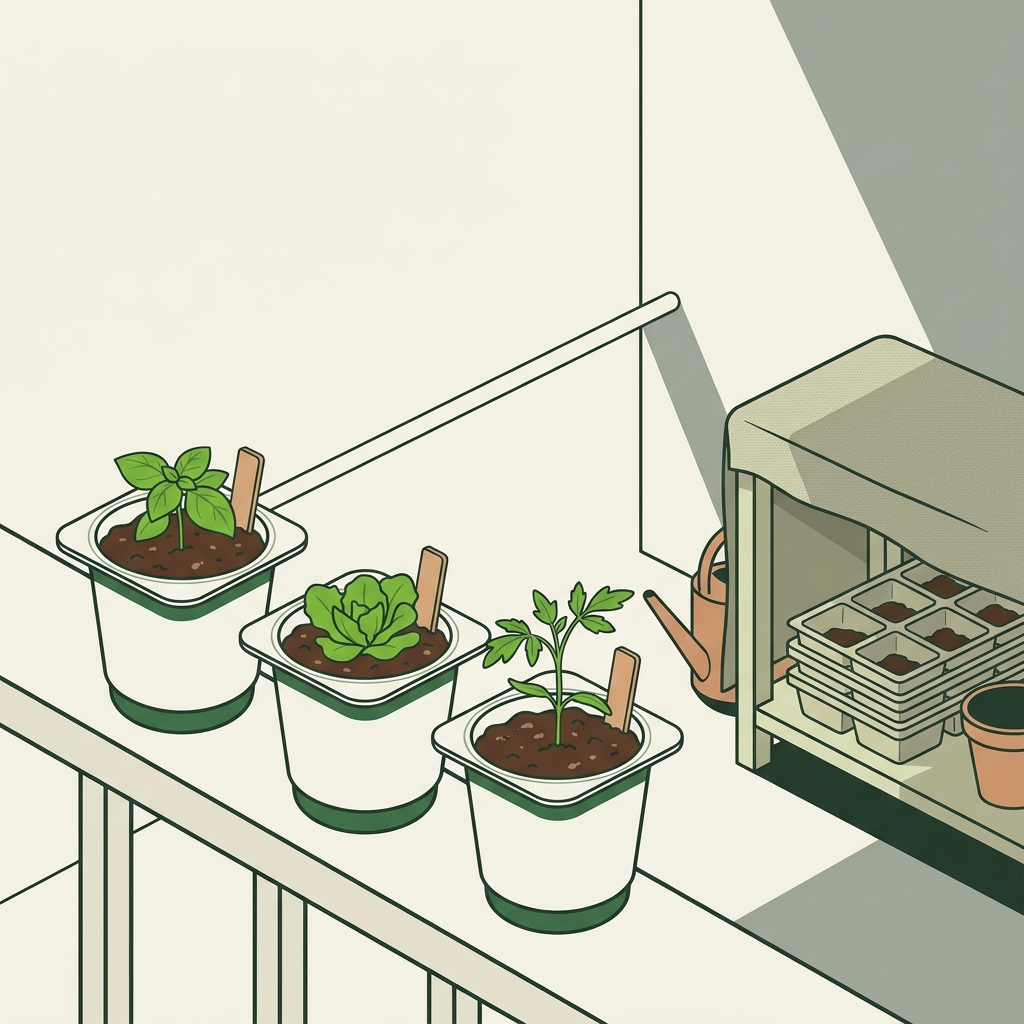
Seeds will germinate in many container types as long as they hold media and provide adequate drainage. Recycled food containers (yogurt cups, produce clamshells, drink cups) can work well if you add or confirm holes in the base (https://yardandgarden.extension.iastate.edu/how-to/containers-starting-seeds). Many gardeners also reuse supermarket produce trays and other sturdy packaging with holes added (https://lovelygreens.com/seed-starting-with-recycled-materials/).
Adding holes and checking integrity
Space several small holes evenly across the base. Test one container first to avoid cracking thin plastics. Retire containers that flex excessively when filled; they are harder to handle without damaging seedlings.
Ready-to-reuse seed tray checklist
Storage tips that extend tray life
After cleaning and drying, stack or nest trays in a dry, protected place out of direct sunlight. Sunlight and weathering accelerate plastic breakdown; indoor storage helps trays last longer (https://seedsnsuch.com/blogs/gardeners-greenroom/how-to-clean-seed-starting-trays-and-plant-pots-a-guide-to-winterizing-your-garden-supplies). Label bundles by size so you can grab what you need without rummaging.
Troubleshooting and safe stop conditions
If you see recurring mold growth or lost seedlings despite proper cleaning, switch to a different, fully clean container and fresh seed-starting mix. Persistent contamination is a sign to stop reusing that item (https://seedsnsuch.com/blogs/gardeners-greenroom/how-to-clean-seed-starting-trays-and-plant-pots-a-guide-to-winterizing-your-garden-supplies). Manage moisture carefully to avoid soggy conditions that invite issues; if fungus gnats are a problem around pots, see our practical plan: How to keep fungus gnats out of potted plants?
FAQ
How often should I disinfect seed trays?
Disinfect before each seed-starting session, and any time trays were used with diseased plants. Extension guidance is clear that reusable containers should be cleaned and sterilized before each use (https://yardandgarden.extension.iastate.edu/how-to/containers-starting-seeds).
Bleach or hydrogen peroxide?
Many gardeners successfully use either. Choose a disinfectant labeled for hard surfaces, follow its dilution and contact-time directions, and never mix chemicals (https://seedsnsuch.com/blogs/gardeners-greenroom/how-to-clean-seed-starting-trays-and-plant-pots-a-guide-to-winterizing-your-garden-supplies).
Can I start seeds in household containers?
Yes, if they are clean and have drainage. Recycled food containers and produce clamshells are commonly used once holes are added (https://yardandgarden.extension.iastate.edu/how-to/containers-starting-seeds; https://lovelygreens.com/seed-starting-with-recycled-materials/). For shallow-rooted crops you’ll pot on later, see our container depth guide: How deep do containers need to be for lettuce?

Reusing trays works when you commit to cleaning, disinfection and drainage. If a tray can’t be cleaned to bare plastic or fails to drain, replace it to protect your next round of seedlings (https://yardandgarden.extension.iastate.edu/how-to/containers-starting-seeds).