
The journal
The best companion plants for chives in pots
Choose chive companions by shared light, moisture and mature space. Consider possible container combinations without assuming tested pest control or one best pairing.
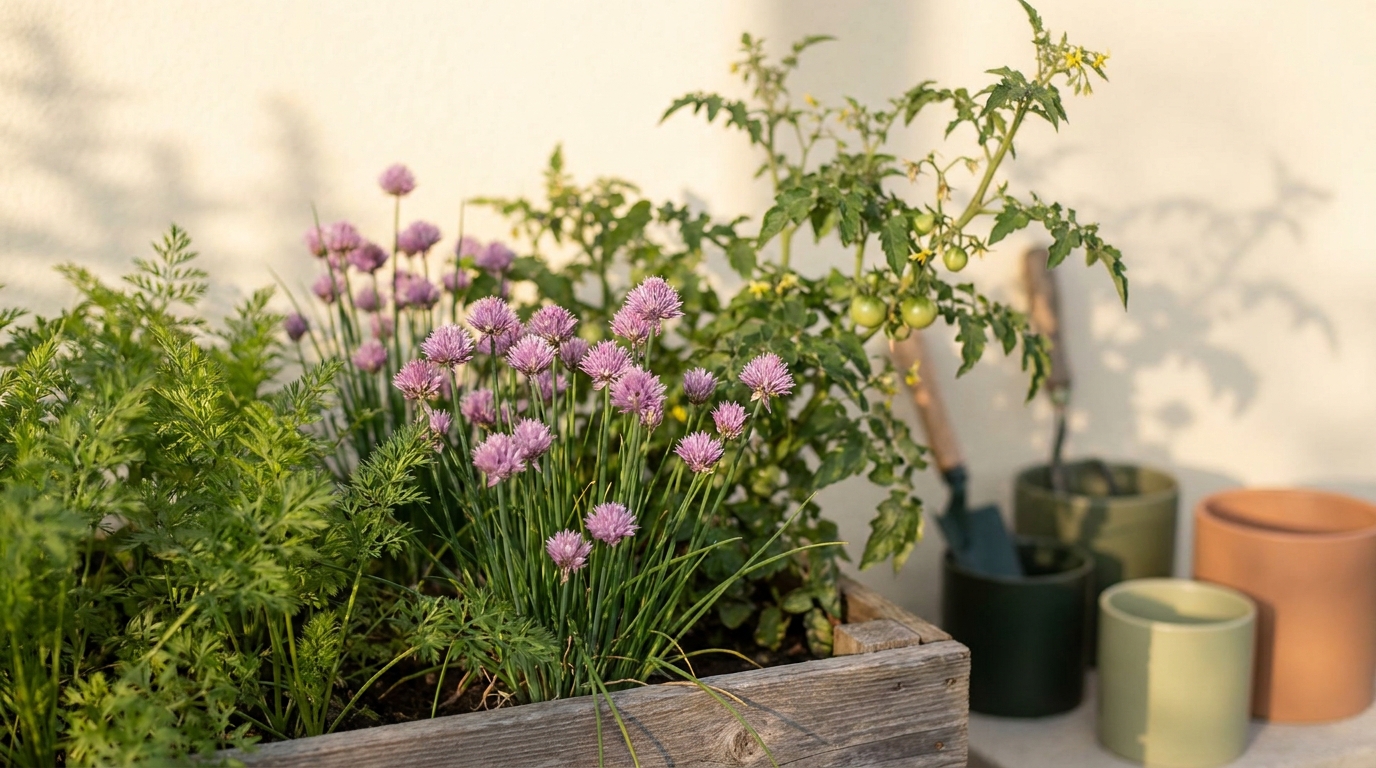
Choose chive companions by shared light, moisture and space needs. Leafy crops such as spinach, or a separately spaced planting of garlic chives, are options to consider. These are practical combinations to plan, not proven rankings of the best companions or a guarantee of pest control.
What makes a good chive companion in a pot
Chives grow well in sun or partial shade and suit containers filled with a peat-free, soil-based compost; they like moisture-retentive but not waterlogged mix. A 20 cm-wide, 20 cm-deep container is a practical minimum for a clump, with regular watering to keep the compost evenly moist. Space clumps about 15 cm apart when sharing a vessel. These details come from RHS chives growing advice. General container principles also apply: ensure drainage holes, avoid overpotting, and expect more frequent watering than in-ground plants, per the RHS container guide.
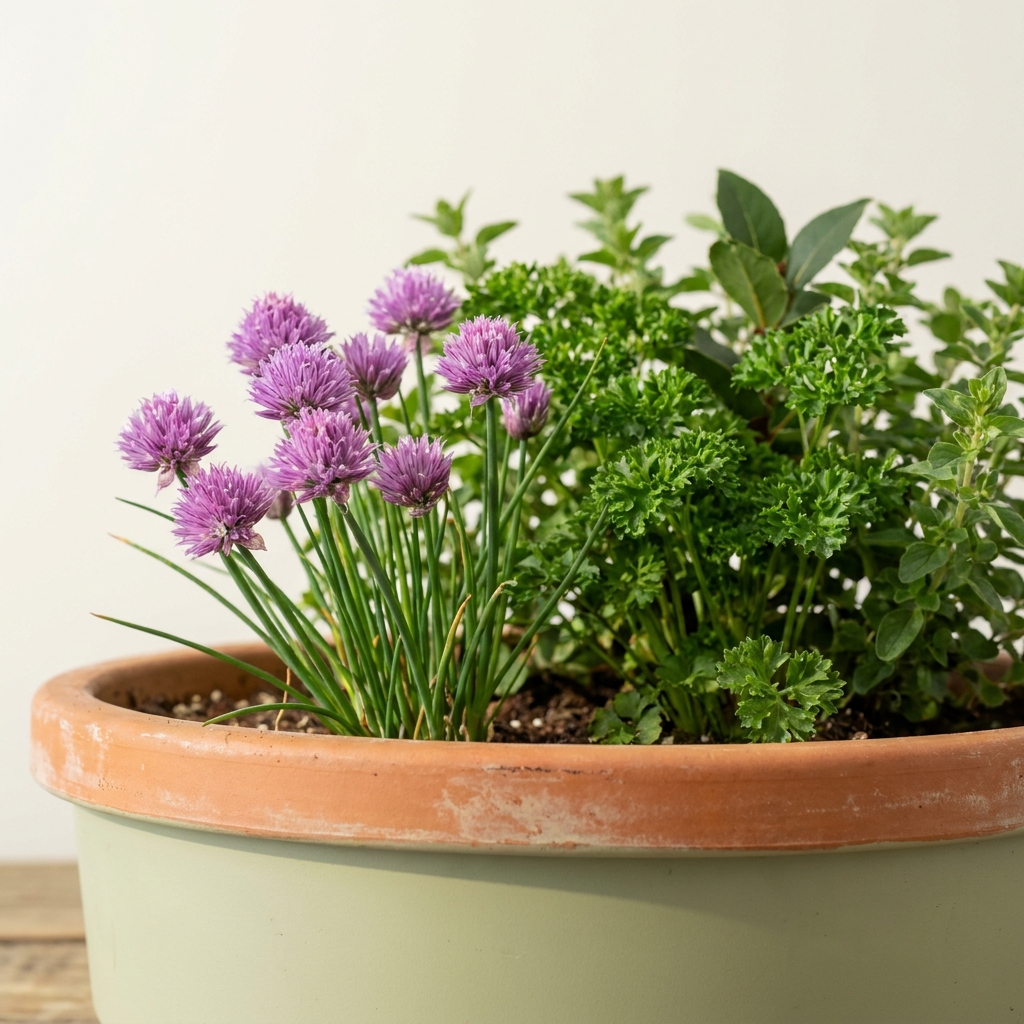
Possible pairings to assess for your container
1) Chives with spinach in a 30 cm pot
- Why it works: Spinach is compact, grows well in containers, prefers cooler conditions and steady moisture, and may share suitable light with chives when the spinach variety and season allow. See RHS spinach and RHS chives.
- Layout: Check the mature size and spacing of both crops before choosing the container. Give each its required root and leaf space; use separate pots if a shared one would crowd either plant.
- Care: Keep the compost evenly moist. Harvest spinach as cut-and-come-again and snip chives regularly to encourage new growth (RHS sources above).
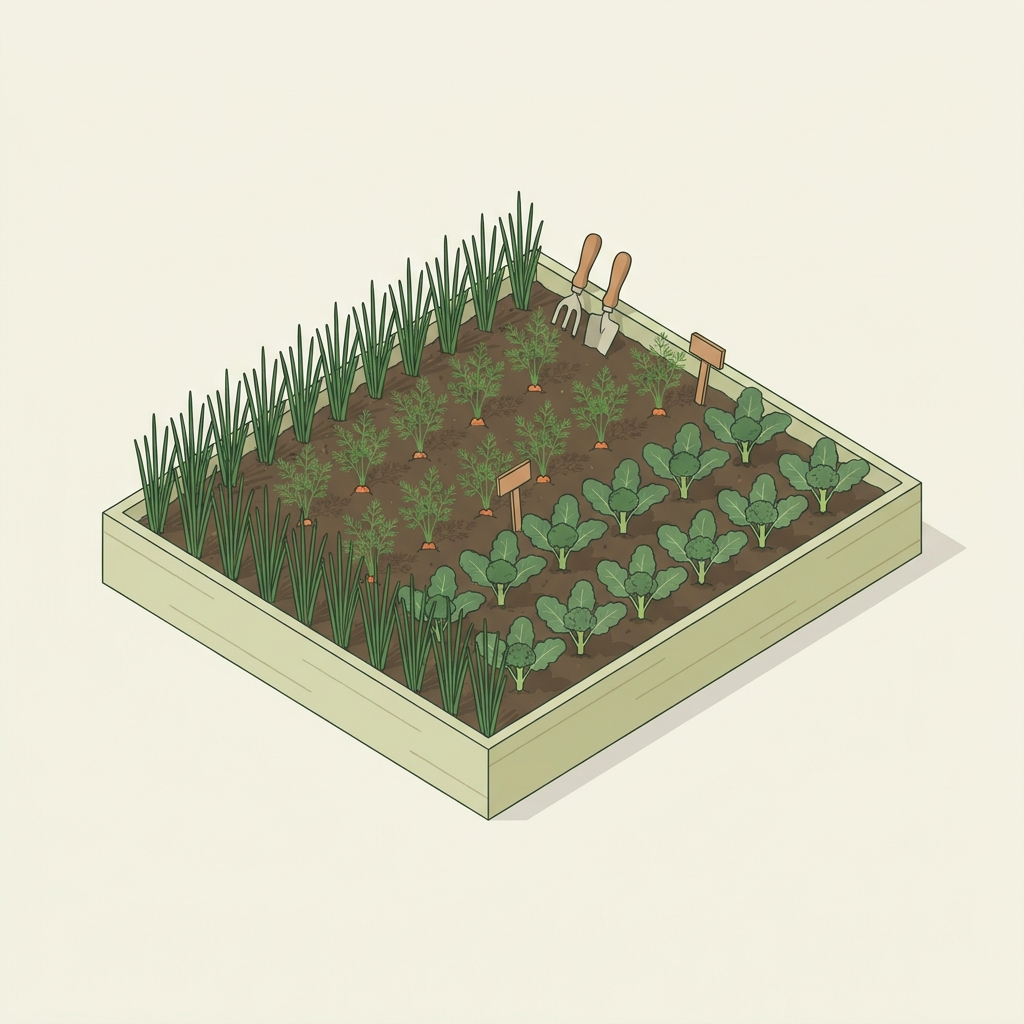
2) Chives with short-rooted carrots in a tall container
- Why it works: In containers deep enough for carrots, pairing an allium near carrots is a common practice. Where there’s no room for tall alliums like leeks, garlic chives are suggested as a small-space alternative alongside carrots (BBC Gardeners’ World companion planting). Common chives share similar culture in pots (RHS chives).
- Layout: Choose a deep pot and sow a short variety of carrot toward the center. Tuck one small chive clump at the edge so its shallow roots don’t compete with the carrot row space.
- Care: Keep drainage free and water consistently (RHS container guide). Thin carrots as required; see our guide on thinning outcomes for containers: What happens if you don’t thin out carrots in containers?
3) A mixed allium bowl: chives with garlic chives
- Why it works: Garlic chives (Allium tuberosum) are closely related, taller and flat-leaved, and suit container culture with similar care. Mixing both extends harvest texture and flavor without conflicting needs (RHS chives).
- Layout: Use a sufficiently wide container for both mature clumps, or keep each in its own pot. A small mixed display is not a permanent spacing plan.
What not to combine in the same pot
- Woody, drought-tolerant Mediterranean herbs like rosemary, thyme and sage prefer drier conditions. Chives do best in moisture-retentive compost and regular watering, so they’re poor roommates in one container. See RHS container guidance on Mediterranean herbs and RHS chives for watering and compost needs.
- Avoid overpotting mixes where one plant sits in a large volume of wet compost; this can raise root-rot risk (RHS container guide). Use sized pots and split combinations across several containers if in doubt. For herb pot depth planning, see Do herbs like deep or shallow pots?
How to plant a simple chive + spinach companion pot
- Choose a pot with drainage holes and enough room for the mature plants (RHS container guide).
- Fill with peat-free, soil-based compost and mix in a slow-release feed suitable for containers (RHS container guide).
- Plant one chive clump near the rim, keeping its previous soil level, spacing at least 15 cm from any neighbor (RHS chives).
- Follow the spinach variety’s spacing rather than fitting an arbitrary number of starts into the remaining space (RHS spinach).
- Water to settle and keep evenly moist throughout the growing season. Harvest little and often.
Put this into practice
Group plants by the actual pot space, light and watering needs first. A companion label does not make a crowded container workable; leave enough room to inspect and harvest each plant.
Plan and plant your chive companion pot
FAQs
Can I plant chives with tomatoes in one pot?
You can edge a large tomato container with a small clump of chives if the pot is big enough and well drained. Tomatoes are hungry and thirsty, so size up the container and water consistently (see RHS container guide). Place the chives toward the rim to reduce competition. For tomato care in containers, see our guide to supports: How to stake up tomato plants in pots?
Do chives stop carrot fly?
Evidence varies. Companion charts and guides often pair alliums with carrots, and where space is tight, garlic chives are suggested alongside carrots (BBC Gardeners’ World companion planting). Treat this as a potential bonus, not a guarantee; still use good cultural practice like timely thinning and steady watering (RHS sources above).

After harvesting culinary chives, Stirred Daily explains how to choose storage conditions for fresh herbs. Keep that food-storage decision separate from the needs of the living plant. Which herbs should not be refrigerated (and how to keep the rest fresh).