
The journal
How do I divide chives in a pot?
Quick, practical steps to split overcrowded chive clumps in containers, when to do it, the right compost and pot size, and how to look after new divisions.
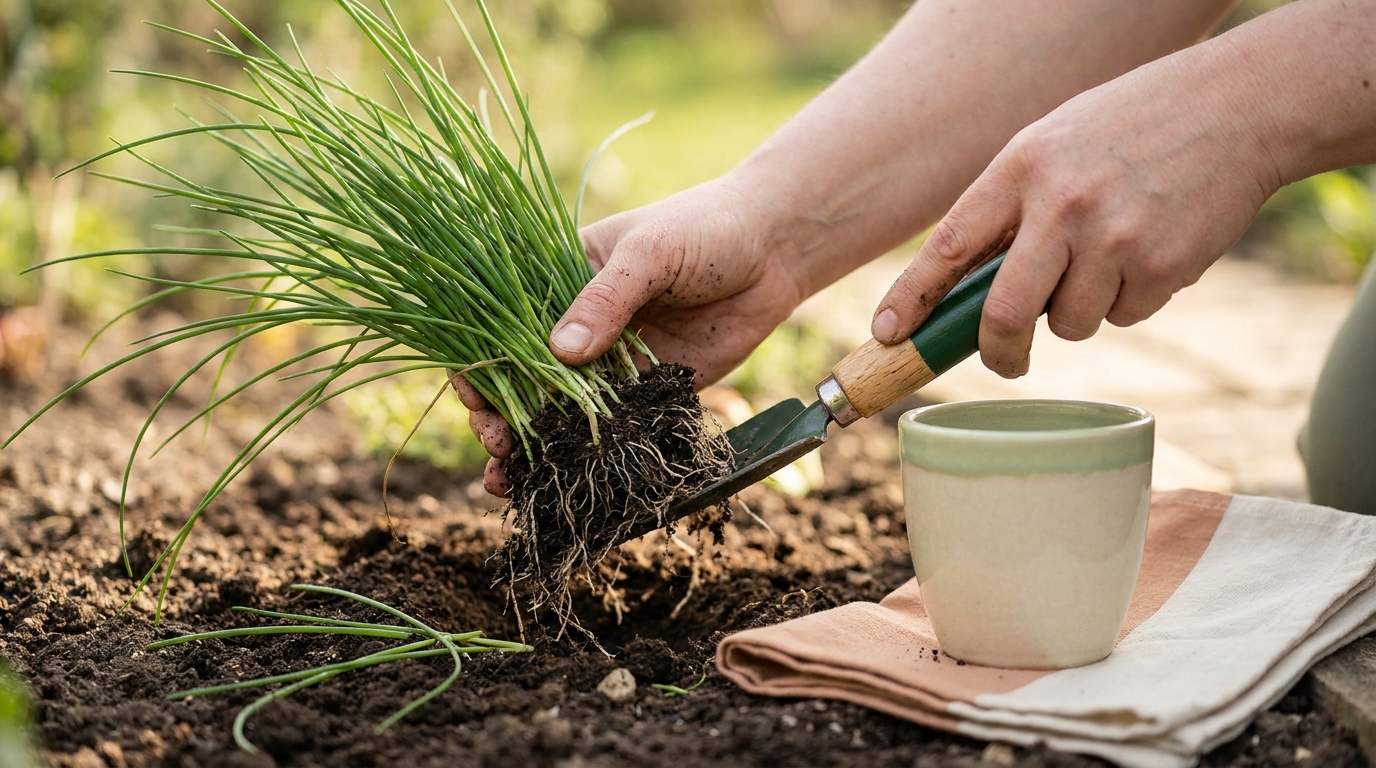
Divide potted chives in early spring or autumn. Slide the clump out of its pot, pull it apart by hand into smaller clumps, then replant each division into fresh peat-free, soil-based compost. Water well and keep the new pots in a bright, sheltered spot while they re-establish. Do this every three to four years to prevent overcrowding and keep plants vigorous (RHS chives guide; RHS: How to divide potted herbs).
When to divide chives in containers
- Best seasons: spring or autumn, when plants aren’t under heat stress (RHS chives guide).
- How often: every three to four years to stop clumps getting overcrowded and to maintain strong growth (RHS chives guide).
- Signs it’s time: a dense, congested clump with fewer fresh leaves is due for lifting and splitting (RHS chives guide).
What you’ll need
- Healthy, actively growing potted chives ready to handle.
- Fresh peat-free, soil-based compost suitable for containers.
- Pots with drainage holes; for single plants, aim for at least 20 cm (8 in) wide and deep (RHS chives guide).
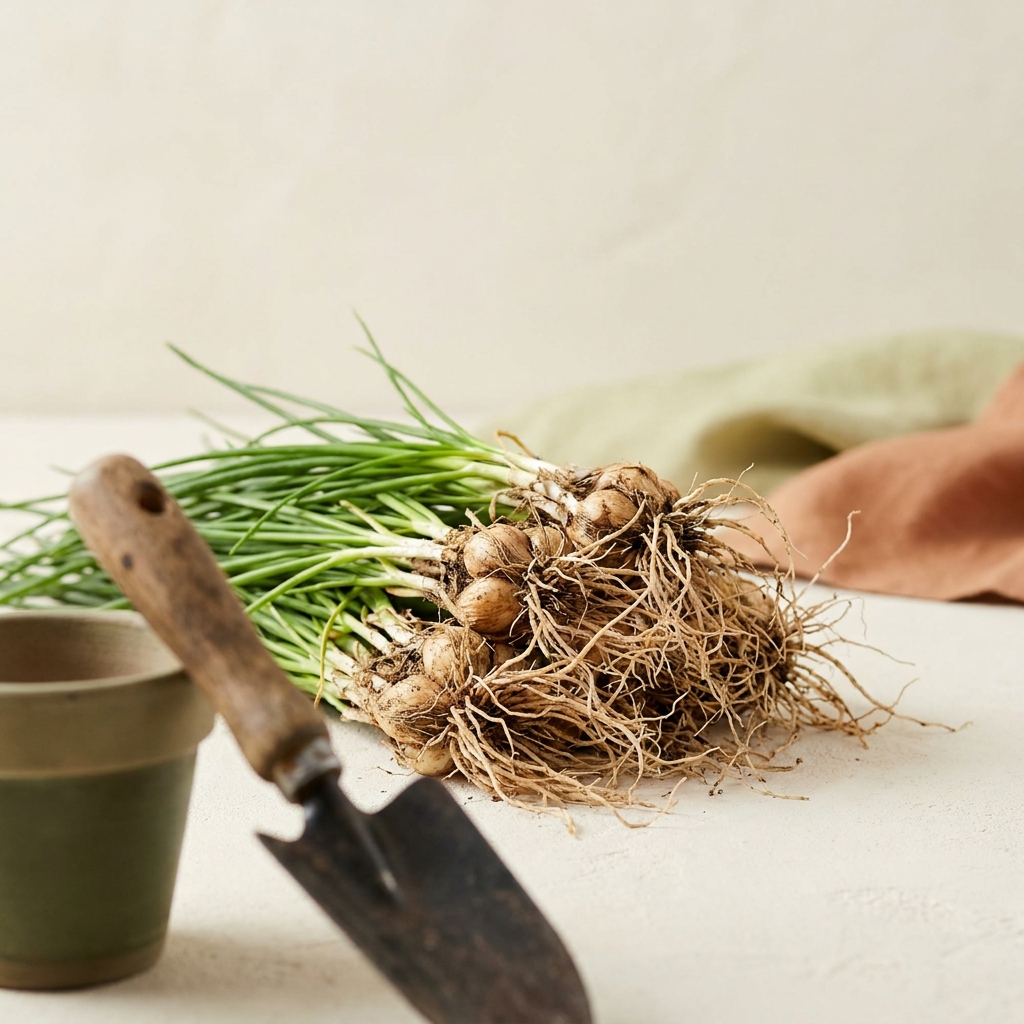
Step-by-step: dividing chives in a pot
- Choose a well-grown plant with strong new growth (RHS: How to divide potted herbs).
- Gently remove the whole clump from its pot (RHS: How to divide potted herbs).
- With your hands, pull the clump apart down the middle into two pieces. Check each for roots and shoots; if sturdy, split again into quarters (RHS: How to divide potted herbs).
- Pot each division separately into fresh peat-free, soil-based compost. If combining more than one division in a larger pot, space them at least 15 cm (6 in) apart and keep the crown at the same depth as before (RHS chives guide).
- Water thoroughly after potting and keep the new plants in a warm, bright place while they establish (RHS: How to divide potted herbs).
Aftercare for divided chives in containers
- Watering: container chives dry out faster than those in the ground. Through the growing season, keep compost evenly moist, not waterlogged (RHS chives guide).
- Light: place in sun or partial shade; both are suitable for chives (RHS chives guide).
- Tidy growth: remove old leaves and spent flower stalks to keep fresh foliage coming (RHS chives guide).
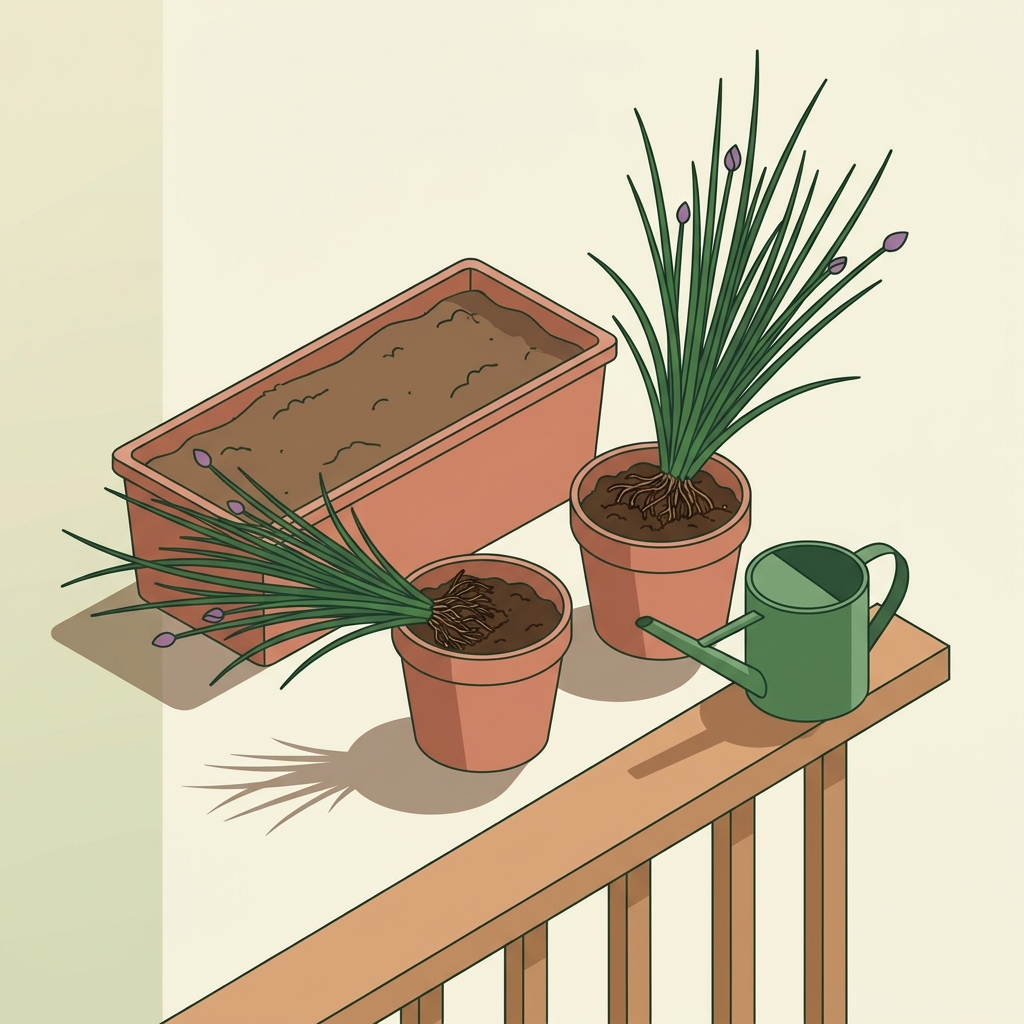
Container cautions that make a difference
- Drainage holes are essential; raise pots slightly to keep them free-draining and reduce winter waterlogging (RHS container guide).
- Avoid overpotting. Choose a pot only slightly larger than the division; oversized pots can hold too much wet compost and risk root rot (RHS container guide).
Short answers to common questions
How many pieces should I make? Halves or quarters are reliable. The goal is several small clumps, each with a good root portion and shoots, rather than many weak fragments (RHS: How to divide potted herbs).
What compost is best in pots? Use a peat-free, soil-based compost for longer-lasting structure in containers, and a pot at least 20 cm wide and deep per clump (RHS chives guide).
Put this into practice
Prepare the new containers and suitable mix before lifting the clump. Separate manageable rooted sections and record their labels, keeping edible-species identification separate from the act of dividing them.
Divide potted chives: quick checklist
Keep learning with Garden in Reach
- Do herbs like deep or shallow pots? A practical guide
- What are the biggest mistakes when repotting? Practical fixes

Optional equipment for this guide
A hand trowel is optional for handling potting mix. Choose tools around the size of the root ball, and do not force a large tool through crowded roots.
As an Amazon Associate I earn from qualifying purchases. These are researched options, not hands-on test results. Check the exact size or model, current price and availability on Amazon.
| Product option | Fit and limits to check | Retailer |
|---|---|---|
| Product imageFiskars Ergo garden trowel | A hand-trowel option for planting and potting. Compare the scoop with your container opening and choose a grip that works comfortably for you. | View on Amazon |