
The journal
What happens if you don't thin out carrots in containers?
Crowded carrot seedlings compete for space and resources. Learn when and how to thin carefully, using cultivar spacing and realistic recovery expectations.
If you don't thin carrot seedlings in a container, crowding limits root growth and access to nutrients, which can leave smaller or misshapen roots; the effect depends on the cultivar, crowding and other growing conditions Ask Extension: To thin seedlings or not.
How crowding affects container carrots
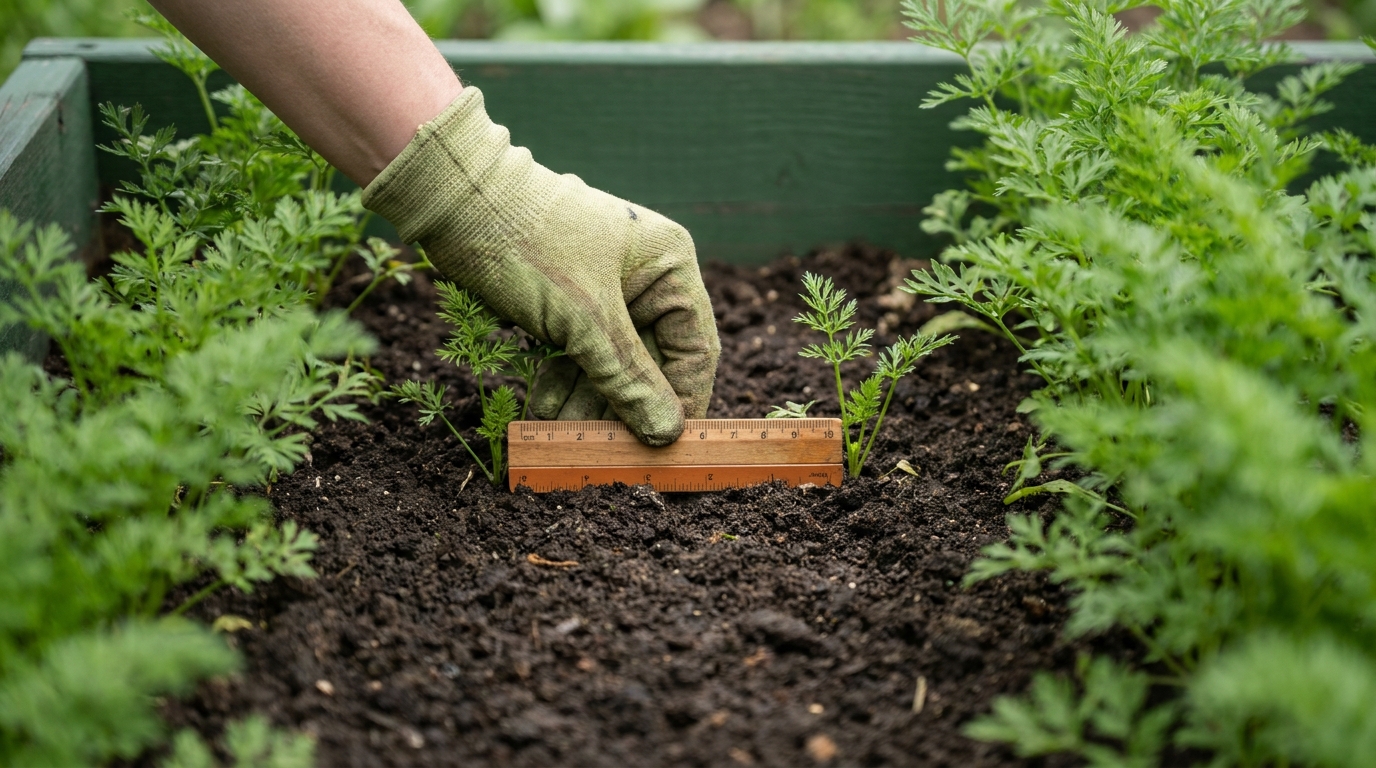
Carrots form one main taproot. In a pot, many seedlings compete in a small surface area. Without thinning, the roots jostle for space and nutrients, restricting diameter and reducing the usable harvest Ask Extension: To thin seedlings or not. Thinning to about 2 to 4 inches between plants gives each root enough room to develop Ask Extension: To thin seedlings or not.
When to thin in a pot
- First pass: thin once seedlings can be identified and handled and are becoming crowded; use the packet’s guidance rather than waiting for a compulsory height Ask Extension: To thin seedlings or not.
- Follow-up: check again as plants grow and use the cultivar’s final spacing. A second pass can help with uneven emergence, but there is no need to leave obvious crowding for a fixed number of weeks Homegrown Garden: Thinning Carrot Seedlings.
For a broader explainer on timing across crops, see When should seedlings be thinned?
How to thin carrots in containers with minimal disturbance
Step-by-step
- Identify the keepers: pick the stockiest, well-spaced seedlings and work around them.
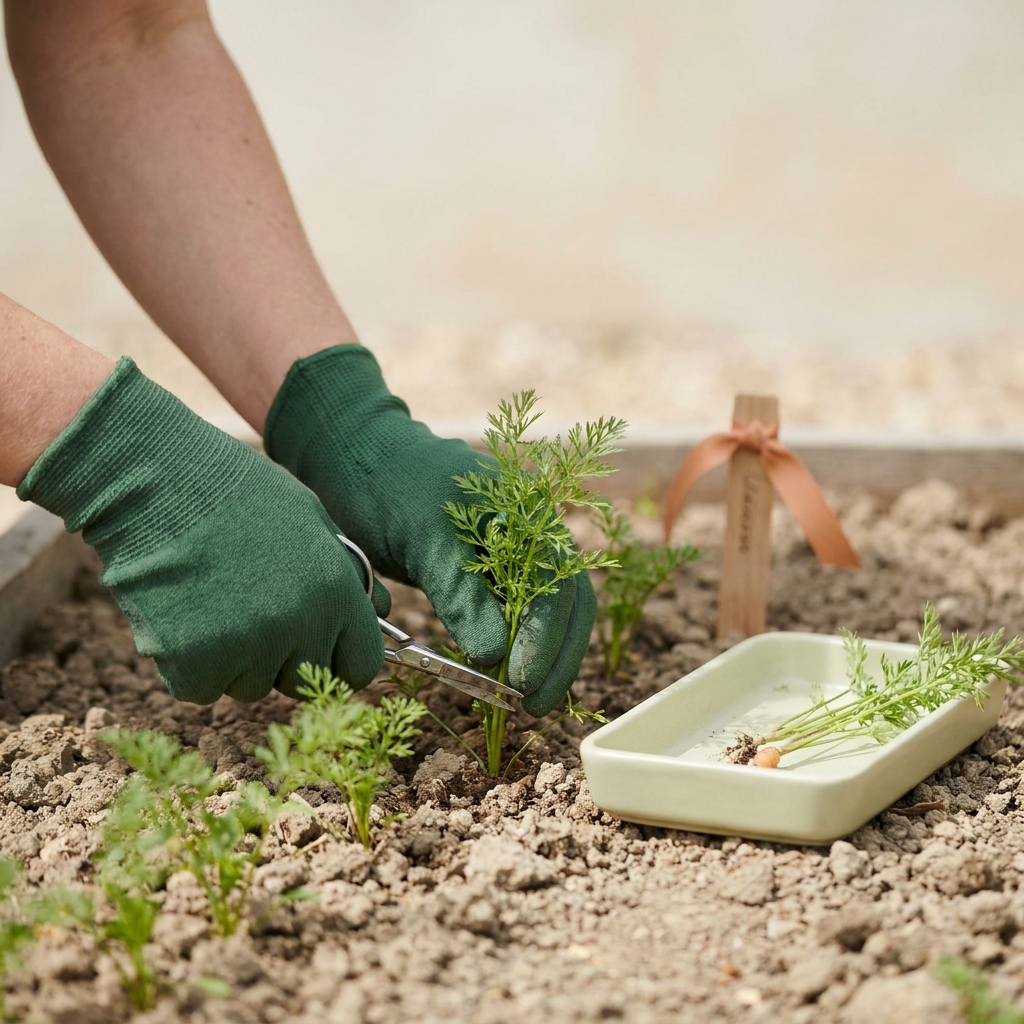
- Make space: use fine snips to cut surplus seedlings at soil level to avoid tugging neighbors. If you choose to pull, grasp by the seed leaves and ease straight up to reduce disturbance Homegrown Garden: Thinning Carrot Seedlings.
- Check spacing: aim for 2 to 4 inches between remaining plants across the pot surface Ask Extension: To thin seedlings or not.
- Settle the soil: water gently to collapse air pockets and help the keepers rebound. If you’re new to gentle watering, see What is the best way to water seedlings?
Tip: Thinning is easiest when the potting mix is slightly moist. Very dry mix crumbles and can shift nearby seedlings; very wet mix smears and compacts.
Simple spacing that works in a pot
Unlike garden rows, containers benefit from a loose grid. After your first pass, look down at the pot from above and adjust until neighboring seedlings are roughly 2 to 4 inches apart in all directions. Measure between the developing root crowns; foliage may overlap even when root spacing is adequate Ask Extension: To thin seedlings or not.
Left it too long? A quick recovery plan
If the container is already dense, create the cultivar’s required spacing with minimal disturbance to the plants you keep. Cutting unwanted seedlings at soil level can avoid pulling neighbouring roots. Extra space reduces competition, but it cannot guarantee that already stunted or damaged roots will recover their expected shape or size.
Common questions for container growers
- How many do I keep? As many as fit at 2 to 4 inches apart across the pot surface. Consider the usable surface area, growing depth and final spacing rather than the container’s nominal plant count Ask Extension: To thin seedlings or not.
- Do I have to pull thinnings? No. Cutting at soil level is a low-risk method that avoids jostling the keepers Homegrown Garden: Thinning Carrot Seedlings.
- What if my seed packet suggests different spacing? Follow the cultivar’s packet if it conflicts with the general 2 to 4 inch range.
Thin carrots in containers: quick checklist

Thinning feels counterintuitive, but in a container it gives the remaining roots more space, although final growth still depends on the cultivar, soil and care. Use as many careful passes as the stand needs, keep the intended spacing, and water gently afterwards.