
The journal
What is the best way to water seedlings?
The most reliable way to water seedlings is bottom-watering after they sprout, with gentle misting only for freshly sown seeds. Here’s how to do it well and when to switch methods.
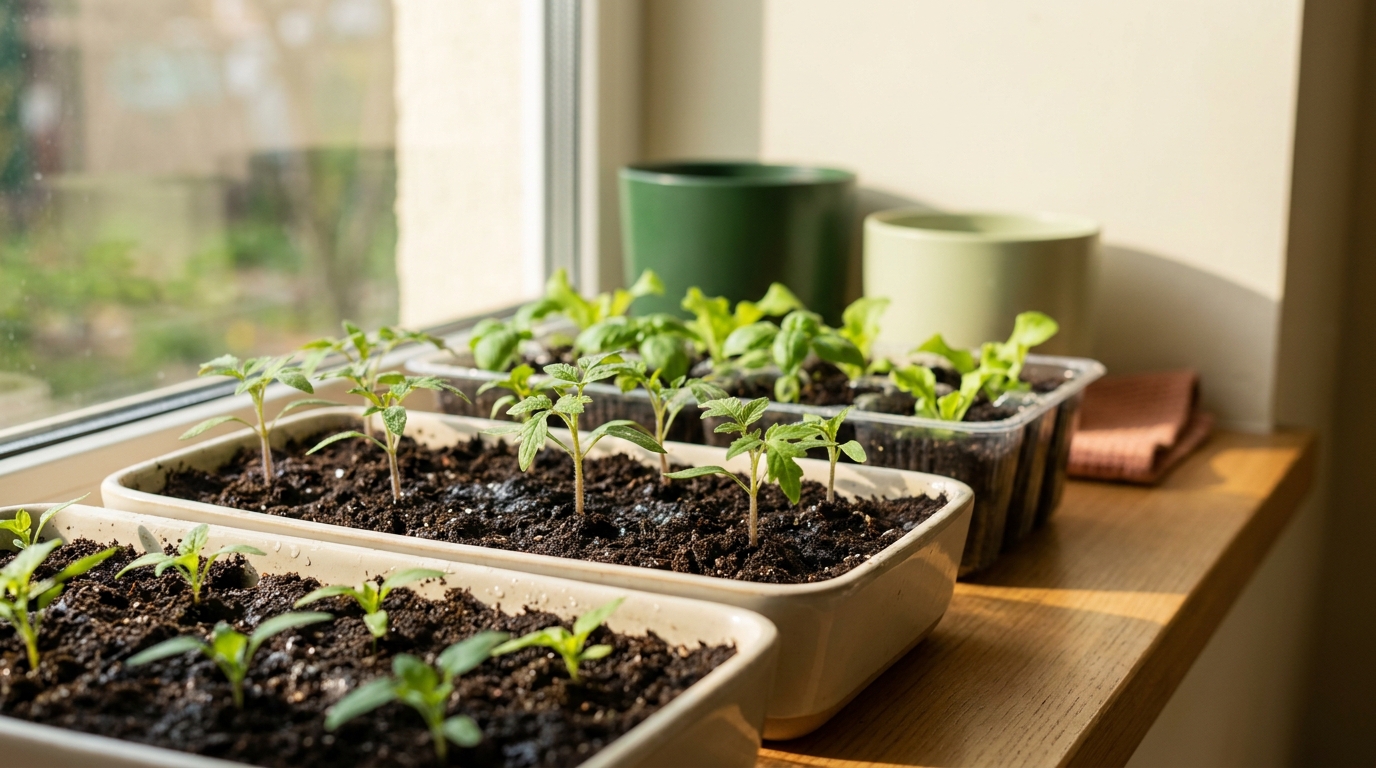
Bottom-watering is the best default once seedlings emerge. It lets the mix wick moisture up from a tray through the drainage holes, keeping the soil surface drier, protecting fragile stems, and encouraging roots to grow down toward water. Use a fine mist or very gentle top-watering only for freshly sown seeds or tiny sprouts, then switch to bottom-watering as soon as they germinate. Once true leaves develop, an occasional gentle top shower can supplement bottom-watering without disturbing plants Gardening Know How Bootstrap Farmer.
Why bottom-watering works (and how to do it)
Bottom-watering relies on capillary action: water in a watertight tray is pulled upward through the mix. This evenly wets the root zone and prevents force on delicate seedlings. Pre-moisten your seed-starting mix before sowing so it wicks well, then set your cell tray into a solid tray with a shallow reservoir of water. About 1/2 inch of water in the bottom tray is an easy starting point. Let the mix wick moisture until the surface darkens, then pour off any excess so water does not sit stagnant under the cells Bootstrap Farmer.
Keeping the surface relatively dry while the root zone stays moist helps reduce the conditions that favor damping off, a common seedling killer. It also avoids wetting foliage, which can raise fungal risk. These are key reasons bottom-watering is widely recommended for seed starting Gardening Know How Bootstrap Farmer.
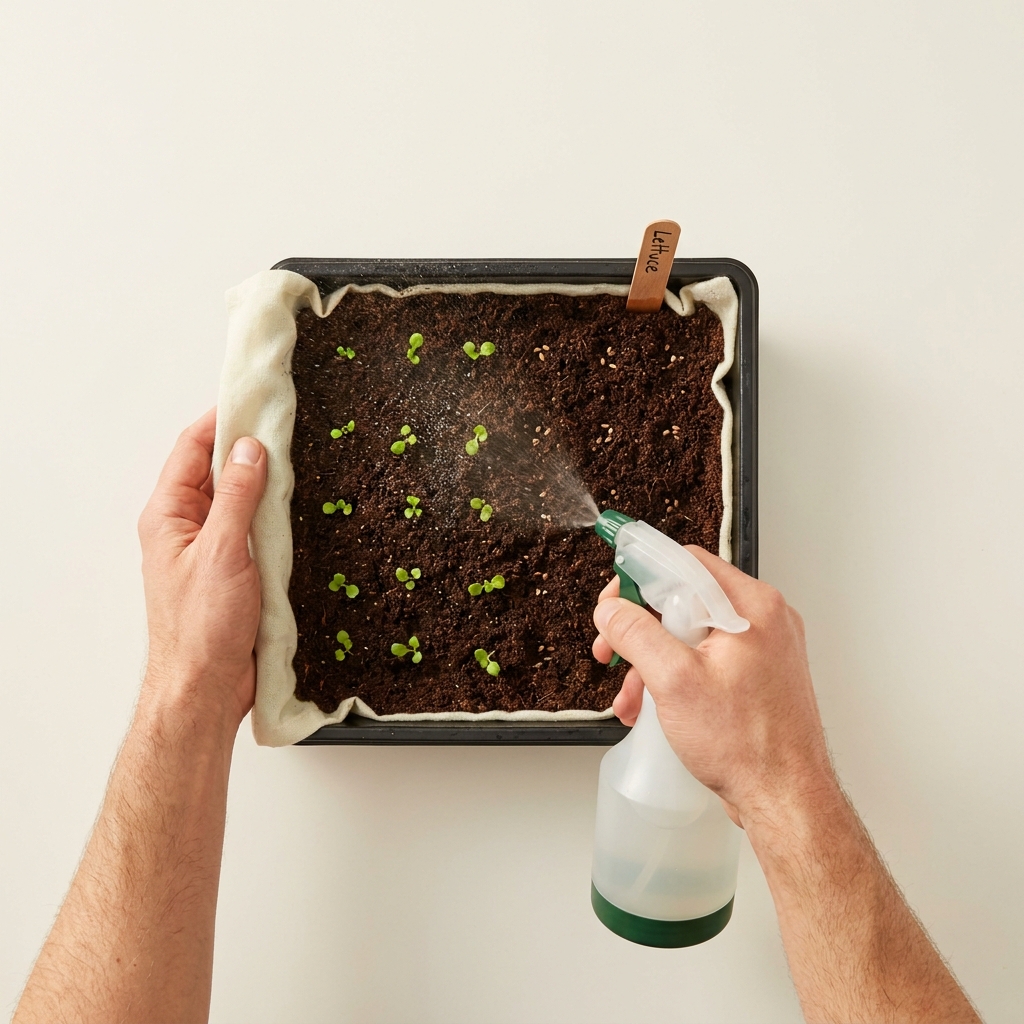
When to mist or top-water instead
Freshly sown seeds and tiny sprouts
Before germination and just after emergence, water from above gently with a mister or very soft spray so you do not displace seeds or knock over new seedlings. Avoid strong streams from a can or hose at this stage Bootstrap Farmer.
Established seedlings with true leaves
As seedlings grow and their water use rises, you can add a very gentle top shower using a watering can with a fine rose or a precision bottle so the flow lands like light rain. This wets the whole surface evenly without disturbing stems and complements your bottom-watering routine Gardening Know How.
How to know when to water
Do not use a rigid schedule. Instead, learn the weight of a tray when the mix is fully saturated, then lift it daily to feel how much moisture has been used. Judging moisture by weight is a reliable way to time refills and avoid both drying out and overwatering Bootstrap Farmer.
A simple, reliable routine
- Pre-moisten seed-starting mix before sowing so it wicks well Bootstrap Farmer.
- Mist lightly until seeds sprout or if seedlings are extremely small, then switch to bottom-watering as soon as they stand upright Bootstrap Farmer.
- For routine waterings, add about 1/2 inch of water to the tray in the morning, allow wicking, then drain any excess. Check again later in the day and adjust next time based on how quickly the tray lightens Bootstrap Farmer.
- Once true leaves appear, continue bottom-watering and, as needed, give a gentle top shower to fully moisten the mix without blasting stems Gardening Know How.
Set up bottom-watering the right way
Capillary mats and self-watering options
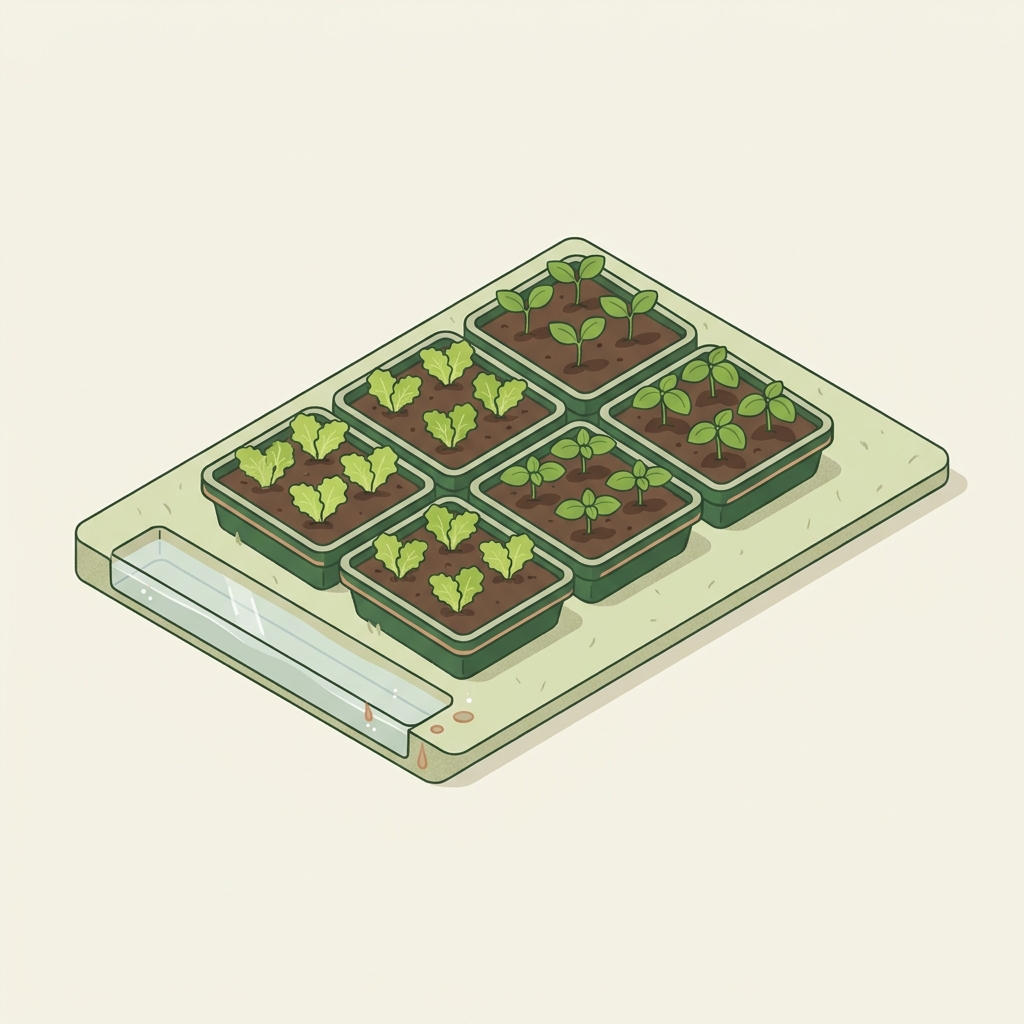
Capillary mats and self-watering trays automate bottom-watering by keeping a consistent wick from a small reservoir into the cell tray. They can greatly reduce hand-watering frequency. Be aware of two common caveats: salts can accumulate at the surface over time, which you can flush with an occasional gentle top-water, and roots may grow into mats if trays sit too long in one place. Periodically lifting trays or slicing roots at the cell bottom avoids damage at transplant Lee Reich.
Common mistakes and easy fixes
- Leaving water standing in the tray. Overfilling or letting water sit creates a stagnant, low-oxygen zone that invites problems. Add only a shallow reservoir and drain excess after wicking Bootstrap Farmer.
- Watering foliage. Keeping leaves wet raises fungal risk. Favor bottom-watering and use a very gentle top shower only when plants are sturdier Bootstrap Farmer Gardening Know How.
- Not cleaning reused trays. If you reuse trays, clean and sanitize them before sowing to reduce disease carryover. See How to clean and reuse seed starting trays.
- Persistently soggy media. If the surface never dries, reduce reservoir depth and increase airflow. If fungus gnats show up, follow our 30-day prevention and control plan.
Quick answers
How long should I bottom-water?
Use a shallow fill, let the mix wick until the surface darkens, then drain leftover water. A morning fill with a mid-day check helps you dial in volume for your conditions Bootstrap Farmer.
Do I need special equipment?
No. A perforated cell tray that nests inside a watertight tray is enough. Capillary mats and flood tables can automate watering if you prefer a set-and-check system Bootstrap Farmer Lee Reich.

Related guides
Product options for this topic
As an Amazon Associate I earn from qualifying purchases. These are researched options, not hands-on test results. Check the exact size or model, current price and availability on Amazon.
| Product option | Fit and limits to check | Retailer |
|---|---|---|
| Product imageXLUX long-probe soil moisture meter | A probe to supplement checks of potting-mix moisture. Readings vary with mix and placement; combine them with pot weight and a finger check. | View on Amazon |
| Product imageHaws Handy one-pint watering can, Green | A small watering can for indoor pots and seedlings. Its modest capacity suits short watering rounds rather than a large outdoor bed. | View on Amazon |