
The journal
Can you leave terracotta pots outside in winter?
A clear answer with practical steps to decide which terracotta pots can stay outdoors, how to protect them, and when to bring them in.
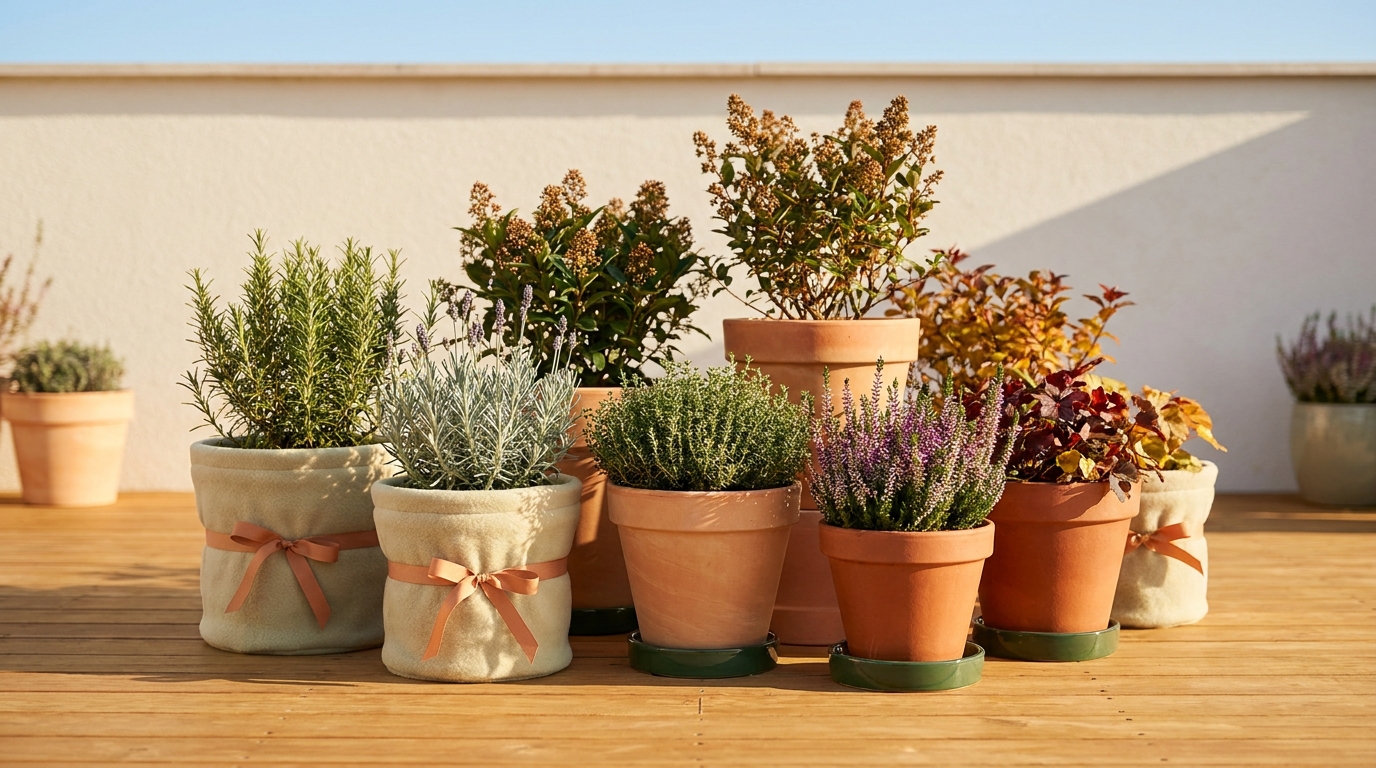
Short answer: sometimes. Terracotta is porous and prone to cracking when absorbed water freezes, so the safest approach in freezing climates is to store terracotta pots dry and covered. If you must leave a pot out, keep it as dry as possible, ensure excellent drainage, elevate it off the ground, and insulate the sides while keeping the drain hole clear (https://extension.psu.edu/overwintering-plants-in-containers; https://www.bbg.org/article/overwintering_potted_plants; https://ucanr.edu/site/uc-master-gardeners-santa-clara-county/container-gardening).
Why terracotta cracks in winter
Clay and terracotta pots are porous, which helps aeration but also lets them absorb moisture (https://ucanr.edu/site/uc-master-gardeners-santa-clara-county/container-gardening). When temperatures drop below freezing, water in the clay and in waterlogged soil expands into ice, stressing the pot wall. Extension guidance notes it is best not to leave clay, ceramic, or glazed pottery exposed to winter wet and freeze because they may crack (https://extension.psu.edu/overwintering-plants-in-containers). Brooklyn Botanic Garden similarly advises that most terracotta is not suitable for leaving outside in freezing temperatures (https://www.bbg.org/article/overwintering_potted_plants).
Freeze-thaw cycles are especially damaging: repeated freezing and thawing opens small fissures and can lead to failure. If a pot must remain outdoors, using a larger container increases soil volume and root insulation, but you still need to manage moisture to protect the pot (https://www.bbg.org/article/overwintering_potted_plants).
Decide: leave outside, protect in place, or bring inside
- Climate and exposure: If your winters regularly freeze, storage under cover is usually safest for terracotta. For milder regions or brief cold snaps, sheltering and insulating may suffice (https://www.bbg.org/article/overwintering_potted_plants).
- Pot condition: Bring in thin-walled, chipped, or hairline-cracked pots. Pre-existing flaws fail sooner under freeze-thaw.
- Size and weight: Large pots buffer roots better but are heavy. Protecting in place can be more practical than moving the root ball (https://www.bbg.org/article/overwintering_potted_plants).
- Plant value: If the plant is irreplaceable, prioritize the plant’s survival and the pot’s protection rather than risking both.
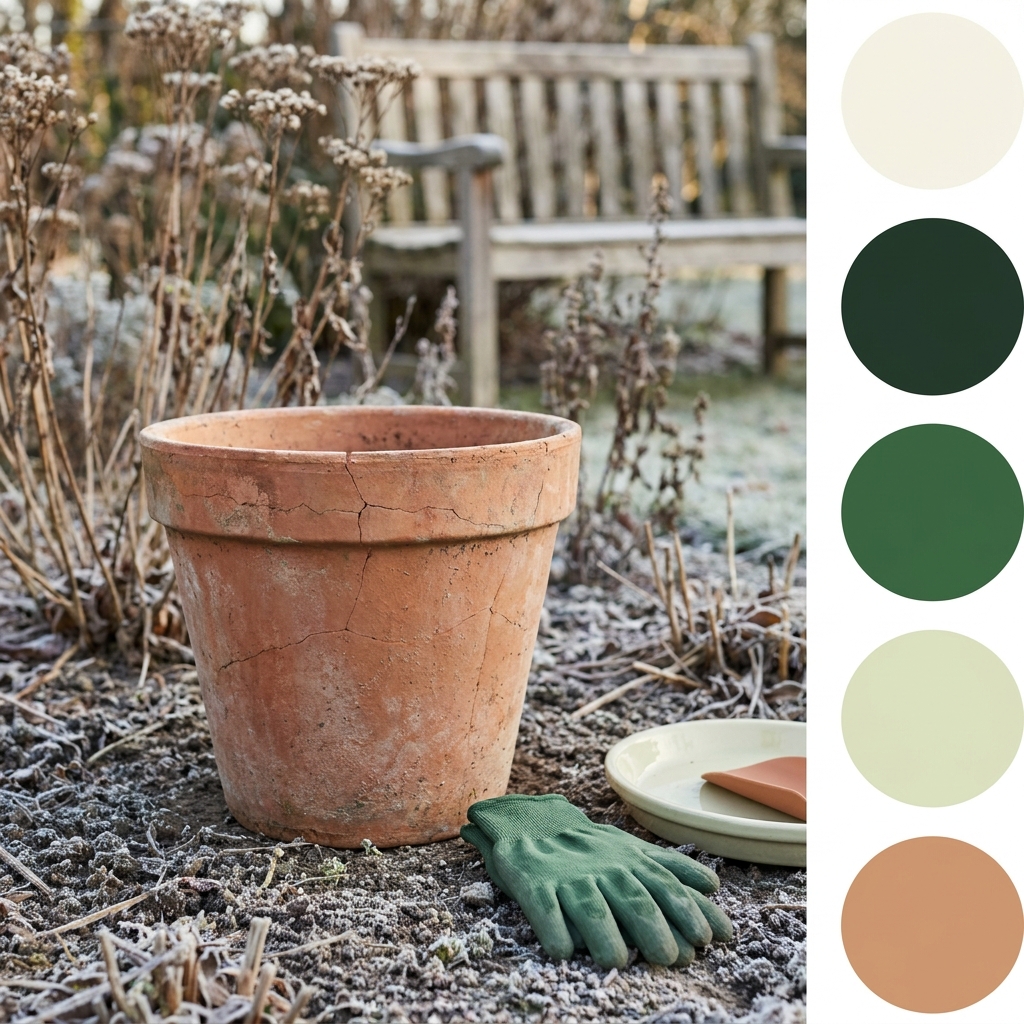
How to protect a terracotta pot you leave outdoors
- Keep water moving: Confirm there are drain holes and that they are open. Remove saucers in winter so the pot does not sit in water (https://ucanr.edu/site/uc-master-gardeners-santa-clara-county/container-gardening).
- Elevate the base: Set pots on feet, bricks, or wood blocks to keep the bottom from wicking moisture off cold, wet ground (https://www.eyeofthedaygdc.com/2015/10/5-tips-for-winterizing-your-terracotta-pottery/).
- Shelter and group: Move pots against a building, under an eave, or near a south-facing wall; cluster containers so they protect one another from wind (https://www.bbg.org/article/overwintering_potted_plants).
- Insulate the sides only: Wrap pot sides with insulating material such as bubble wrap or burlap, then add a weather-shedding layer so the pot doesn’t re-wet. Keep the top and drain hole clear so water can escape (https://extension.psu.edu/overwintering-plants-in-containers; https://www.bbg.org/article/overwintering_potted_plants).
- For planted pots: After watering well before the soil freezes, mulch the soil surface and around the plant to protect roots. Check occasionally so soil is not bone dry or waterlogged (https://extension.psu.edu/overwintering-plants-in-containers).
- For empty pots: Store terracotta upside down or on its side in a dry place. If a large pot cannot be moved, cover it to keep water from accumulating inside and freezing (https://www.bbg.org/article/overwintering_potted_plants).
- About sealers: Some gardeners use penetrating masonry sealers on unglazed terracotta to reduce absorption; this can help but does not make a pot winter-proof. Keep unglazed areas as dry as possible regardless (https://www.eyeofthedaygdc.com/2015/10/5-tips-for-winterizing-your-terracotta-pottery/; https://www.blackrivertrading.ca/pots-in-the-winter).
Decide what to do with each terracotta pot before hard freezes
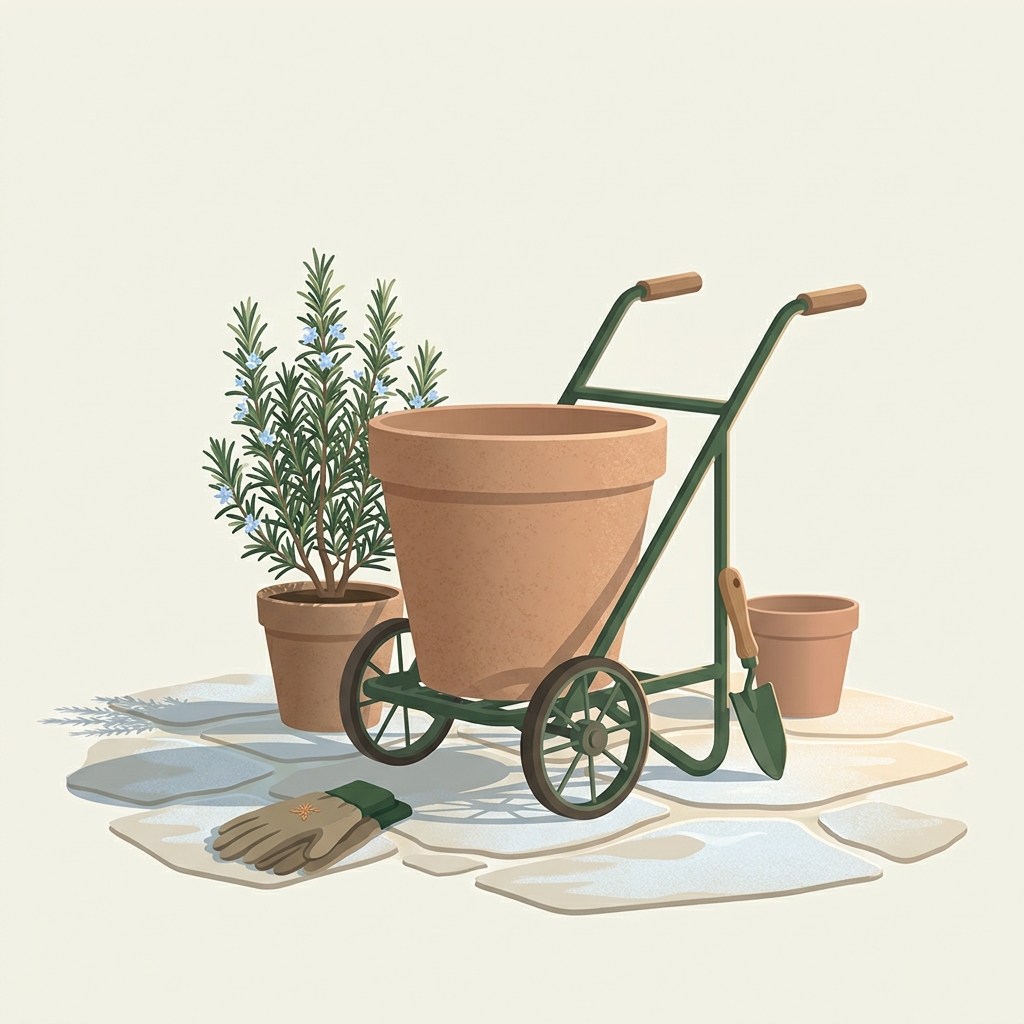
Common mistakes to avoid
- Leaving saucers on or blocking drainage. Pots that sit in water are far more likely to crack (https://ucanr.edu/site/uc-master-gardeners-santa-clara-county/container-gardening).
- Assuming glaze makes a pot safe. Even glazed or ceramic pots can crack when exposed to winter wet and freezes (https://extension.psu.edu/overwintering-plants-in-containers).
- Wrapping over the drain hole. Insulate the sides but keep the base and drain path open so water can escape (https://extension.psu.edu/overwintering-plants-in-containers).
- Relying on “frost resistant” labels alone. Clay density and firing vary; dryness and protection still matter (https://www.bbg.org/article/overwintering_potted_plants; https://www.blackrivertrading.ca/pots-in-the-winter).
Quick examples
- Small terracotta pot with a shallow-rooted plant in a freezing climate: Bring it into an unheated garage or shed and keep the soil just slightly moist, not wet (https://extension.psu.edu/overwintering-plants-in-containers).
- Large, heavy terracotta with a hardy shrub: Leave in place on pot feet, move against a wall, wrap the sides, mulch the soil surface, and monitor moisture (https://www.bbg.org/article/overwintering_potted_plants; https://extension.psu.edu/overwintering-plants-in-containers).
- Empty decorative terracotta: Dry thoroughly and store upside down in a dry, sheltered spot. If too big to move, keep it covered so water cannot collect and freeze inside (https://www.bbg.org/article/overwintering_potted_plants).
Related for container gardeners
- How often should you water potted plants in autumn?
- Will herbs survive winter in pots? Practical container care and choices
FAQ
Can glazed terracotta stay outside?
Glaze helps shed water, but even glazed or ceramic pots can crack when exposed to winter wet and freeze-thaw. If they must stay out, wrap and shelter them, and keep drains open (https://extension.psu.edu/overwintering-plants-in-containers; https://www.bbg.org/article/overwintering_potted_plants).
Do pot feet really help in winter?
Yes. Elevating pots reduces wicking from wet ground and helps drainage, both of which lower freeze stress on the clay (https://www.eyeofthedaygdc.com/2015/10/5-tips-for-winterizing-your-terracotta-pottery/).
Should I seal terracotta for winter?
Some gardeners use penetrating masonry sealers to reduce moisture uptake. This can help but does not make pots winter-proof; keeping unglazed areas dry remains essential (https://www.blackrivertrading.ca/pots-in-the-winter; https://www.eyeofthedaygdc.com/2015/10/5-tips-for-winterizing-your-terracotta-pottery/).

Related guides
Product options for this topic
As an Amazon Associate I earn from qualifying purchases. These are researched options, not hands-on test results. Check the exact size or model, current price and availability on Amazon.
| Product option | Fit and limits to check | Retailer |
|---|---|---|
| Product imageXLUX long-probe soil moisture meter | A probe to supplement checks of potting-mix moisture. Readings vary with mix and placement; combine them with pot weight and a finger check. | View on Amazon |
Sources and further reading
- Overwintering Plants in Containers | Penn State Extension
- Overwintering Potted Plants | Brooklyn Botanic Garden
- Container Gardening | UC Master Gardeners of Santa Clara County
- 5 Tips for Winterizing Your Terracotta Pottery | Eye of the Day
- Can I Leave Pots Outside in the Winter? | Black River Trading Company