
The journal
How often should you water potted plants in autumn?
Replace the summer watering routine with checks of the plant, potting mix and drainage. Build a useful autumn log without relying on a fixed interval.
Key takeaways
- Water when that plant's potting mix needs it, rather than every fixed number of autumn days.
- Rain on the leaves does not prove the roots are wet. Check sheltered pots separately.
- Keep drainage clear; a cold, waterlogged pot needs investigation, not another scheduled drink.
Autumn changes the checks, not just the calendar
There is no reliable “every seven days” rule for all potted plants in autumn. The practical answer is to check the moisture against the needs of the particular plant, then water if needed. A small exposed pot on a warm, windy balcony can behave very differently from a large container under a cool porch.
The RHS container-growing guide highlights both the limited water available to container roots and their vulnerability to winter waterlogging and cold. A seasonal watering routine needs to account for both drying and poor drainage.
Put a reminder in your calendar to inspect, not an instruction to pour water. Check again after an unusual warm or windy spell, after moving a pot, or if its mix dries much faster than expected. The result of an inspection can be “no water needed”.
Check the mix and the drainage
Feel below the surface where accessible without damaging roots. Compare that observation with the plant's requirements: a moisture-loving plant and a drought-adapted succulent should not be managed identically. The dry-looking top of a deep pot does not establish that its lower mix is dry.
For a small container you can lift safely, learn how it feels after normal watering and drainage, then compare later checks. Do not lift heavy pots or use a weight comparison with a different container as if it were a moisture measurement. A wooden probe can provide another observation, but no simple reading diagnoses the plant's health.
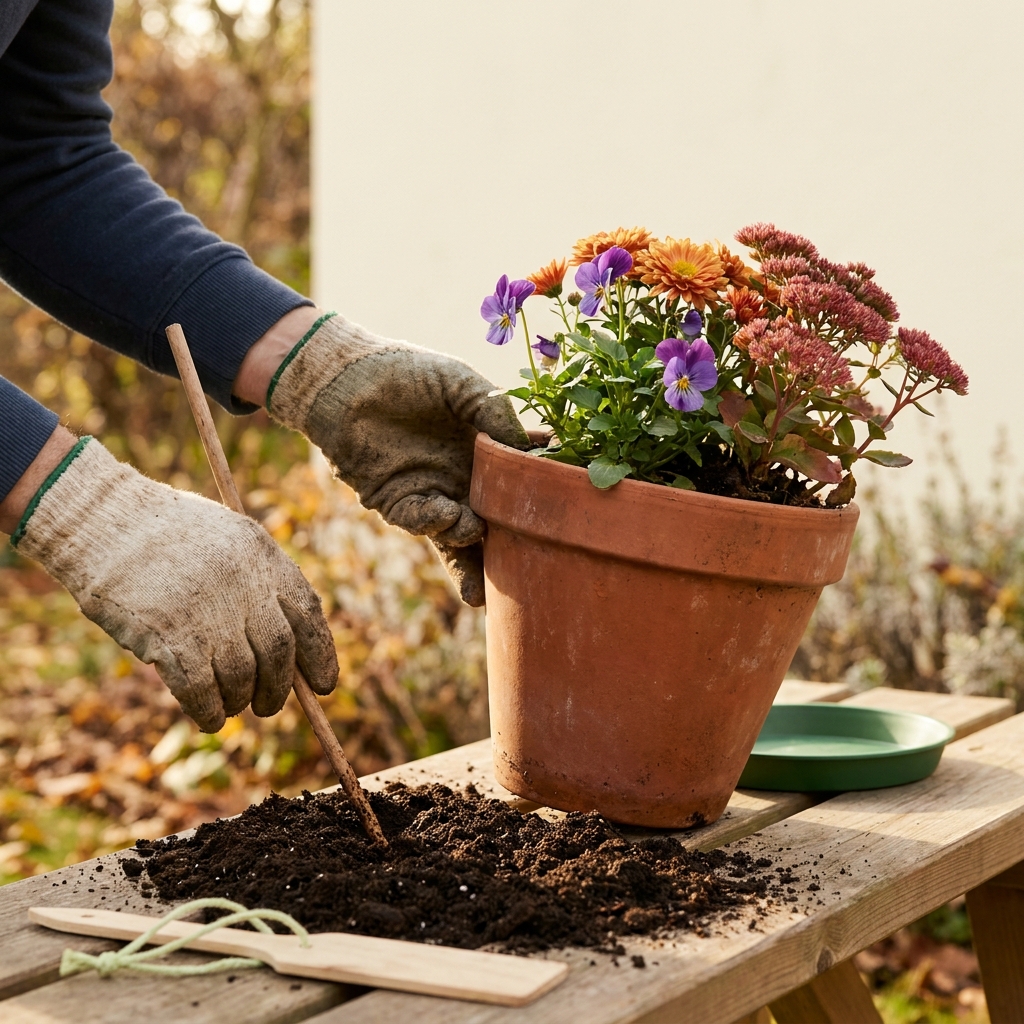
Look underneath for obstructed drainage holes and check inside decorative outer pots. Water left out of sight can keep the growing container saturated. University of Minnesota Extension advises emptying catch trays to avoid prolonged waterlogged conditions. Most container plants need moisture rather than constantly soggy mix.
Give different pots different notes
Group your notes by plant and location rather than assuming every pot on the patio follows one schedule. Record whether rain can actually reach the mix. Containers beneath eaves may stay dry during a rainy week; an open pot elsewhere may receive more water than it needs.
For example, label two containers “sheltered herb” and “open patio shrub”, then record what you find on each check. These are examples of useful labels, not prescriptions for watering either plant. Add its name and growing requirements before making a decision.
Where a pot stays wet, look at drainage, exposure and plant suitability before adding more water. Where it repeatedly dries rapidly, check its actual volume, root occupancy and growing mix. Do not diagnose either problem from a yellow leaf alone.
When water is needed, make it reach the roots
Use the appropriate method for the plant and container, applying water to the mix rather than merely misting the surface. Observe whether it is absorbed and whether excess can drain. Water running immediately down a gap at the pot edge does not demonstrate that the root ball has been rewetted.
If the mix is difficult to rewet or water repeatedly pools, consult guidance for that growing medium and plant. Avoid compensating with repeated unmeasured splashes. Our container-watering guide and potting-mix guide explain the wider setup.

Prepare for colder weather without a “final soak” rule
AHDB's guidance for container-grown hardy nursery stock stresses adjusting irrigation as light, day length and temperature fall while maintaining good drainage. That supports reducing unnecessary watering, not abandoning observation altogether.
Do not use a universal rule to saturate every pot a certain number of hours before frost. Overwintering needs depend on the plant, container and local climate. Check species-specific guidance and local horticultural advice for hard freezes; protection of exposed roots is a separate job from choosing a watering interval.
Keep a record you can use next week
A useful log has five columns: date, plant and location, moisture observation, action taken, and next check. Write “mix still moist, no water” as readily as “watered and drained”. After several entries, use your own observations to choose a sensible inspection rhythm for that pot.
Autumn container check
This checklist is an inspection aid. It does not calculate litres or certify that a plant needs water.
Common questions
Is weekly watering enough in autumn?
It may be too much for one pot and too little for another. Inspect the mix and apply the plant's requirements rather than treating a week as a universal interval.
Can I stop checking after rain?
No. Shelter and foliage can change how much rain reaches the mix, while an exposed pot can remain too wet. Check the actual container.
Should I leave a saucer full?
Avoid prolonged waterlogging and follow the plant's requirements. Check decorative outer containers as well as visible saucers.
Product options for this topic
As an Amazon Associate I earn from qualifying purchases. These are researched options, not hands-on test results. Check the exact size or model, current price and availability on Amazon.
| Product option | Fit and limits to check | Retailer |
|---|---|---|
| XLUX long-probe soil moisture meter | A probe to supplement checks of potting-mix moisture. Readings vary with mix and placement; combine them with pot weight and a finger check. | View on Amazon |
| Haws Handy one-pint watering can, Green | A small watering can for indoor pots and seedlings. Its modest capacity suits short watering rounds rather than a large outdoor bed. | View on Amazon |