
The journal
How to grow lettuce indoors in small spaces
A practical, step-by-step guide to growing loose-leaf and baby-leaf lettuce indoors with the right light, cool temperatures, containers, watering and harvest methods.
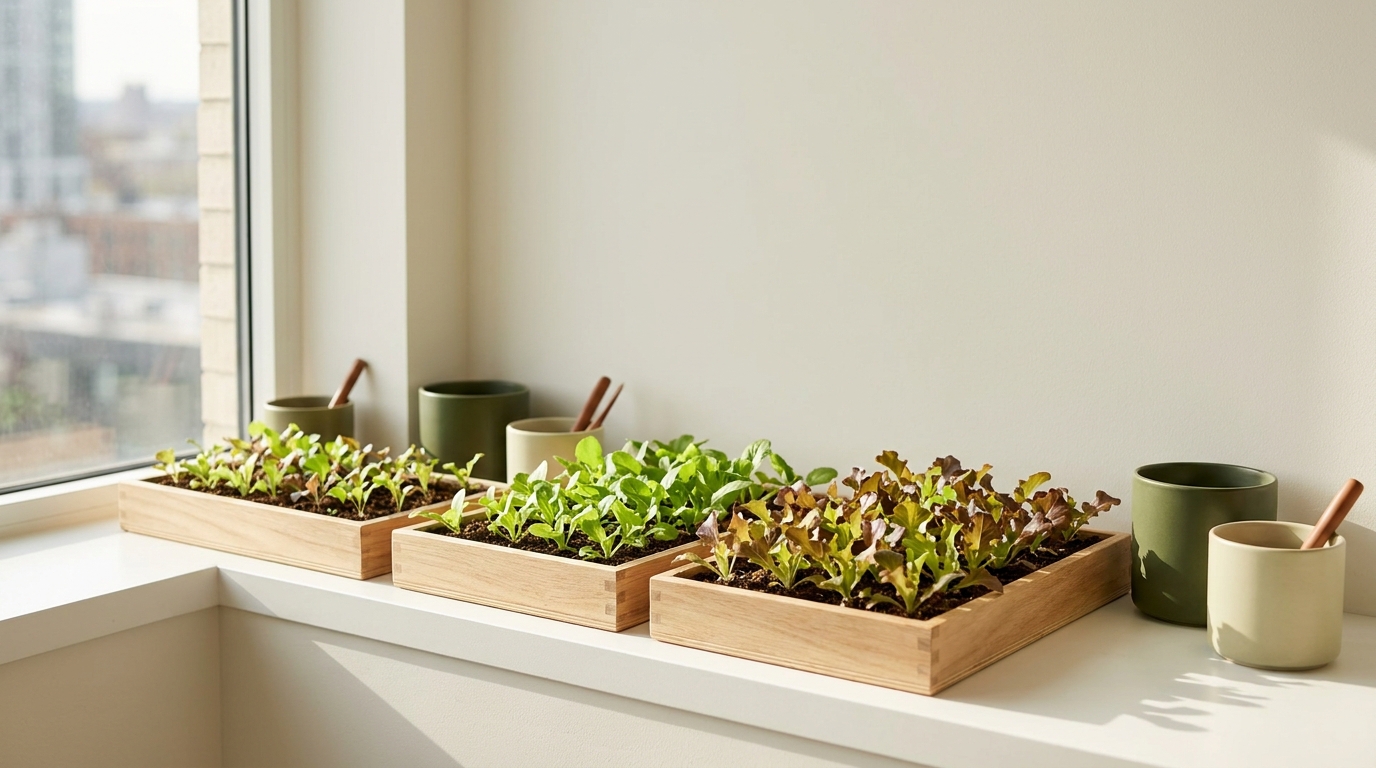
Yes. To grow lettuce indoors successfully, choose loose-leaf varieties, provide about 6-8 hours of bright sun or use grow lights for roughly 14-16 hours daily, keep temperatures on the cool side, and maintain even moisture. These points align with horticultural guidance that lettuce is a cool-season crop prone to bolting and bitterness in heat, and that loose-leaf lettuces harvest quickly as cut-and-come-again crops (RHS lettuce guide; Illinois Extension winter indoor tips).
Indoor essentials: light, temperature, containers and mix
Light that actually works indoors
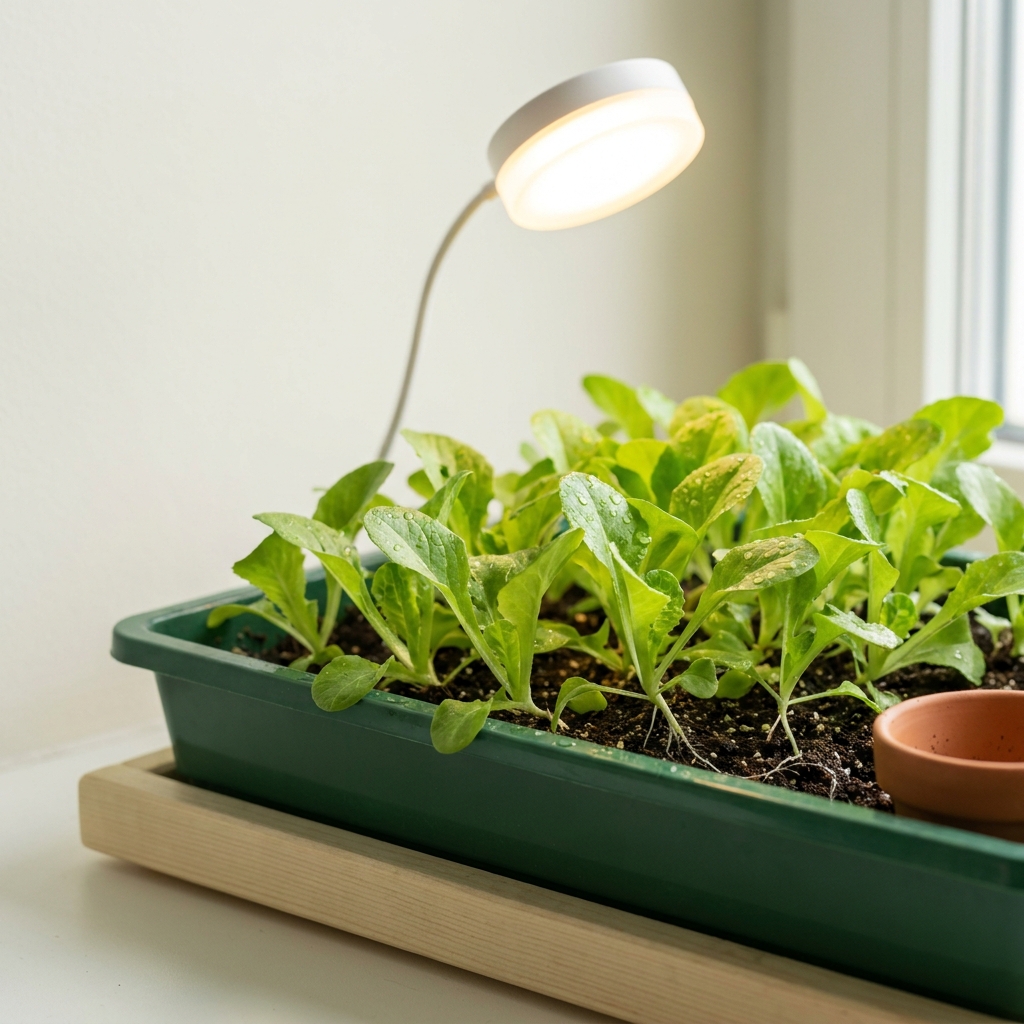
If you have a bright south-facing window, aim for 6-8 hours of sun. Most homes benefit from supplemental lights: keep fluorescent or LED grow lights about 6-12 inches above plants and run them 14-16 hours per day for sturdy growth (Illinois Extension). Rotate containers every few days so plants don’t lean strongly toward the light.
Keep it cool to avoid bitterness
Lettuce prefers cooler indoor rooms; under about 70°F is a good target. Heat and drought trigger bolting, which makes leaves bitter, so keep plants away from radiators and hot, sun-baked panes and water consistently (Illinois Extension; RHS lettuce guide).
Containers, drainage and potting mix
Use shallow trays or small pots with drainage holes and a light, well-draining potting mix. Avoid using garden soil indoors; it compacts and can introduce pests. A good organic potting mix suits lettuce roots and helps prevent waterlogging (Growing North indoor salad basics; Illinois Extension). If you plan to grow full heads, ensure adequate container depth; see our guide on container depth for lettuce.
Step-by-step: from sowing to first harvest
Sow, then thin or harvest early
Sow thinly across the surface and barely cover the seed. Keep the mix evenly moist until germination, then thin gradually or begin harvesting baby leaves to prevent crowding and improve airflow (Mother Earth News quick indoor crop; RHS lettuce guide).
Watering rhythm and a light feeding
Indoors, containers dry faster. Aim for consistently moist (not soggy) mix and water in the morning when possible. In containers, a light general-purpose liquid feed every couple of weeks during active growth can help, but don’t overdo it (RHS lettuce guide).
Light schedule recap
Under artificial lights, keep fixtures 6-12 inches above the foliage and run 14-16 hours daily for compact, robust plants (Illinois Extension).
When to harvest
For baby leaves, expect the first pick in about 3-4 weeks in good light, with ongoing pickings afterward (Mother Earth News). Many loose-leaf lettuces reach pickable size within 4-6 weeks, especially under favorable conditions (RHS lettuce guide).
Varieties that suit indoor growing
Loose-leaf beats head lettuce indoors
Loose-leaf types and salad-leaf mixes are compact, fast, and ideal for repeated picking. Head-forming lettuces need more space and stronger, longer light to form dense hearts, so they’re usually less reliable indoors (RHS lettuce guide; Illinois Extension).
Troubleshooting: aphids, bolting and leaf problems
Aphids
Check undersides of leaves regularly. If you spot early colonies, remove affected leaves and gently rinse plants. Improving airflow and avoiding over-crowding also helps (RHS lettuce guide).
Bolting and bitterness
Signs include rapid vertical growth and a forming flower stalk. Move plants to a cooler spot, thin to reduce stress, and keep moisture steady. Heat and drought are common triggers (RHS lettuce guide; Illinois Extension).
Leaf diseases and humidity
Dense, damp foliage can invite grey mould. Water in the morning, avoid wetting leaves when possible, and maintain spacing for airflow (RHS lettuce guide).
Weekly indoor lettuce care checklist
Harvest for ongoing salads
Cut-and-come-again made simple
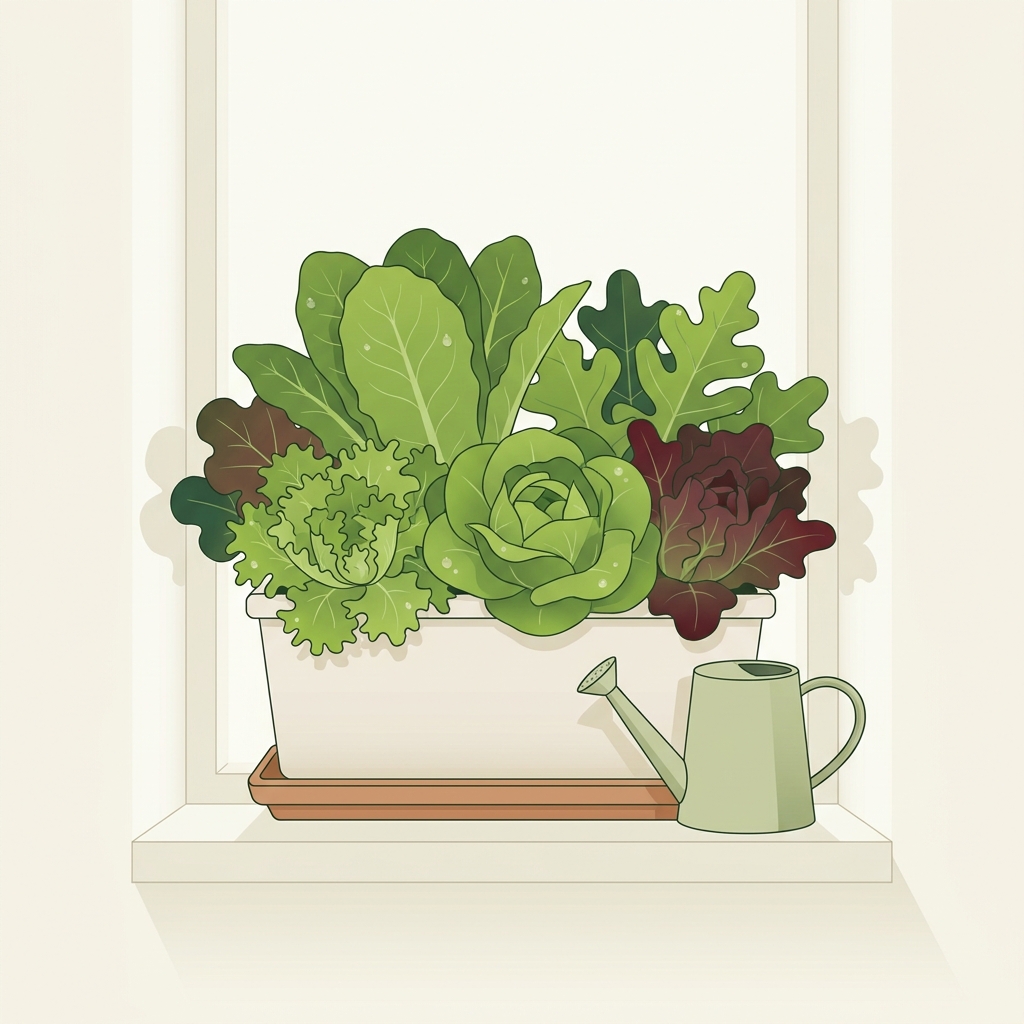
Harvest outer leaves and leave the crown so plants keep producing; you can get multiple pickings this way (RHS lettuce guide). For a deeper dive on regrowth, see does lettuce regrow after cutting?
Rinse gently, spin or pat dry, and store loosely covered in the fridge. Only harvest what you need; tender indoor leaves are best fresh.
Short FAQ
Can I grow lettuce indoors year-round?
Yes, if you provide adequate light and keep temperatures cool. Even in short days, lettuce and herbs can be grown indoors with supplemental lighting (Illinois Extension).
How close and how long should I run grow lights?
Keep lights roughly 6-12 inches above the foliage and run them 14-16 hours per day to compensate for weaker indoor light (Illinois Extension).

Related guides
Product options for this topic
As an Amazon Associate I earn from qualifying purchases. These are researched options, not hands-on test results. Check the exact size or model, current price and availability on Amazon.
| Product option | Fit and limits to check | Retailer |
|---|---|---|
| Product imageFiskars Ergo garden trowel | A hand-trowel option for planting and potting. Compare the scoop with your container opening and choose a grip that works comfortably for you. | View on Amazon |