
The journal
What’s the best thing to clean garden tools with?
Straightforward care for hand tools: brush off soil, rinse if needed, dry fully, then oil pivots and blades. When to disinfect, how to handle sap and rust, plus simple storage tips for small spaces.
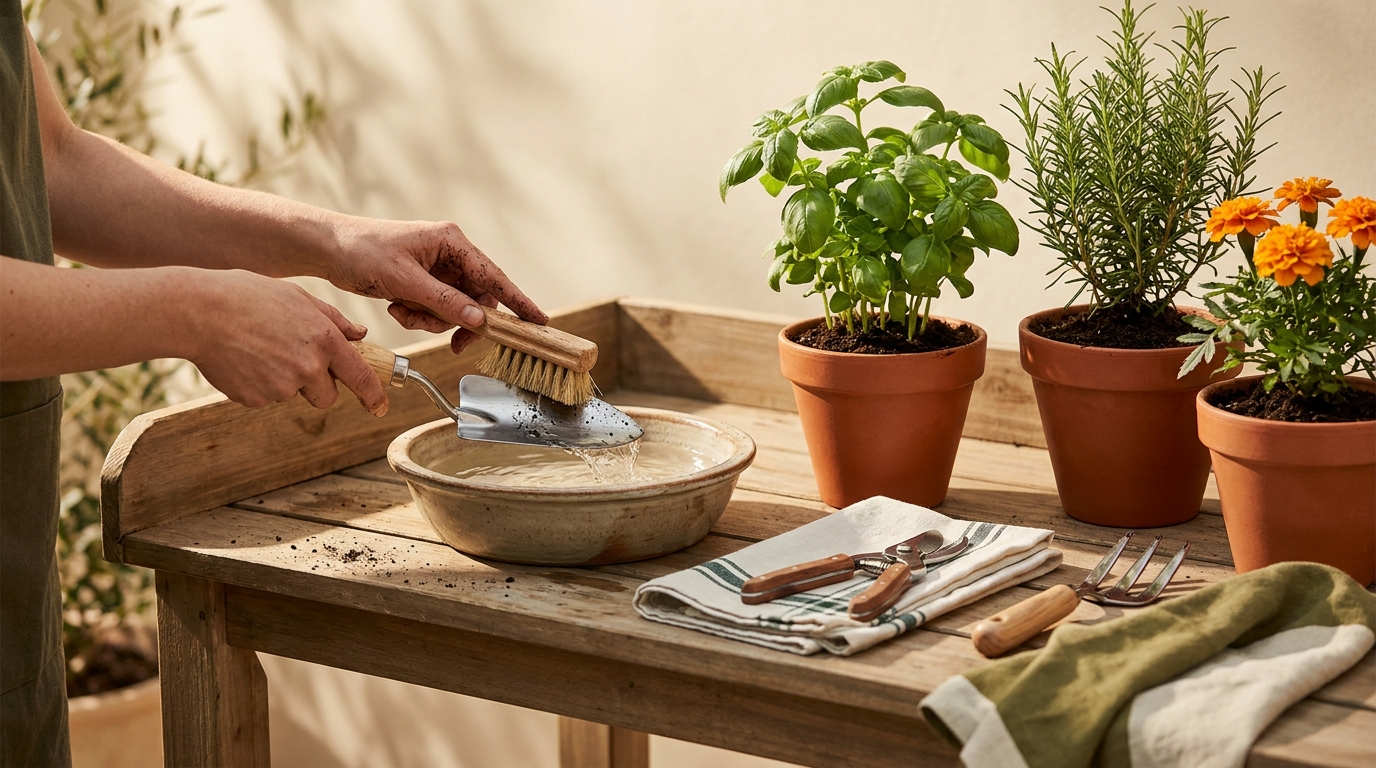
The best thing to clean garden tools with for everyday use is a stiff brush and water, followed by thorough drying and a light coat of oil on metal parts and pivots. This simple routine keeps tools working well and limits rust and disease spread when combined with targeted disinfection only when needed (https://northerngardener.org/clean-garden-tools/; https://ucanr.edu/site/uc-master-gardener-program-contra-costa-county/article/be-kind-your-tools-be-kind-your-plants).
What to keep on hand
- Stiff brush (or old toothbrush) and a putty knife for packed soil (https://www.burpee.com/blogs/garden-care/how-to-clean-garden-tools-and-5-other-ways-to-make-them-last).
- Bucket or hose; a little mild dish soap only if grime persists (https://www.burpee.com/blogs/garden-care/how-to-clean-garden-tools-and-5-other-ways-to-make-them-last).
- Clean towel and rags to dry thoroughly (https://northerngardener.org/clean-garden-tools/).
- Light oil for pivots and blades; fine steel wool or a wire brush for rust as needed (https://northerngardener.org/clean-garden-tools/).
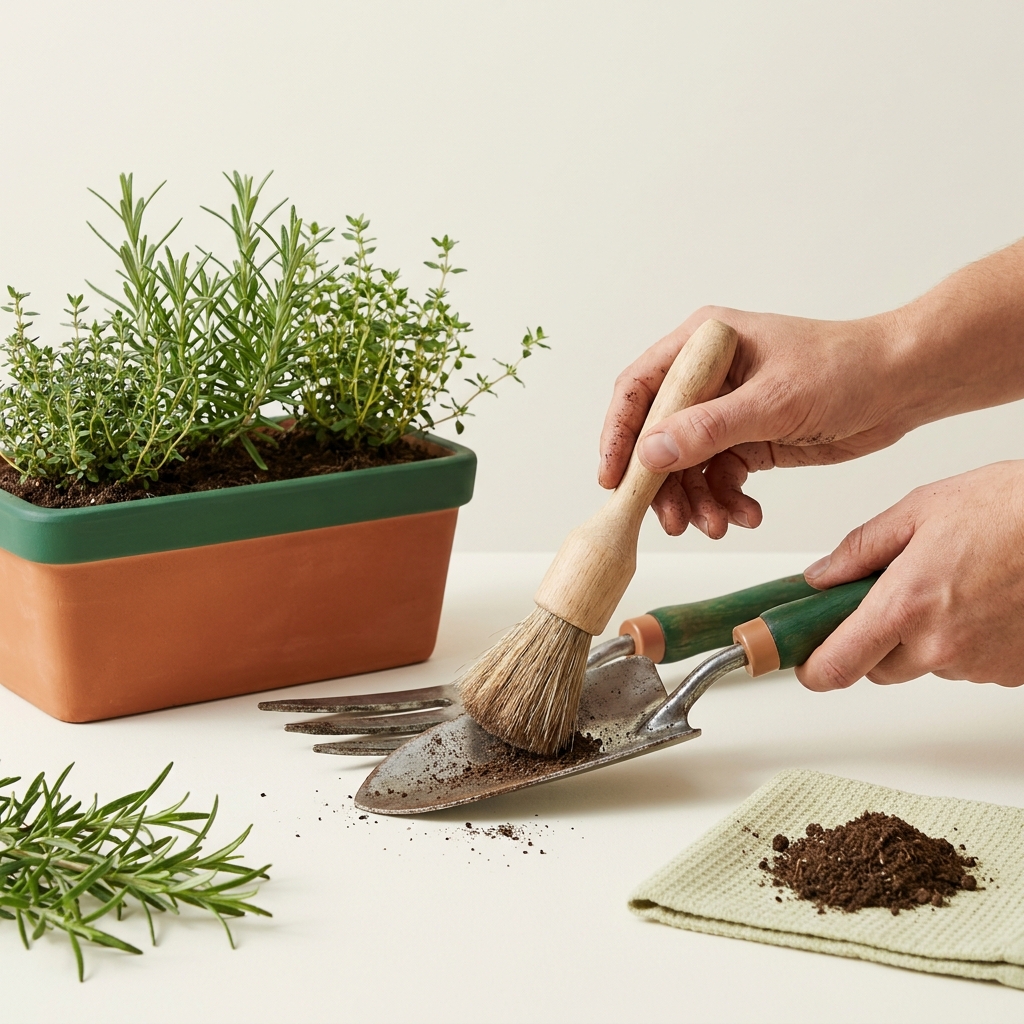
Fast end-of-session clean for hand tools
Step-by-step routine cleaning
1) Remove soil and debris
Knock off loose dirt, then scrub with a stiff brush. A putty knife helps with caked-on soil, including around pruner pivots (https://www.burpee.com/blogs/garden-care/how-to-clean-garden-tools-and-5-other-ways-to-make-them-last).
2) Rinse only as needed
Use water to lift remaining grime; add a little mild soap if stubborn. Avoid prolonged soaking of wooden handles (https://www.burpee.com/blogs/garden-care/how-to-clean-garden-tools-and-5-other-ways-to-make-them-last).
3) Dry fully and protect
Dry with a towel right away and let tools sit briefly to ensure no trapped moisture, then apply a light oil to metal parts and pivots to prevent rust and keep motion smooth (https://northerngardener.org/clean-garden-tools/; https://ucanr.edu/site/uc-master-gardener-program-contra-costa-county/article/be-kind-your-tools-be-kind-your-plants).
Sap and rust: practical fixes
- Sticky sap: Try mechanical removal first with a rag. If needed, use fine steel wool gently on metal surfaces (https://northerngardener.org/clean-garden-tools/).
- Surface rust: After cleaning, scrub with fine steel wool or a wire brush, then dry and apply a light coat of oil (https://northerngardener.org/clean-garden-tools/).
- Heavier rust: Some gardeners loosen rust with vinegar then neutralize and abrade with baking soda before drying and oiling (https://northerngardener.org/clean-garden-tools/).
When to disinfect, and how
Disinfect when you suspect plant disease or when switching between known-infected and healthy plants. Clean first so the disinfectant can reach the metal. Convenient options include wiping or spraying with isopropyl alcohol; allow contact time and let the tool dry before the next cut. Research summaries note many disinfectants reduce transmission if given time on the blade, with recommended contact times ranging from at least 10 to 60 seconds. Chlorine bleach is effective but corrosive to metal; less corrosive over‑the‑counter disinfectants are often preferred for tools (https://ucanr.edu/site/uc-master-gardener-program-contra-costa-county/article/be-kind-your-tools-be-kind-your-plants).
Storage that keeps tools cleaner longer
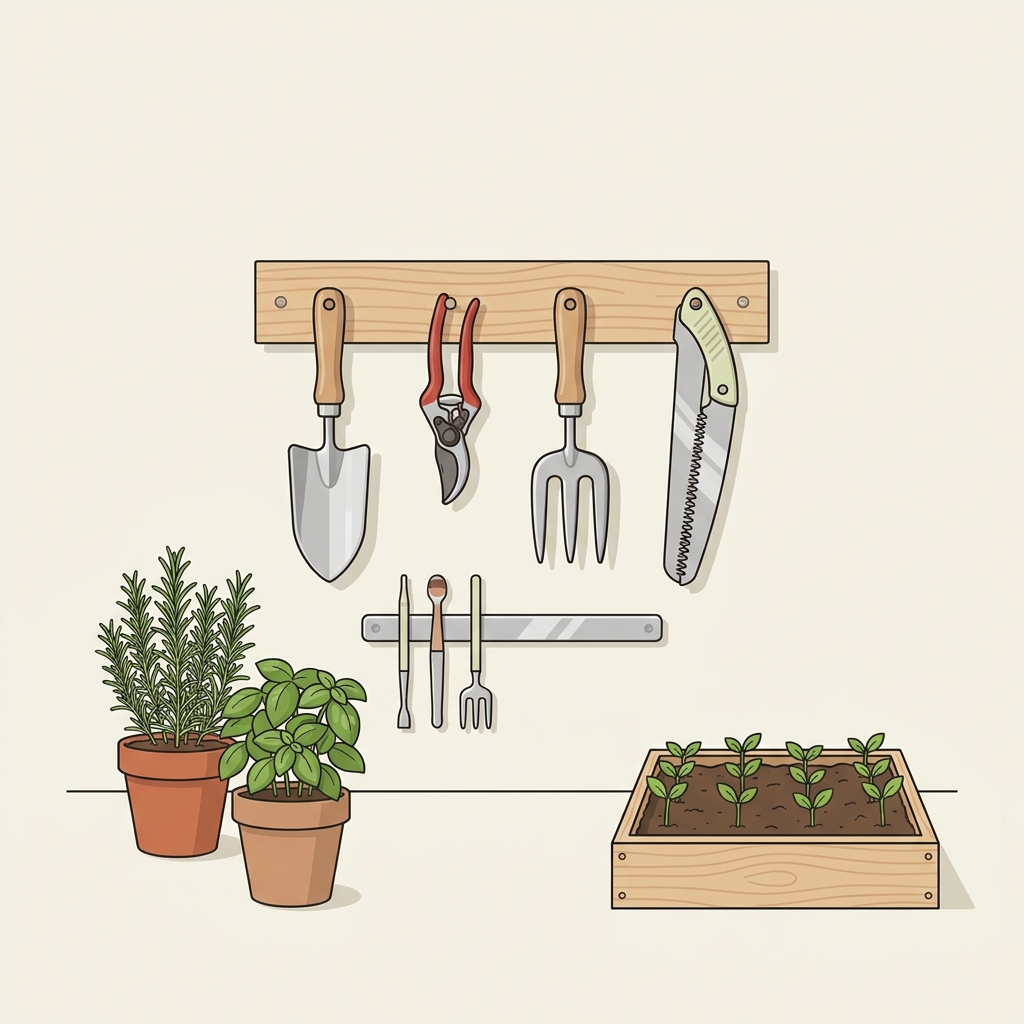
- Store tools indoors or under cover and off the floor; keep them dry to limit rust (https://northerngardener.org/clean-garden-tools/).
- After busy weeks, check quickly for moisture or nicks; wipe blades and re‑oil pivots as needed (https://northerngardener.org/clean-garden-tools/).
- Do a slightly deeper clean and sharpening occasionally so cuts stay smooth, which also supports plant health (https://ucanr.edu/site/uc-master-gardener-program-contra-costa-county/article/be-kind-your-tools-be-kind-your-plants).
Common mistakes to avoid
- Putting tools away wet. Moisture drives rust; always dry first (https://northerngardener.org/clean-garden-tools/).
- Skipping cleaning before disinfection. Dirt blocks disinfectants; clean, then disinfect with adequate contact time (https://ucanr.edu/site/uc-master-gardener-program-contra-costa-county/article/be-kind-your-tools-be-kind-your-plants).
- Overusing harsh chemicals on finishes. Favor mechanical cleaning and light oil; reserve stronger products for specific needs supported by tool guidance.
FAQ
Do I need a sand-and-oil bucket for quick cleaning?
Not required, but some gardeners use a sand-and-oil bucket to speed end-of-day cleanup and add light protection. Rinse and dry first, then dip to help remove remaining grit and leave a thin protective film (https://www.burpee.com/blogs/garden-care/how-to-clean-garden-tools-and-5-other-ways-to-make-them-last).
How often should I disinfect pruners?
Only when disease is suspected or when moving between infected and healthy plants. Clean first, then use an effective disinfectant and let it sit for the recommended contact time; allow tools to dry before cutting (https://ucanr.edu/site/uc-master-gardener-program-contra-costa-county/article/be-kind-your-tools-be-kind-your-plants).
Further reading for small-space growers:
- Do herbs like deep or shallow pots? A practical guide
- How to keep fungus gnats out of potted plants? A practical 30-day plan