
The journal
Garlic chives vs chives: the key difference for pot growers
The main difference is leaf shape and flavour: garlic chives have flat leaves with a mild garlic taste and white starry flowers, while common chives have thin cylindrical leaves with a mild onion flavour and mauve pom‑pom blooms. Practical tips for choosing and growing each in containers.
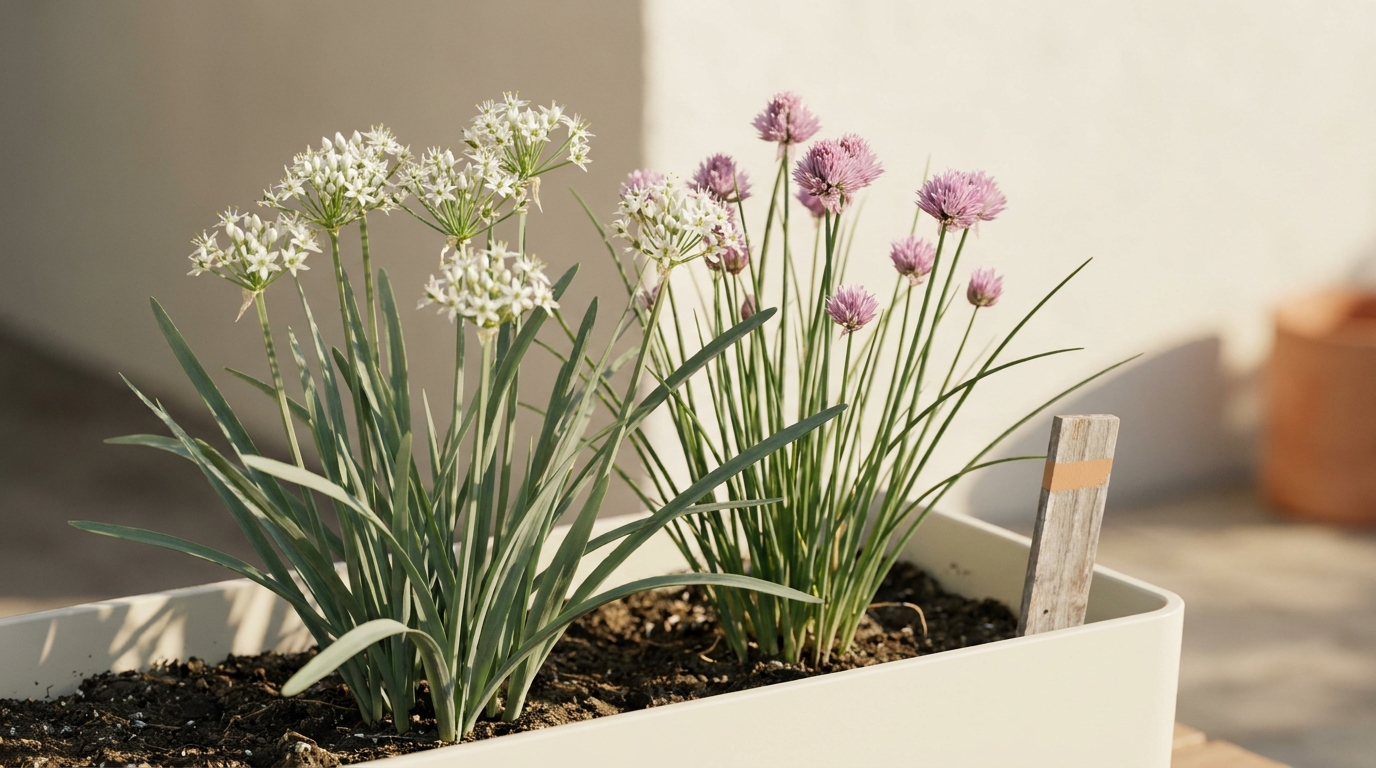
The main difference is leaf shape and flavour: garlic chives (Allium tuberosum) have flat, strap-like leaves with a mild garlic taste and white starry flowers, while common chives (Allium schoenoprasum) have thin, cylindrical leaves with a mild onion flavour and mauve pom‑pom flower heads. Garlic chives also grow a little taller and form larger clumps. These distinctions are noted by the Royal Horticultural Society (RHS) RHS chives guide.
How to tell them apart at a glance
- Leaves: Garlic chives have flat leaves; chives have narrow, cylindrical leaves about 30 cm tall. Garlic chive leaves are typically 40-50 cm long and the clumps are larger. Source: RHS chives guide.
- Flavour: Garlic chives taste mildly of garlic; common chives taste mildly of onion. Source: RHS chives guide.
- Flowers: Garlic chives carry clusters of starry white, edible flowers; chives carry rounded, mauve flower heads. Source: RHS chives guide.
Which is better for pots? Practical notes
Both are well suited to containers. For chives, RHS recommends a soil-based, peat‑free compost in a container at least 20 cm wide and deep, with clumps spaced about 15 cm apart. Water to keep the compost evenly moist through the growing season and snip regularly to encourage fresh leaves (RHS chives guide).
Because garlic chives form larger clumps and taller leaves, they will appreciate a bit more room and the same even moisture. If you’re deciding between two pot sizes, choose the larger one so the root zone doesn’t dry as fast. Ensure good drainage and regular deadheading if you don’t want self‑seeding. General container care principles also apply (RHS container growing).
Space and harvest timing
- Planting and spacing: For chives in pots, use at least 20 cm width and depth, spacing clumps 15 cm apart. Apply the same spacing guideline if you combine more than one clump in a larger container (RHS chives guide).
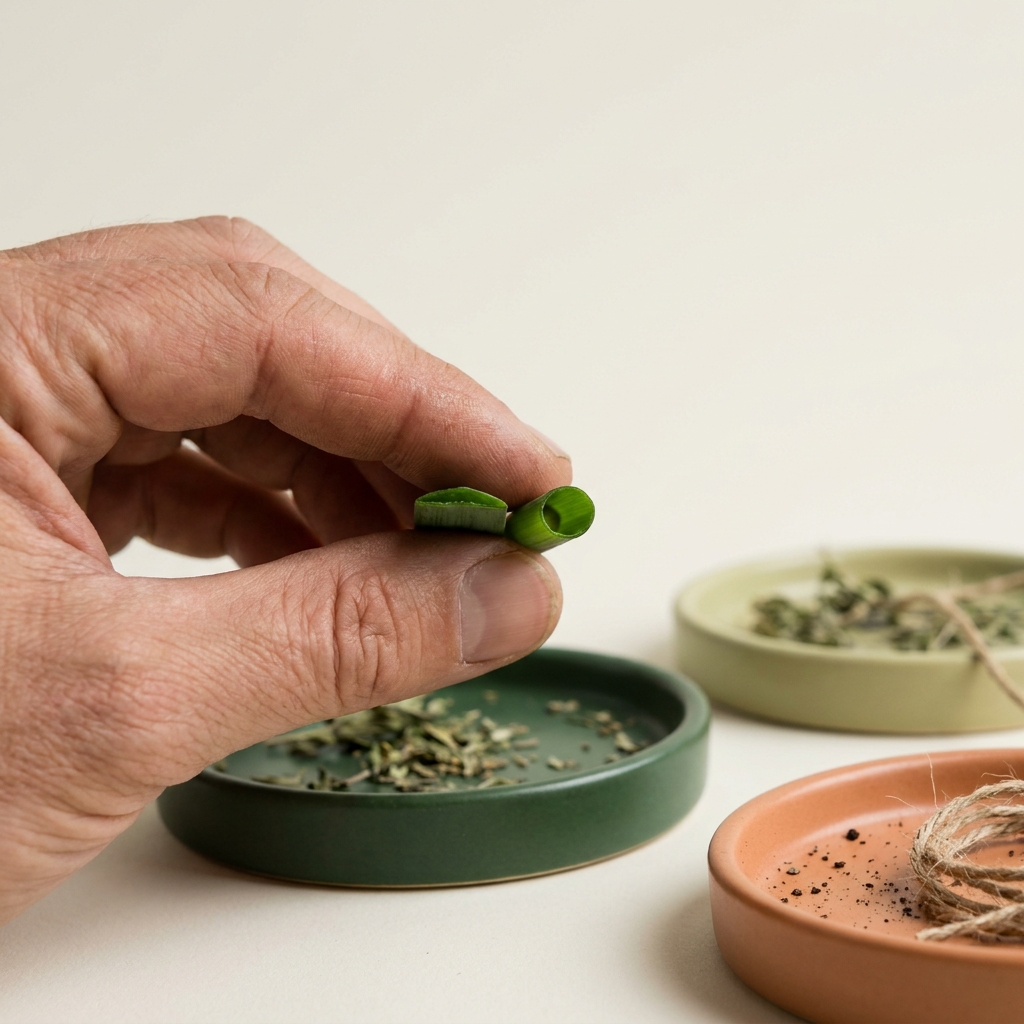
- Harvest: Chives are best used raw, snipped just above the base from spring to autumn; flowers are edible. Harvest garlic chive leaves similarly and use their white flowers too (RHS chives guide).
Pot care that matters for both
- Drainage first: Always use containers with drainage holes to avoid waterlogging and root rot (RHS container growing).
- Moisture management: Container herbs dry out faster than those in the ground. Check moisture frequently in warm weather and water to keep compost evenly moist for steady growth (RHS chives guide; RHS container growing).
- Feeding and potting mix: A peat‑free, soil‑based mix is longer‑lasting for herb pots. You can add slow‑release fertiliser for sustained nutrients if needed (RHS chives guide; RHS container growing).
Related reading on Garden in Reach
- Do herbs like deep or shallow pots? A practical guide
- Will herbs survive winter in pots? Practical container care and choices
Put this into practice
Identify the plant before using or sharing it, and label the pot with the actual type. Compare the growing and harvest requirements for that plant rather than treating all onion-flavoured leaves as interchangeable.
Quick checklist: choosing and growing chives in a pot
FAQ
Can I grow both in one container?
Yes, if the container is large enough to space clumps about 15 cm apart and you can keep the compost evenly moist. This spacing is recommended for chives and works as a guide when combining plants in a wider pot (RHS chives guide).

Once the plant is positively identified and you are using its edible leaves, Stirred Daily discusses the separate recipe decision about fresh and dried herbs. Can I substitute dried herbs for fresh herbs? The simple 1-to-3 rule.