
The journal
The best way to write plant labels for seedlings
Write short, legible seedling labels with the plant name and sowing date, use pencil or a waterproof marker, and keep a simple backup note or tray map.
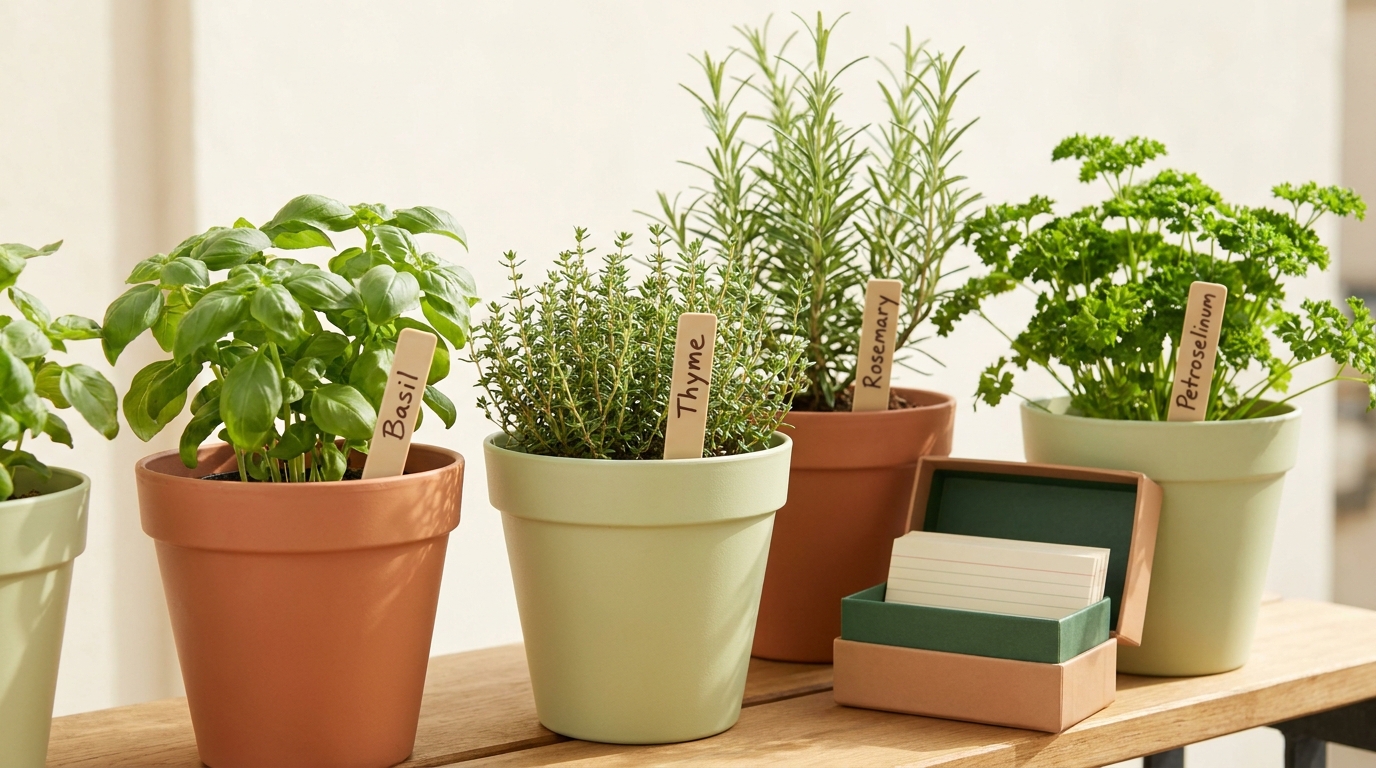
Write each seedling label in clear block letters with the plant name and sowing date, using a pencil or good waterproof marker, and keep a simple notebook or tray map as backup in case a tag fades or goes missing. This keeps look-alike seedlings organized from sowing to transplanting (The Seed Collection: DIY plant labels; Hartley Botanic: keep things correctly labeled).
What to write on seedling labels
- Essential: plant name and sowing date. Short entries stay readable on small tags (The Seed Collection).
- Optional: variety/cultivar, supplier, or a simple tray/row code that matches your notebook. Moving extra details to a notebook prevents cramped, hard-to-read tags (Hartley Botanic).
What to write with
Pencil or waterproof marker
- Pencil: A regular soft pencil writes clearly on plastic and resists sun and water well for seedling-stage labels (Hartley Botanic). The Seed Collection also recommends pencil for DIY labels (The Seed Collection).
- Waterproof marker: Use a good quality waterproof or UV-resistant marker, especially on temporary wood or tape labels (The Seed Collection).
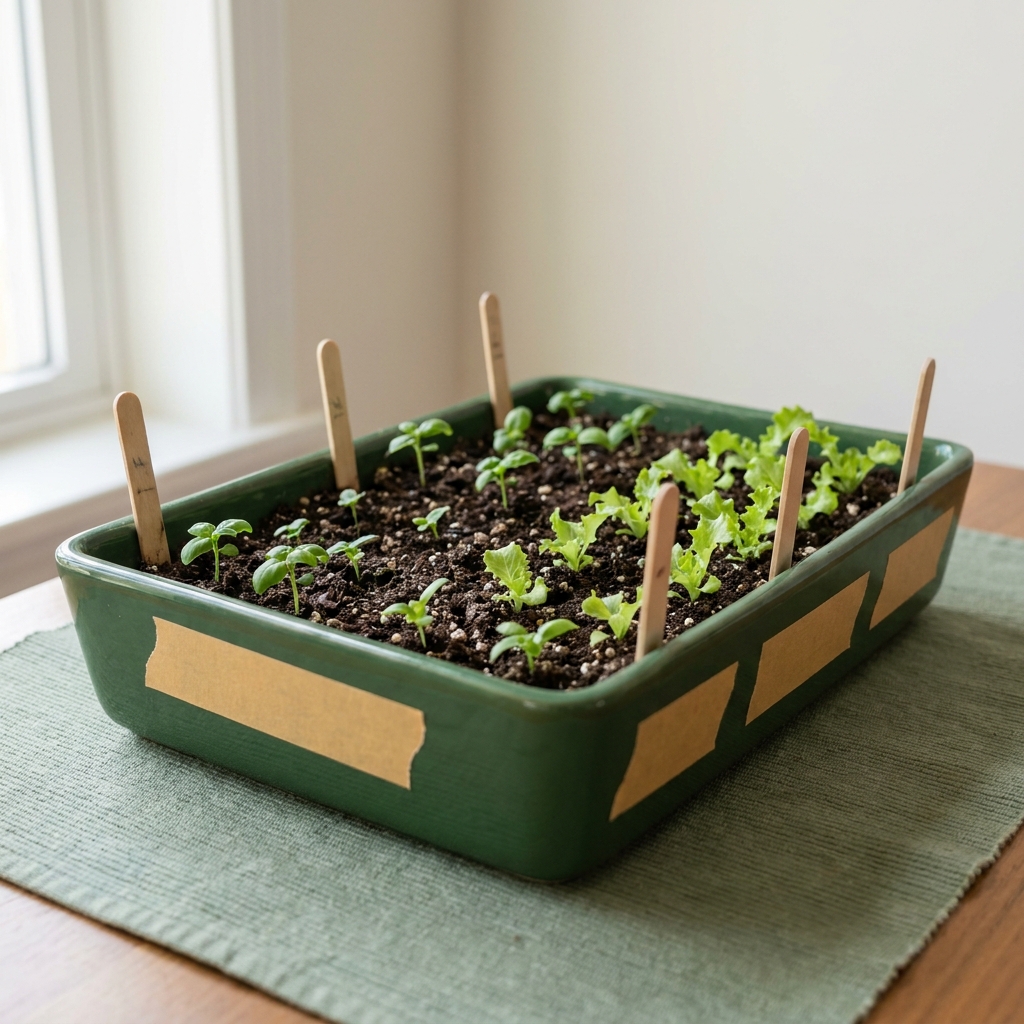
Low-cost, reliable labels for seed trays
Upcycled plastic strips
Cut clean yoghurt, margarine, or milk containers into strips big enough for name and date; they’re durable, free, and easy to read in a crowded tray (The Seed Collection).
Popsicle sticks or painter’s tape
For quick indoor starts, popsicle sticks or painter’s tape on the tray edge work well and are easy to replace as you pot up (Gardenary: plant labels). Writing directly on pots or trays is another simple option (Hartley Botanic).
Keep a simple backup so lost tags don’t matter
- Notebook or tray map: Note what’s in each row or cell and the sowing date. If a label fades or pops out, you still know what’s where (Hartley Botanic).
- Keep seed packets: Storing empty packets in a small file helps you confirm variety names later (Hartley Botanic).
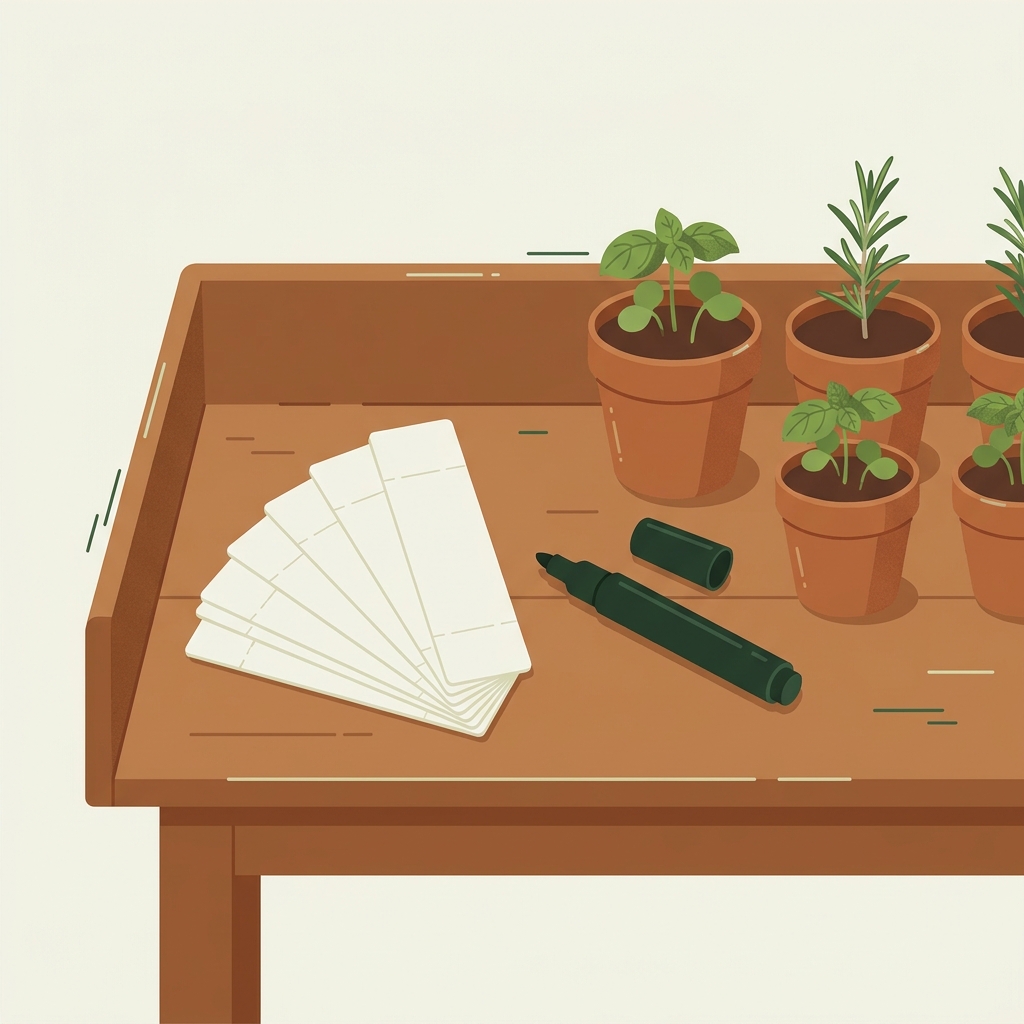
Quick formats that stay readable
- Single line: “Basil Genovese | 12 Mar”
- Two lines: “Tomato ‘Sungold’\n10 Apr”
- With a code: “Lettuce ‘Salad Bowl’ | A2 | 5 Feb” and record A2 = tray A, row 2 in your notebook.
Troubleshooting and when to switch labels
- Fading text: Refresh pencil/marker as needed; move long-season seedlings to a more durable tag before they go outdoors (The Seed Collection).
- Lost tags: Use your tray map to remake labels. Placing labels at the tray edge and pressing them firmly into media helps them stay put.
- Before hardening off: Replace tape or sticks with a sturdier plastic strip or outdoor-safe label so names survive sun and rain. See our practical plan for moving seedlings outdoors: How do I harden seedlings for transplanting?
- Watering habits: Bottom-watering reduces splashing that can blur ink on wood or tape. For technique, see What is the best way to water seedlings?
Seedling label routine: do this every time you sow
FAQ
Is pencil or marker better for seedling labels?
Both work. A soft pencil writes cleanly on plastic and holds up well to moisture and light for seedling stages (Hartley Botanic), while a good waterproof marker is useful on wood or tape (The Seed Collection).
Can I reuse labels next round?
Yes. Upcycled plastic strips can be erased or turned over; popsicle sticks can be relabeled but may degrade faster with frequent watering (The Seed Collection; Hartley Botanic).

Related guides
Product options for this topic
As an Amazon Associate I earn from qualifying purchases. These are researched options, not hands-on test results. Check the exact size or model, current price and availability on Amazon.
| Product option | Fit and limits to check | Retailer |
|---|---|---|
| Product imageHaws Handy one-pint watering can, Green | A small watering can for indoor pots and seedlings. Its modest capacity suits short watering rounds rather than a large outdoor bed. | View on Amazon |