
The journal
What does a rootbound plant look like?
Direct signs and a safe check to confirm whether a plant is root bound, plus when to act and when to wait.
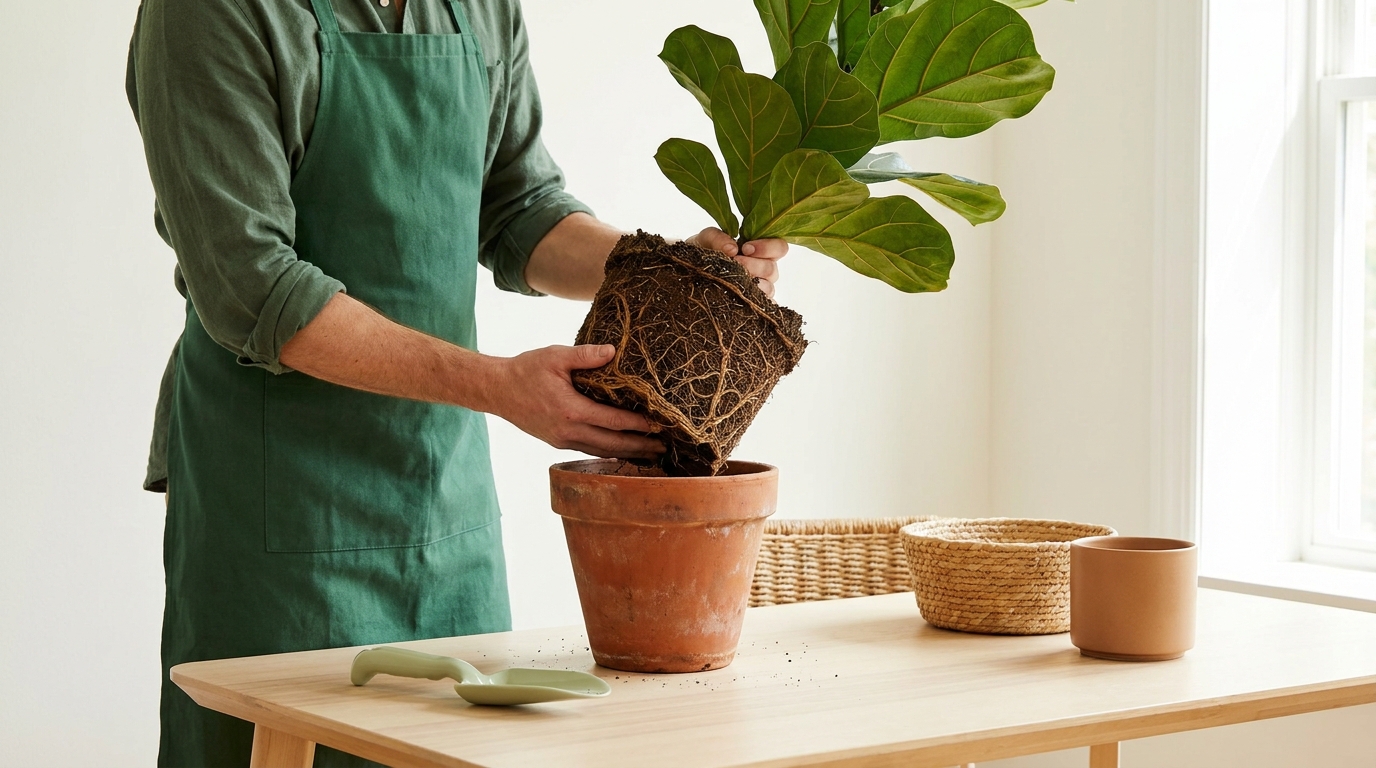
A rootbound plant looks like a tight, pot-shaped mass of roots that fills the container, often with roots visible at the soil surface or even spilling over the rim. Because the dense roots shed water quickly, you may also see leaf-edge browning or tip dieback from poor water uptake, and water may run straight through without wetting the center of the root ball (University of Maryland Extension).
Spot the signs without unpotting
Roots you can see
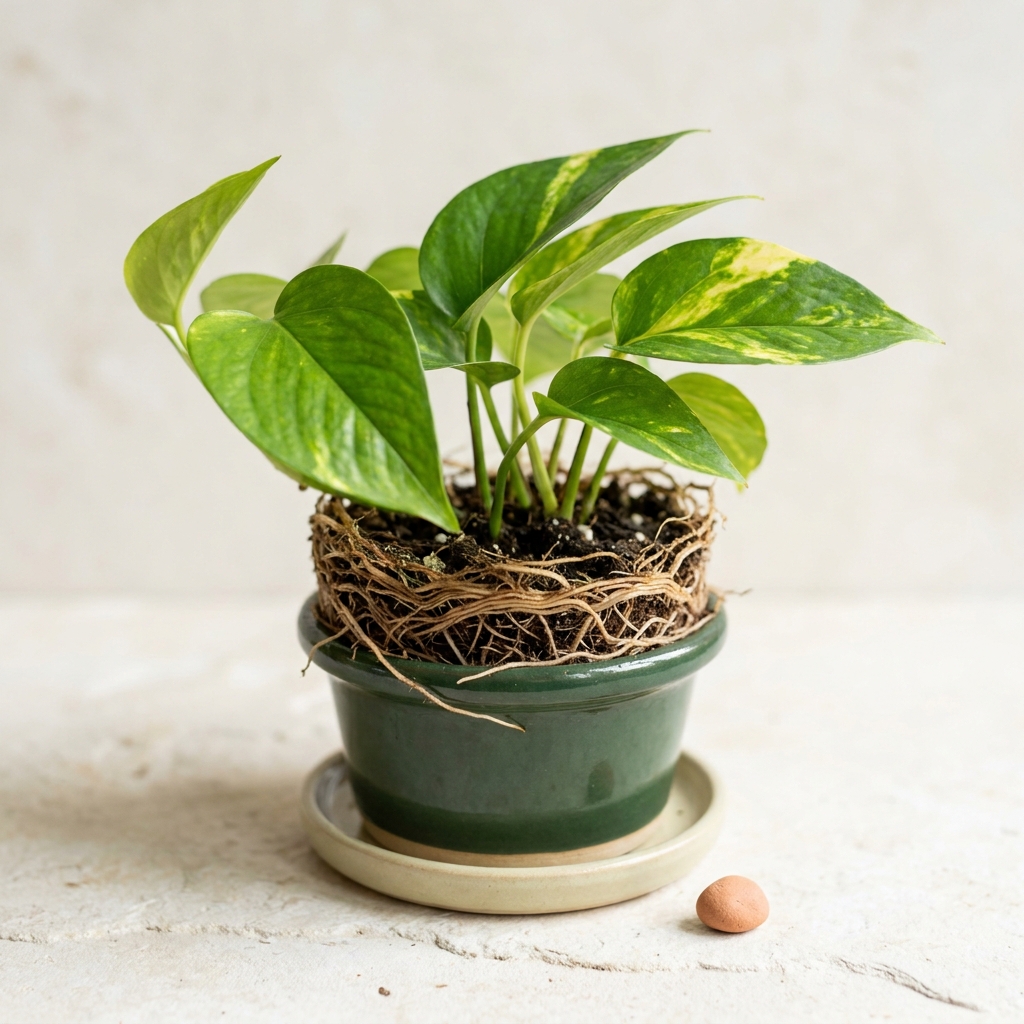
- Roots at the soil surface or over the rim. Tight root masses can reach the pot edge and appear at or above the soil line (University of Maryland Extension).
- Roots emerging from drainage holes. Lots of roots pushing through the bottom are a practical clue the root system has filled the pot (Tula House).
Watering and growth changes
- Water rushes through and the center stays dry. In pot-bound plants, water can pass too quickly and fail to moisten the middle of the root ball (University of Maryland Extension).
- Needing to water far more often than usual. Very frequent watering can indicate the root mass has displaced much of the soil (Tula House).
- Leaf edge browning or tip dieback. Lack of water within a dense root mass can cause marginal browning and tip dieback (University of Maryland Extension).
- Stunted new growth in active season. Small or stalled leaves may be a clue, though light and water issues can look similar (Tula House).
Note: Some species produce normal aerial roots (for example, monstera). Aerial roots alone do not prove the plant is pot bound (Tula House).
How to confirm safely by sliding the plant out
To be certain, tip the pot slightly, support the stem base, and gently slide the plant out far enough to see the outer rootball. Avoid pulling by the stems. If it won’t budge, squeeze flexible pots or tap the sides to loosen.
What a rootbound rootball looks like
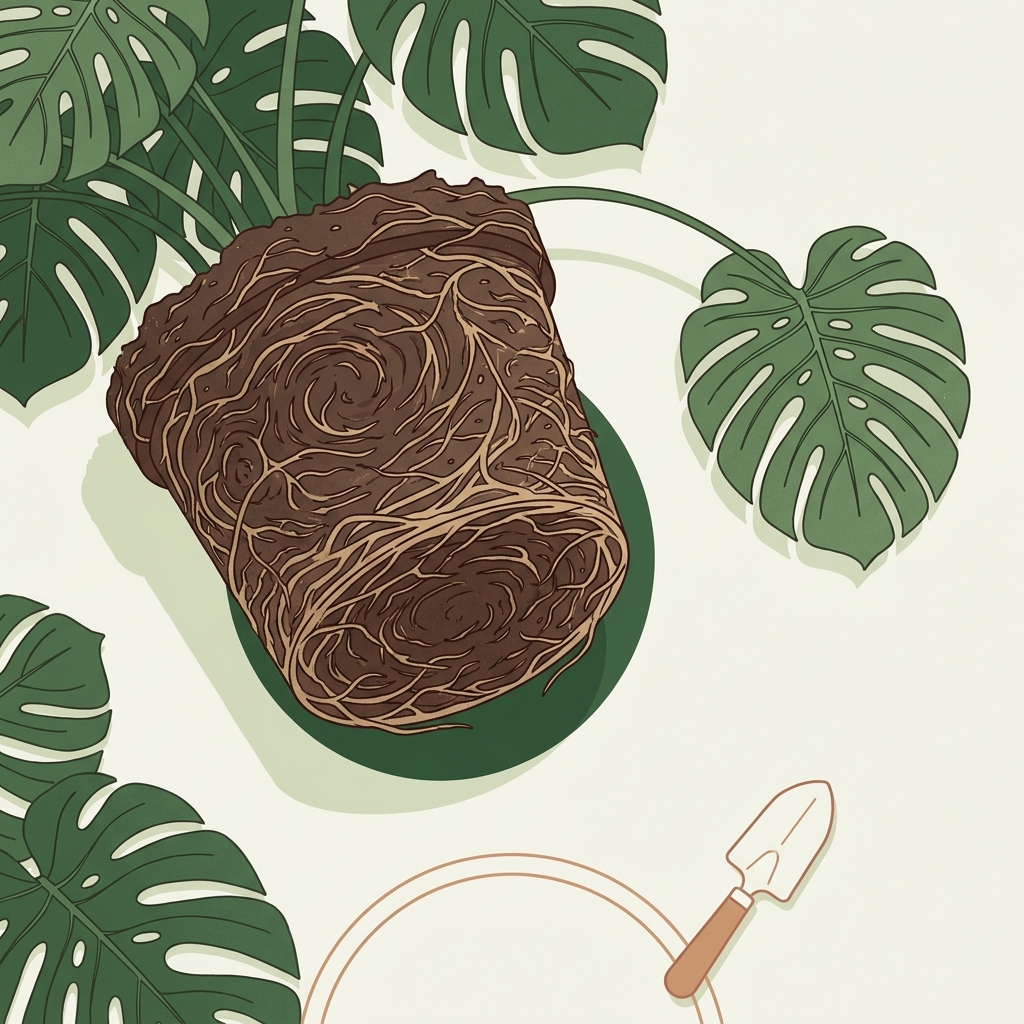
- A dense, pot-shaped cylinder of roots with little loose soil visible, often matching the container’s exact shape (University of Maryland Extension).
- Circling roots wrapped around the perimeter, sometimes forming a tight mat, and occasionally rooting over the edge of the pot (University of Maryland Extension).
- Dry interior despite recent watering if water has been bypassing the center (University of Maryland Extension).
When to act, and what "acting" means
Repot when you confirm a tight, circling root mass, when visible roots accompany confirmed crowding inside the pot, or when drying symptoms trace back to a dense rootball; a few roots at a drainage hole alone are not enough. For an otherwise healthy plant, choose an appropriate container and follow species-specific repotting guidance. Gently loosen accessible circling roots where suitable; root pruning is not appropriate for every species or season, and badly tangled or damaged roots need more careful assessment (University of Maryland Extension).
Right pot size and timing
- Size: Many growers step up just one pot size so the new mix does not stay overly wet. After you decide to repot, going one size bigger is a common approach (Tula House).
- Season: Most houseplants respond best to repotting in spring or summer; repotting during winter dormancy can leave excess wet soil around inactive roots (Tula House).
For practical next steps after you confirm the issue, see our focused guides: Can a plant recover from being root bound? and What are the biggest mistakes when repotting?.
Quick checklist: confirm rootbound before repotting
FAQ
Do yellow or brown leaf edges always mean rootbound?
No. Leaf-edge browning and dieback can occur when dense roots limit water uptake, but similar symptoms can also result from watering or light issues. Confirm by inspecting the rootball (University of Maryland Extension).
Are aerial roots a sign my plant is pot bound?
Not necessarily. Some plants naturally produce aerial roots; check for root crowding inside the pot before deciding to repot (Tula House).