
The journal
How long should I leave plants in bottom watering?
Bottom-watering time varies with the plant, pot and mix. Monitor the moisture that plant needs, then drain; surface colour alone is not a universal endpoint.
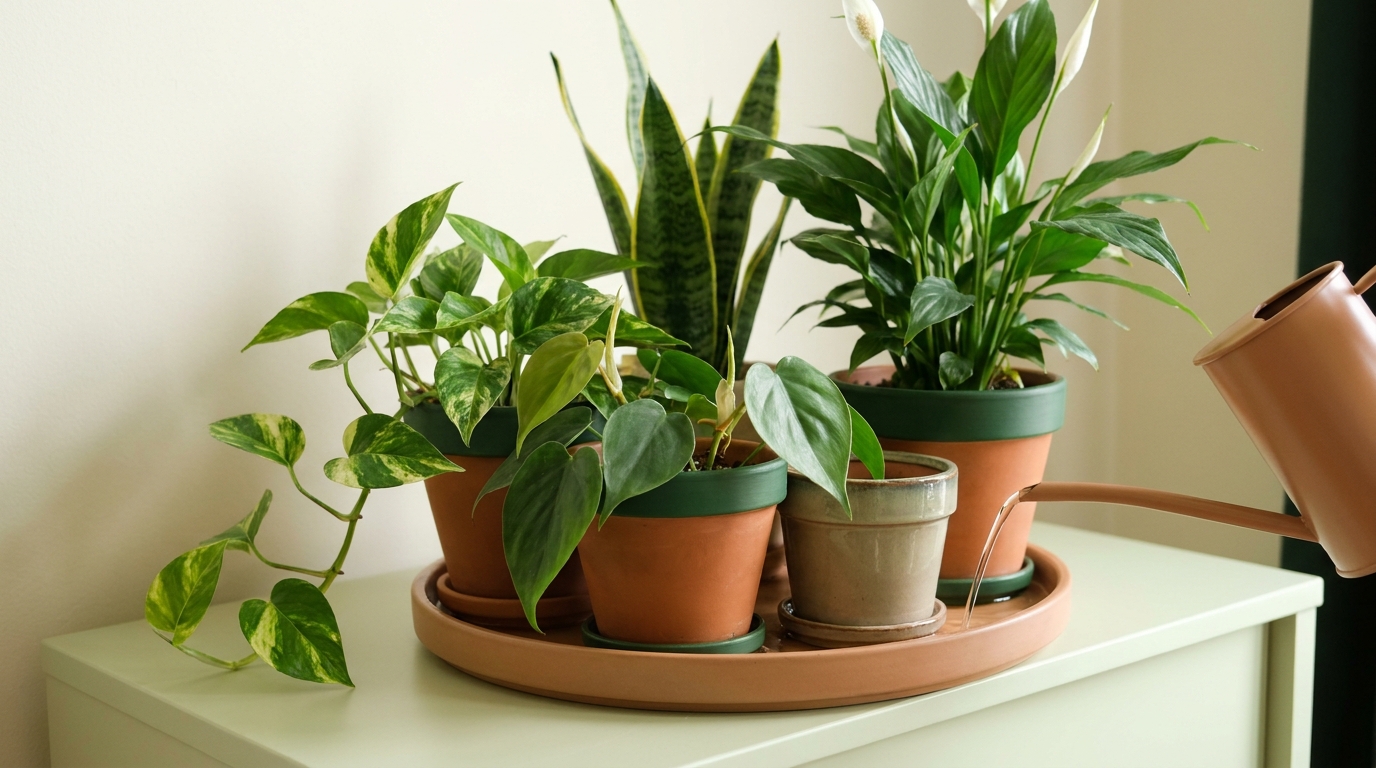
There is no fixed time that suits every plant and pot. For ordinary terrestrial plants watered this way, monitor moisture uptake, then remove the pot and allow excess water to drain. Follow the plant’s specific care needs; do not aim to keep every species’ entire mix saturated. Then lift the pot out, let it drain, and empty any saucer. Don’t leave containers standing in water, as waterlogged compost can cause root rot and plant decline, and trays should not keep pots sitting in water in wetter seasons (RHS Growing plants in containers).
Why there isn’t a fixed number of minutes
Bottom watering relies on capillary action, so the time varies with pot size and shape, drainage-hole size, compost ingredients and compaction, how dry the compost is to start with, and the plant’s root density. These variables change how quickly moisture wicks to the surface. Monitor the moisture required for the particular plant, then stop and drain; a surface cue alone does not measure the whole rootball (RHS).
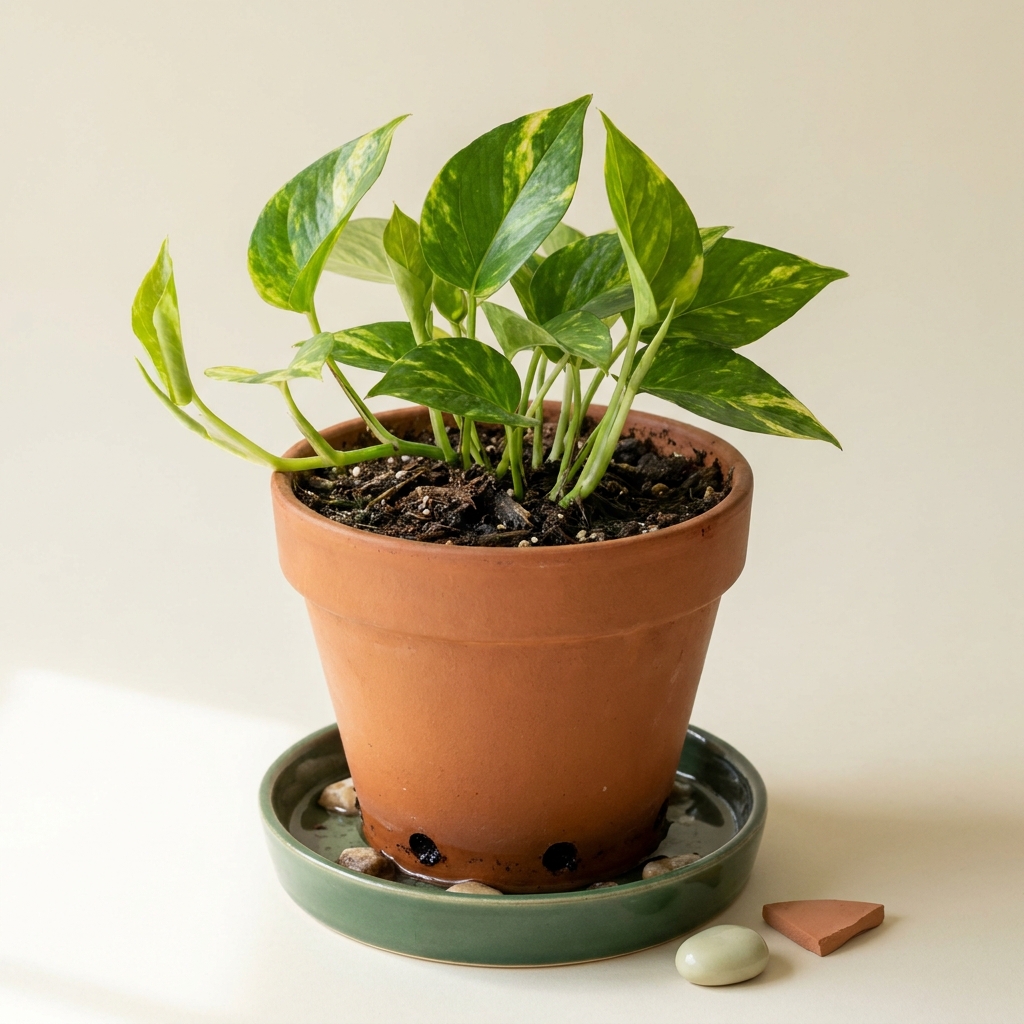
Step-by-step: a safe bottom-watering routine
1) Set up correctly
- Use a pot with drainage holes. Without them, excess water cannot escape and the compost can become waterlogged (RHS).
- Use a shallow tray or sink with a little water. You only need enough depth for the pot to take up moisture from the base.
2) Soak only to full, even moisture
- Place the pot in the tray. Check every few minutes.
- Check moisture and weight against the plant’s needs. A heavier pot suggests uptake, but coolness or surface colour alone is not a reliable endpoint for every mix.
- If the surface stays dry but the tray water is disappearing, briefly top-water to finish wetting any dry pockets.
3) Drain thoroughly and avoid standing water
- Lift the pot out and allow it to drain freely.
- Empty any saucer or outer cachepot so the plant is not left sitting in water. Prolonged standing water can waterlog compost and lead to root problems; in wetter seasons, remove trays so pots aren’t left in water (RHS).
How to tell you’re done
- The top of the compost has darkened slightly and feels evenly damp.
- The pot has gained weight and feels cool.
When bottom watering helps most
- Dense foliage or delicate leaves make top-watering awkward.
- After a dry spell when the compost has shrunk from the pot sides and won’t wet evenly from the top.
- Seedling modules or small pots that benefit from gentle, even moisture without disturbing the surface.
Whichever method you choose, remember that container plants rely on you for water more than plants in the ground. Potted plants generally need more frequent watering and careful drainage management than plants in open soil (RHS).
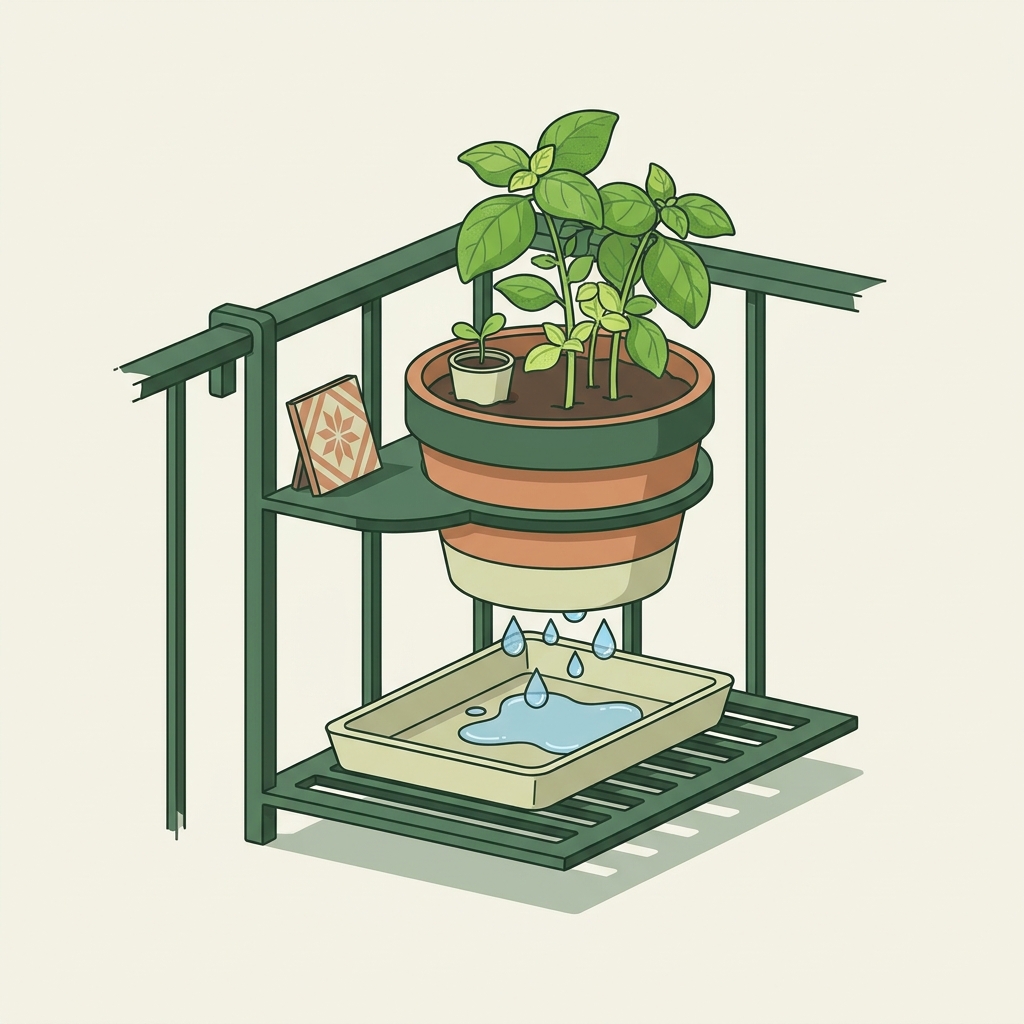
Common pitfalls to avoid
- Leaving the pot soaking after the surface is damp. This risks waterlogging and root damage (RHS).
- Using a pot without drainage holes. Good drainage is essential for healthy container plants (RHS).
- Forgetting to empty saucers. In wet or cold periods especially, standing water can be harmful (RHS).
Related reading from Garden in Reach
Put this into practice
Check the species, pot and initial moisture before putting the container in water. Inspect the result and remove it when the intended watering is achieved instead of turning a typical duration into a fixed rule for every plant.
Quick bottom-watering checklist