
The journal
Why use peat-free compost? Practical reasons and how to switch
Why peat-free potting mixes help protect peatlands, how to choose a blend, and how to adapt watering and feeding to the product and plants.
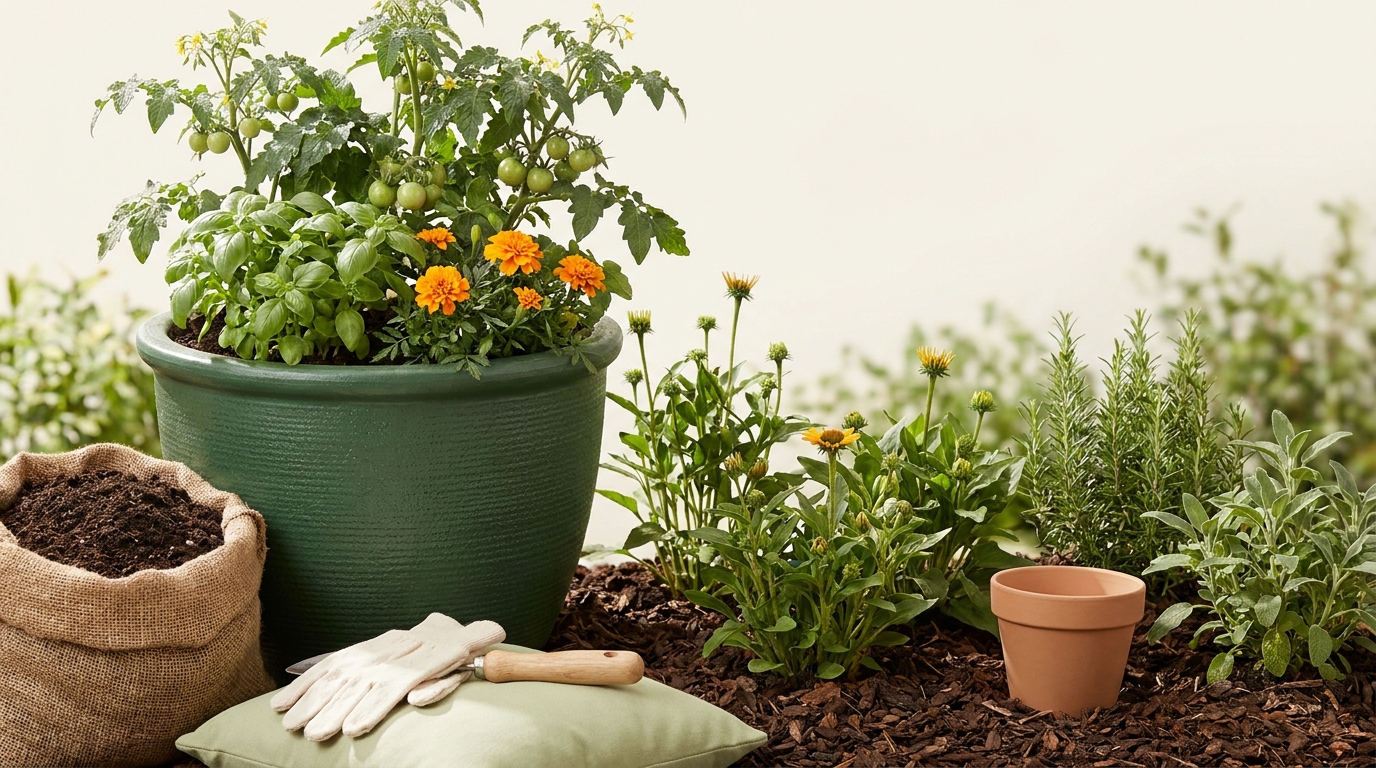
Use peat-free compost to protect peatlands while growing successfully. Peatlands are major carbon stores and unique wildlife habitats; damage and drainage for extraction release carbon and harm biodiversity. Modern peat-free potting mixes are widely available and perform well when you match the product to the task and adjust watering and feeding to the formulation (RHS peat-free guidance).
What peat-free potting compost is
Peat-free potting compost is a purpose-made growing medium for containers, seed trays and houseplants. Typical ingredients include composted bark, wood fibre, coir and green compost, sometimes with grit, sand or loam to tune drainage and structure (RHS peat-free guidance). In UK usage, potting compost (bagged growing medium) is different from garden compost (home-made soil improver). If you’re deciding between potting compost and soil for containers, see our explainer: Is compost different from soil in containers?
Why gardeners choose peat-free
- Conserves peatland habitats and the biodiversity they support, helping climate goals because peatlands store large amounts of carbon. Draining or damaging them for extraction releases carbon dioxide (RHS peat-free guidance).
- Quality and range have improved; you can now buy peat-free versions for seed sowing, containers, houseplants and ericaceous plants when you need a lower pH (RHS peat-free guidance).
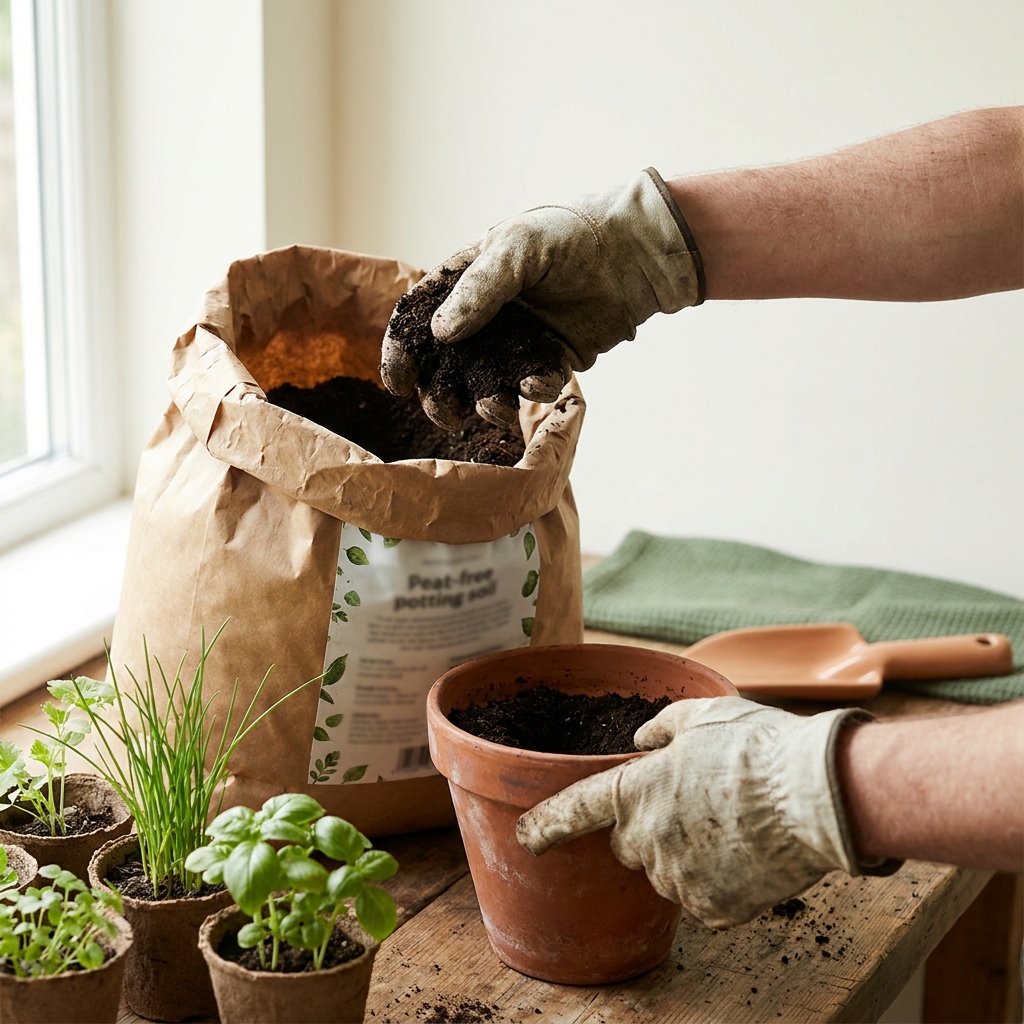
How peat-free behaves differently in use
Because blends vary, check the bag for the intended use and any feeding or watering notes. Differences to expect:
- Watering: surfaces can look dry while the root zone remains moist; check moisture below the top layer before you water. If a pot fully dries and becomes water-repellent, rehydrate by soaking the container in a bucket, then let it drain (Garden Organic peat-free growing).
- Feeding: many bagged composts only feed for the first few weeks. Check the product’s initial nutrient supply and feeding instructions; do not assume every mix runs out at the same week. Adjust any supplementary feed to the plant and fertiliser label (Garden Organic peat-free growing). If the packaging recommends a fertiliser, that reflects the mix’s nutrient balance rather than marketing alone; another product needs to match the relevant nutrient balance and application instructions; the three NPK numbers alone do not establish identical suitability (RHS peat-free guidance).
How to switch your potting mix
The RHS practical peat-free tips recommend checking moisture below the surface and adapting feeding to the plants and product instructions. Peat-free does not mean one uniform recipe: learn how your particular blend behaves.
- Pick by purpose. Choose peat-free seed compost for sowing (fine texture, low nutrients) and a peat-free multi-purpose or container mix for pots. Use a peat-free ericaceous mix for acid-loving plants (RHS peat-free guidance).
- Buy what you’ll use this season. Like all composts, mixes can break down in storage; fresh compost gives better results (RHS peat-free guidance).
- Look for clear labelling. If the bag doesn’t say peat-free, assume it contains peat. “Environmentally friendly” or “organic” on its own does not guarantee peat-free. The Responsible Sourcing Scheme logo helps you compare sustainability credentials (RHS peat-free guidance).
- Pre-wet before potting. Moisten the mix so it’s evenly damp and crumbly, not sodden, to help roots establish (Garden Organic peat-free growing).
A worked example: sowing in peat-free
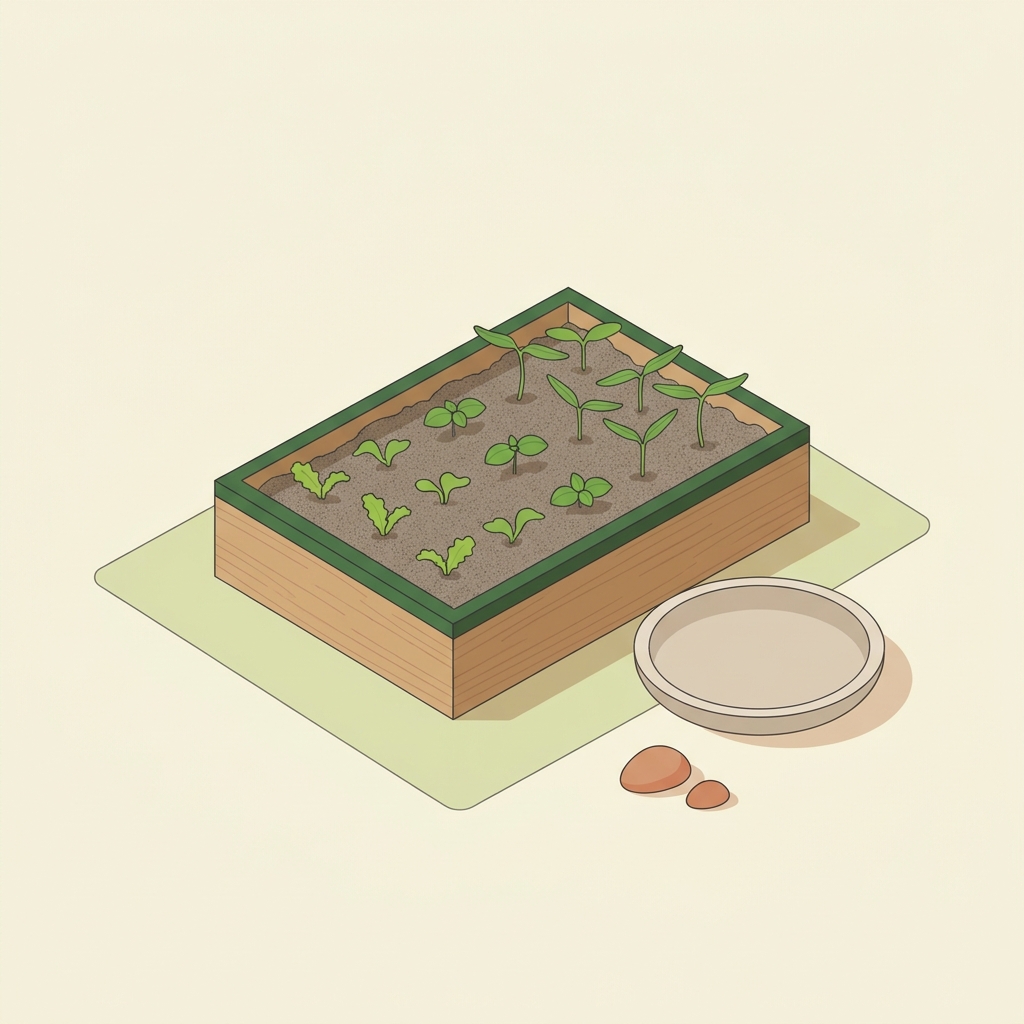
Fill a clean seed tray with a fine peat-free seed compost, level and lightly firm. Water gently to settle, then sow thinly and cover to the advised depth. Keep evenly moist by checking just under the surface and watering from below or with a fine rose. For detailed watering technique, see What is the best way to water seedlings? Use a suitable seed-sowing mix and clean equipment, avoid waterlogging and follow the seed packet. Low nutrient content alone does not prevent damping-off (RHS peat-free guidance).
Troubleshooting tips
- Looks dry on top, plants still happy? Check moisture a finger-depth down before watering; many mixes look dry at the surface while remaining damp below (Garden Organic peat-free growing).
- Mix dried hard and repels water? Stand the pot in a bucket of water to re-wet fully, then drain well (Garden Organic peat-free growing).
- Pale, slow growth? Check moisture, temperature, roots and the mix’s nutrient supply before adding a suitable feed; nutrient deficiency is one possible cause, not the only one (Garden Organic peat-free growing; RHS peat-free guidance).
Switch to peat-free potting mixes: setup checklist
Quick answers
Will my plants grow as well in peat-free compost?
Yes. With today’s improved mixes, plants can thrive when you choose the right peat-free product for the job and adjust watering and feeding to the formulation (RHS peat-free guidance).
Is peat-free the same as organic or “environmentally friendly”?
No. Those labels don’t automatically mean peat-free; always check the bag specifically says peat-free (RHS peat-free guidance).

Choosing peat-free potting compost helps protect peatlands and can deliver excellent results. Match the mix to the task, monitor moisture below the surface, and start feeding on time for reliable growth.
Related guides
Optional equipment for this guide
Use the plant and potting mix as the guide. A small watering can can help with controlled initial wetting and top watering where needed.
As an Amazon Associate I earn from qualifying purchases. These are researched options, not hands-on test results. Check the exact size or model, current price and availability on Amazon.
| Product option | Fit and limits to check | Retailer |
|---|---|---|
| Product imageHaws Handy one-pint watering can, Green | A small watering can for controlled watering of indoor pots or seedlings. Its one-pint capacity suits small rounds; follow the reservoir or compost guidance rather than watering to a fixed schedule. | View on Amazon |