
The journal
What is a gritty potting mix?
A gritty potting mix contains a substantial coarse component. Choose its ingredients for the plant and container; perlite and vermiculite do different jobs.
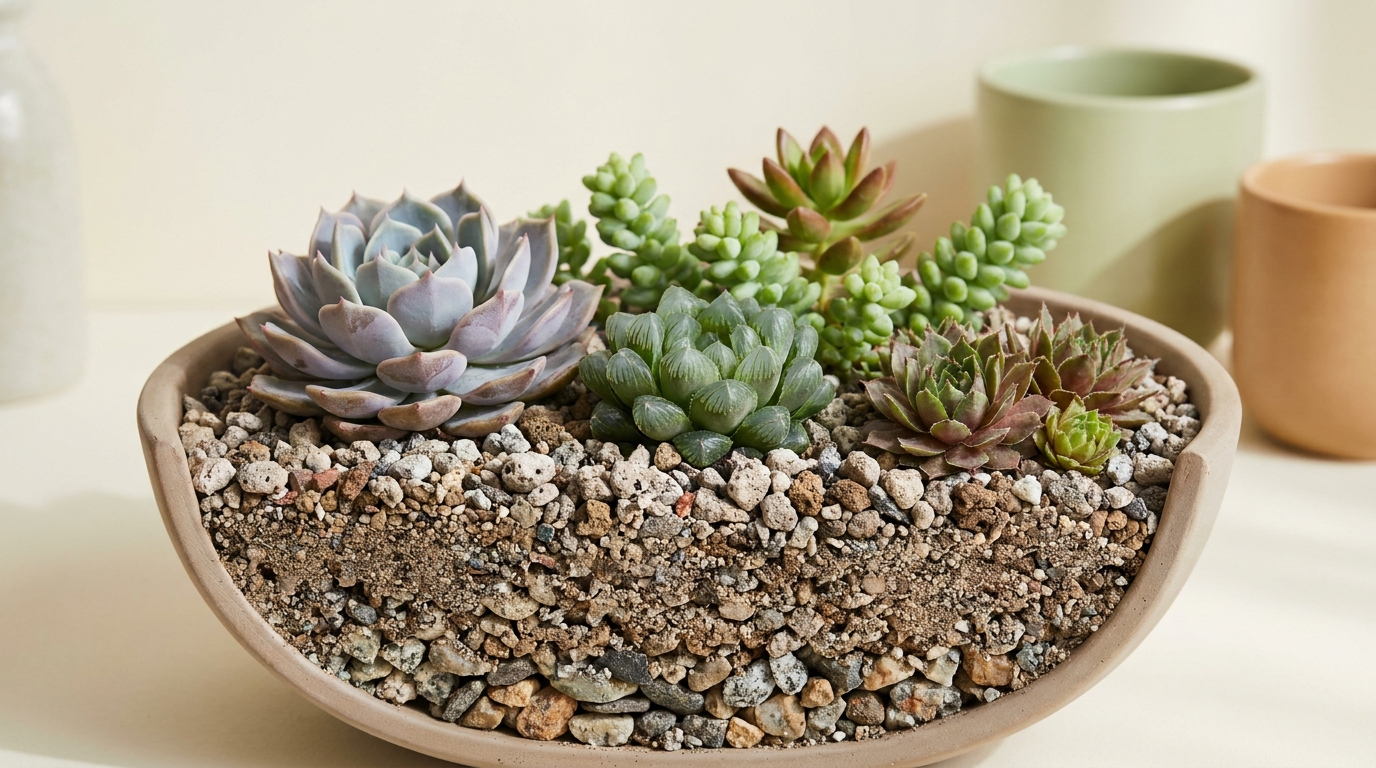
A gritty potting mix is a loose description for a container mix with a noticeable coarse component. The name alone does not tell you the particle sizes, water retention or suitability for your plant. Check what is actually in the bag or recipe before treating “gritty” as a promise of good drainage.
Start with the plant, not a universal ratio
A cactus, a seed tray and a leafy herb pot need different management. Write down the plant you are potting, whether it will stay indoors or outdoors, and the container you intend to use. Then choose a mix recommended for that plant rather than automatically adding grit to whatever compost is available.
A commercial mix with a stated intended use can be a clearer starting point than an unverified homemade formula. Keep the label so you can check the maker’s watering and feeding advice later. If a recipe gives only “parts,” find out whether that means volume or weight before measuring.
Ingredients do different jobs
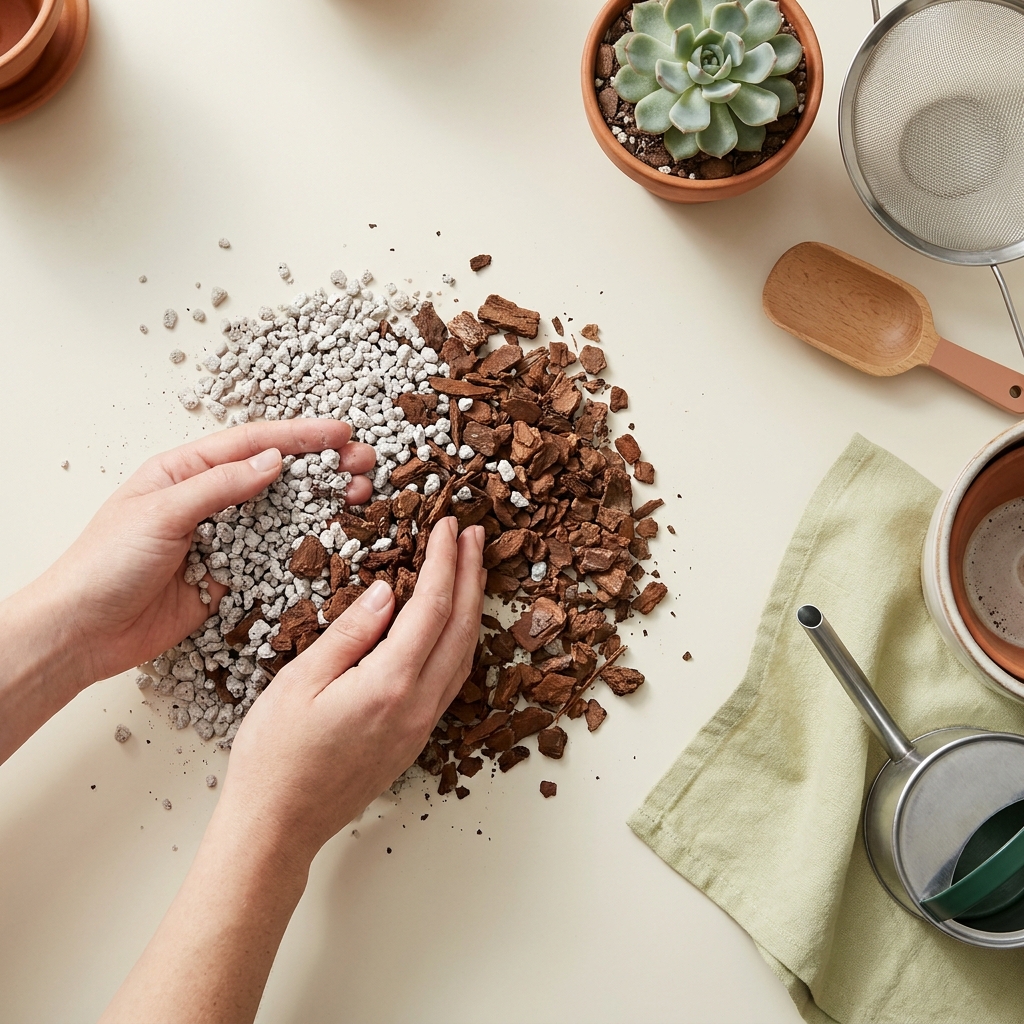
Iowa State Extension’s component guide distinguishes perlite, used for air-filled pores, from vermiculite, which holds water and some nutrients. They are not interchangeable just because both are sold beside potting compost. Particle size and processing also affect the finished mix.
That distinction helps when reading a recipe: ask why each component is present. “More mineral material” is not a complete instruction. A fine material can behave differently from a coarse one, and a layer at the bottom is different from ingredients mixed throughout the root zone.
Keep the container in the decision
Use a container appropriate to the plant with an outlet for excess water, unless you are following instructions for a deliberately different growing system. Check that a decorative outer pot will not leave the inner one standing in runoff. Our drainage-hole guide explains that separate decision.
Observe your actual setup
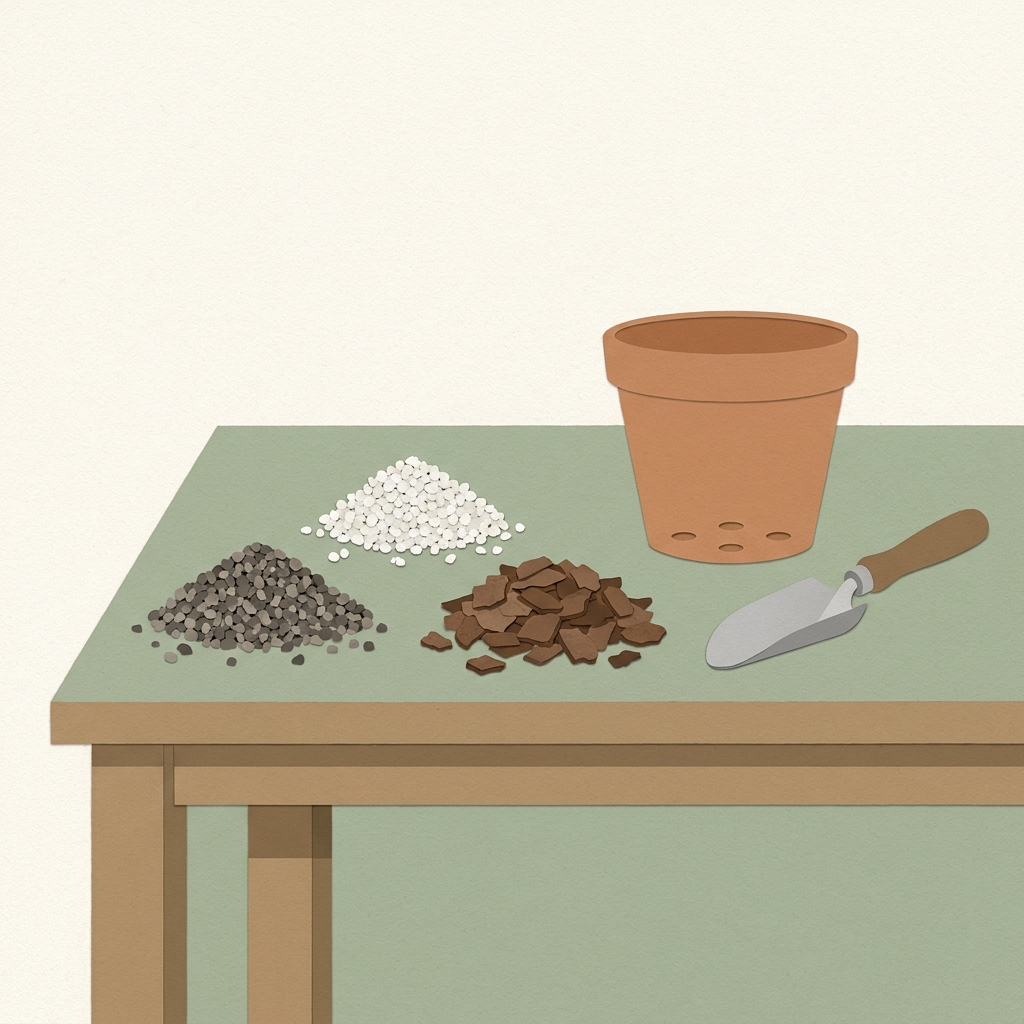
After potting, follow the plant-specific watering instructions and check how the root-zone mix changes between waterings. Do not assume a dry surface means the whole pot is dry, or that a gritty appearance means you cannot overwater. Record what you used so a later change is deliberate rather than a guess.
If the mix remains unsuitable, reassess the plant, container, location and watering together. Adding another handful of grit after every problem makes the original recipe impossible to track. For a pot that is already saturated, use our waterlogged-container guide before making another mix.
Put this into practice
Record the plant, current mix and watering behaviour before changing the recipe. Test a small suitable batch rather than assuming one gritty texture is correct for every species and container.
Choose a mix for this pot
There is no single gritty-mix recipe established here for every succulent, herb or houseplant. The useful result is a mix you can identify, manage and adjust for a particular plant, rather than a fixed ratio applied to every container.