
The journal
Can I grow radishes in a 5 gallon bucket?
Check whether your five-gallon bucket meets the chosen radish cultivar’s width, growing-depth and spacing needs before sowing.
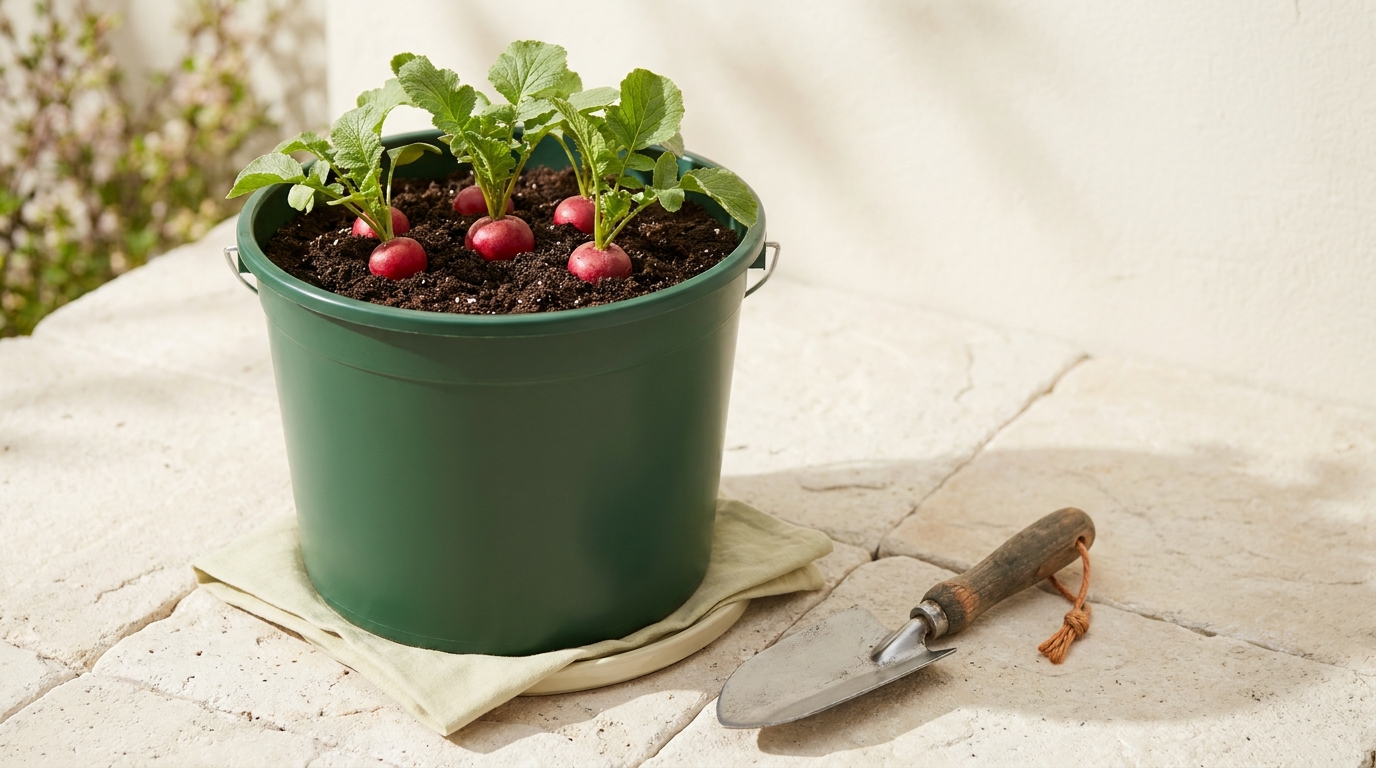
A suitably sized bucket can grow short, round salad radishes, but the five-gallon volume alone does not establish its width or usable growing depth. Check those dimensions, drainage and the chosen cultivar before filling it with an appropriate potting mix. The Royal Horticultural Society notes that salad radishes grow well in large containers at least 30 cm (1 ft) wide and deep, so measure your bucket instead of assuming the volume label meets that recommendation RHS radish guide.
What works in a 5‑gallon bucket
Container and mix
- Use a clean, food‑safe bucket that has never held hazardous chemicals, and drill several holes in the base for drainage.
- Fill with peat‑free multi‑purpose potting compost (potting mix), not heavy garden soil. In UK terms, that means a bagged potting compost for containers, not home‑made garden compost alone RHS radish guide. For a refresher on container substrates, see Is compost different from soil in containers?
- Radishes prefer a loose, well‑drained medium so the roots can expand evenly RHS radish guide.
Depth, spacing and timing
- Depth: The RHS recommends a container at least 30 cm (1 ft) deep for salad radishes. Check the actual growing depth after leaving watering space, and allow for the chosen cultivar’s root length RHS radish guide.
- Sowing: Sow at the seed packet’s stated depth (1 cm is about 3/8 in). Space seeds 2.5-5 cm (1-2 in) apart and thin promptly to that final spacing RHS radish guide. If you’re new to spacing, this quick explainer may help: When should seedlings be thinned?
- Timing: Radishes are a cool‑season crop. Sow in spring and again in late summer/early autumn; avoid hot, dry spells that cause bolting and poor roots RHS radish guide.
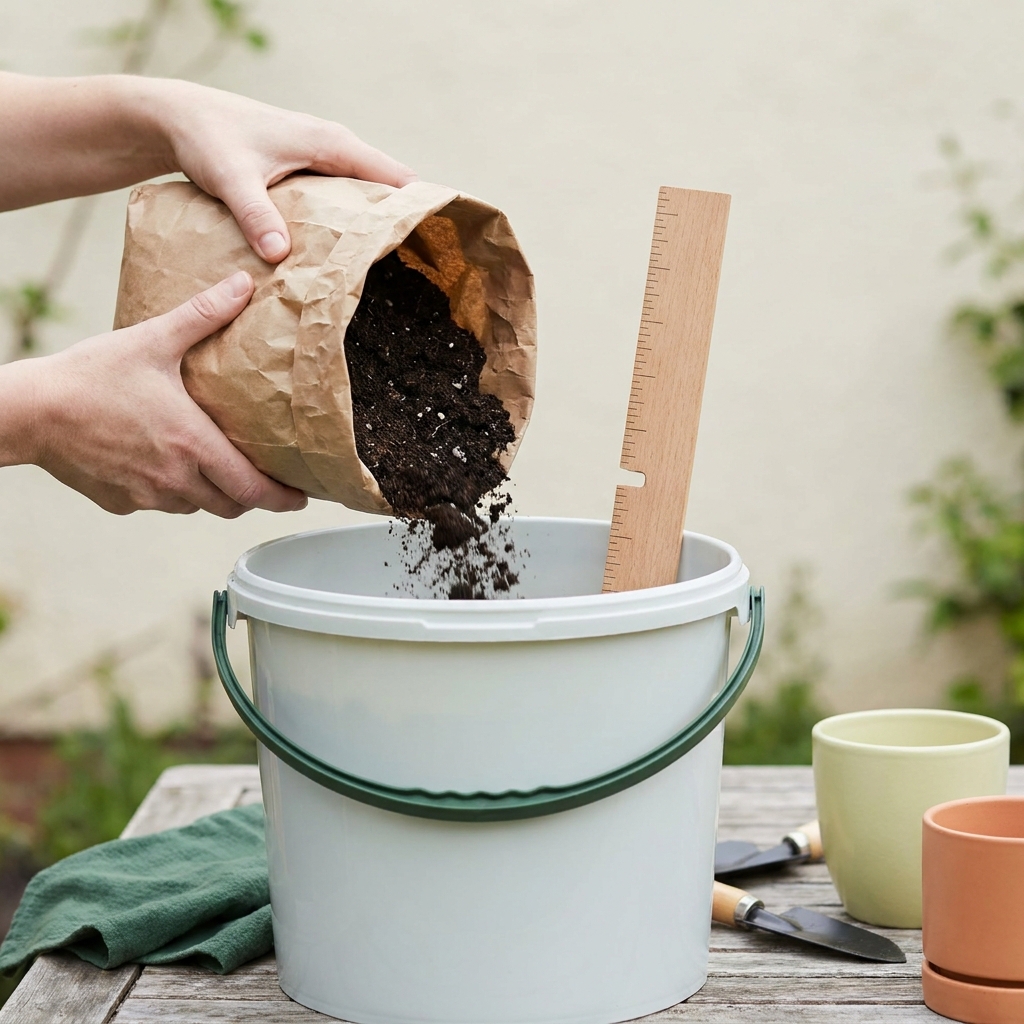
Step‑by‑step: one bucket, start to harvest
- Prepare the bucket: Add drainage holes; rinse and dry.
- Fill: Add potting mix to near the rim, then water to settle. Top up if it sinks; leave about 2-3 cm (1 in) headspace for watering.
- Sow: Make shallow furrows or a light grid, sowing 1 cm deep and 2.5-5 cm apart. Cover lightly and firm.
- Place: Choose a suitable sunny position for the cultivar and season. Light shade helps in warm weather RHS radish guide.
- Water: Keep the mix consistently moist. Inconsistent moisture can cause roots to split or fail to swell RHS radish guide.
- Thin: As soon as seedlings crowd, thin to 2.5-5 cm spacing so roots have room to form properly RHS radish guide.
- Harvest: Pick when the selected cultivar reaches its intended young harvest size. Use packet timing as an estimate and check the roots; shape and maturity vary with cultivar, sowing date and conditions RHS radish guide.
A worked spacing example for one bucket
Five gallons doesn’t set plant count; surface area and spacing do. Measure the usable diameter and mark the packet’s final plant spacing on that surface, leaving room at the edge. For a packet specifying 5 cm spacing, keep planting points 5 cm apart rather than reducing the distance to fit a target number. Wider-spaced or long-rooted cultivars need a different layout. The RHS’s container recommendation is at least 30 cm wide and deep; the bucket’s interior, growing depth and drainage must be checked in practice.
Which radishes suit a 5‑gallon bucket?
- Best fit: Short, round salad types (often called spring or summer radishes) such as globe or small cylindrical varieties. They are specifically recommended for container growing and quick harvests RHS radish guide.
- Not ideal here: Long winter and oriental radishes (for example, daikon/mooli) which can need more growing depth than a particular bucket provides. Check the cultivar’s mature root length and container requirements before choosing it RHS radish guide.
Common bucket problems and quick fixes
- Bolting in heat: Avoid midsummer heat where possible; provide light shade and steady moisture during warm spells RHS radish guide.
- Roots not swelling or tasting woody/hot: Usually due to heat, drought, or crowding. Thin promptly and keep moisture even; harvest young for best flavor and texture RHS radish guide.
- Splitting: Often caused by uneven watering. Water regularly so growth stays even, especially in containers that dry quickly RHS radish guide.
Set up and sow radishes in a 5‑gallon bucket
Quick FAQ
How many plants fit in one 5‑gallon bucket?
Use the surface area and your packet’s spacing. The count depends on usable surface area and the cultivar’s final spacing. Mark the actual layout before sowing rather than assuming one count from a five-gallon label.
Can I grow daikon (mooli) in a 5‑gallon bucket?
Check the exact cultivar and usable growing depth. A five-gallon volume alone cannot answer this; choose a container deep enough for that root type rather than assuming all daikon are alike RHS radish guide.

Related guides
Optional equipment for this guide
A basic hand trowel is optional if you can fill the container safely with a tool you already have.
As an Amazon Associate I earn from qualifying purchases. These are researched options, not hands-on test results. Check the exact size or model, current price and availability on Amazon.
| Product option | Fit and limits to check | Retailer |
|---|---|---|
| Product imageFiskars Ergo garden trowel | A hand trowel for filling a suitable drained bucket with potting mix. Check the scoop fits the opening and leave the chosen radish spacing unchanged. | View on Amazon |